

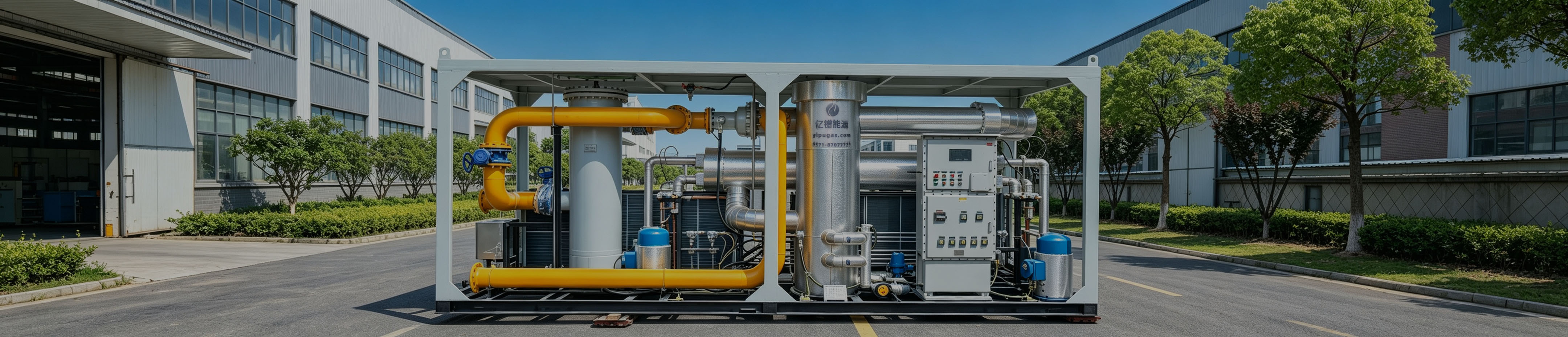
Yipu natural gas dehydration unit: efficient water removal, safeguarding the purity and safety of every cubic meter of natural gas
I. Market Pain Points
In the process of natural gas extraction, processing, transmission and distribution, the presence of moisture is the main cause of pipeline corrosion, ice blockage, hydrate formation and reduced calorific value. This is especially true for unconventional natural gas with high sulfur and high water content, such as shale gas, coalbed methane and oilfield associated gas, where dehydration is more difficult. Traditional dehydration methods often suffer from high energy consumption, incomplete regeneration, unstable dew point, large equipment footprint and high maintenance costs. Many gas filling stations, city pipeline networks and LNG/CNG projects experience frequent equipment failures, surging operating costs and even safety accidents due to substandard natural gas dehydration. How to select an efficient, reliable and intelligent natural gas dehydration unit has become a core pain point that industry users urgently need to solve.
II. Unit Process
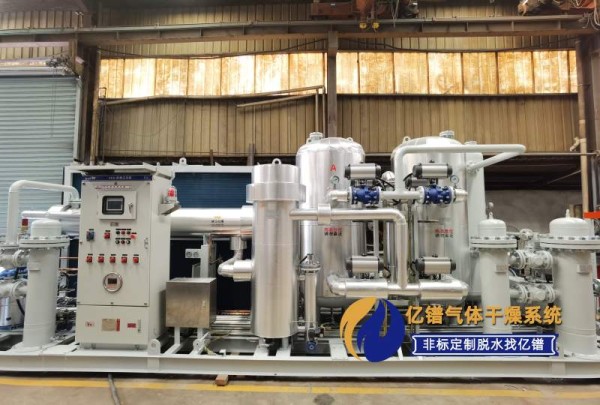
The Yipu natural gas dehydration unit adopts a combined "cooling + adsorption" process. The entire process is divided into three stages: pre-cooling, drying and regeneration. First, the feed natural gas enters the separation filter to remove entrained liquid and solid particles; it then enters the pre-cooler, where heat exchange lowers the temperature to 25–28°C, and most of the saturated water condenses here and is discharged by the gas-liquid separator. The natural gas, after pre-cooling and dehydration, enters Tower A. As it passes through the spherical molecular sieve bed in the tower, moisture is efficiently adsorbed under high pressure and low temperature. The dried gas is then deeply purified through a dust filter and finally output from the outlet as high-quality dry natural gas with an atmospheric pressure dew point ≤-60°C. Towers A and B operate alternately, with one tower adsorbing while the other regenerates, ensuring continuous and stable gas supply.
III. Working Principle
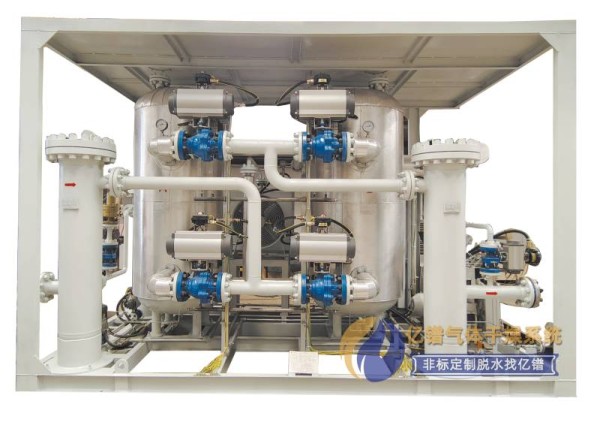
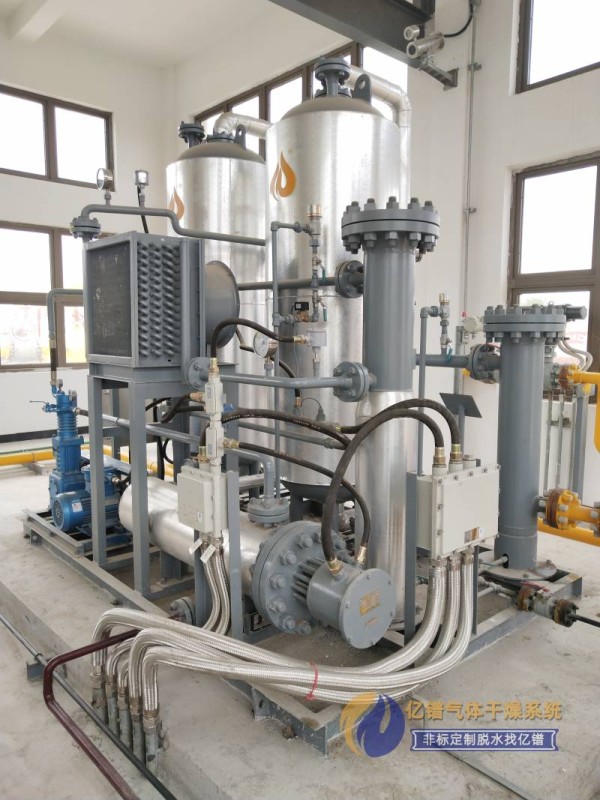
The core of the Yipu natural gas dehydration unit lies in the selective adsorption and regeneration cycle of the molecular sieve. Molecular sieve is an aluminosilicate crystal with a uniform microporous structure and a very strong affinity for water molecules. Under normal temperature and high pressure, the feed gas passes upward through the adsorption tower, where water molecules are captured in the molecular sieve channels, while target components such as methane and ethane pass through smoothly, thereby achieving dehydration. When the molecular sieve in the adsorption tower becomes saturated with water, the system automatically switches to the regeneration process. During regeneration, a small amount of dry gas is pressurized by a booster and enters the explosion-proof electric heater, where it is heated to about 180°C and passes downward through the regeneration tower; the high temperature desorbs the water from the molecular sieve. The high-moisture regeneration gas after desorption is cooled by an explosion-proof air-cooled cooler, the water condenses and enters the liquid storage tank, and the separated gas returns to the inlet to participate again in adsorption and drying. The entire regeneration process is carried out at the equipment's working pressure, achieving zero emissions.
IV. Core Advantages
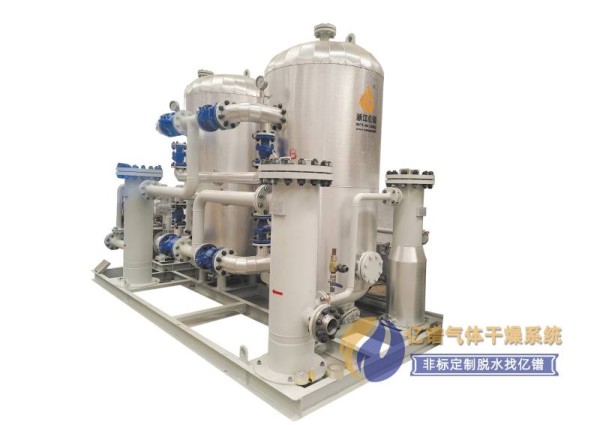
1. Deep dehydration: The outlet atmospheric pressure dew point of the Yipu natural gas dehydration unit can reach below -60°C, fully meeting the water content requirements of national standards such as GB/T 37124-2018 for pipeline natural gas, vehicle compressed natural gas and liquefied natural gas.
2. Energy saving and consumption reduction: The synergistic operation of cooling pre-treatment and adsorption greatly reduces the water absorption load of the molecular sieve, significantly lowering regeneration energy consumption; at the same time, isobaric semi-open countercurrent heating regeneration is adopted to avoid pressure reduction and venting, achieving zero emissions and energy recycling.
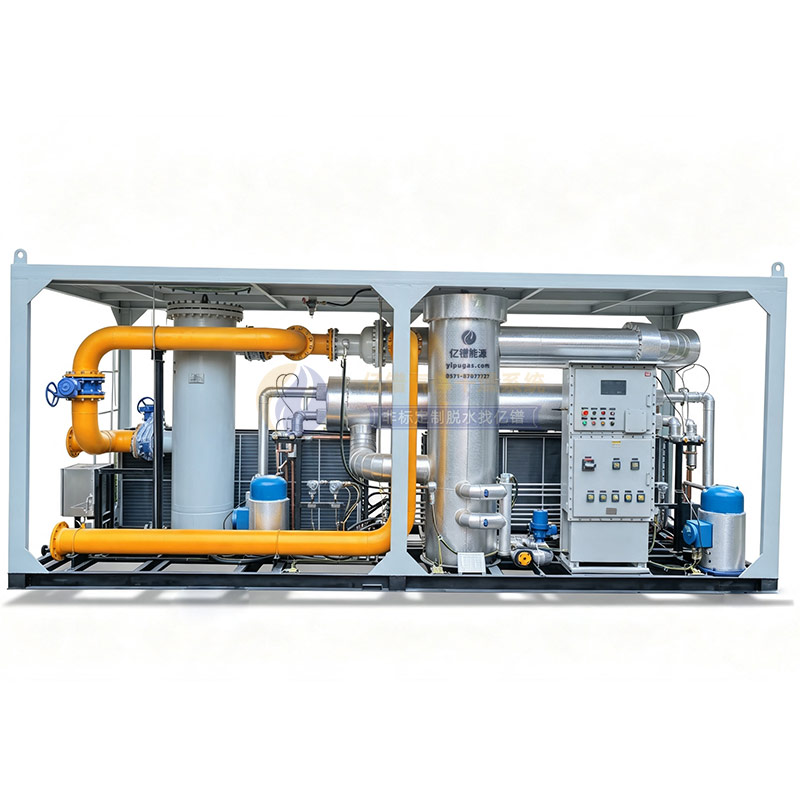
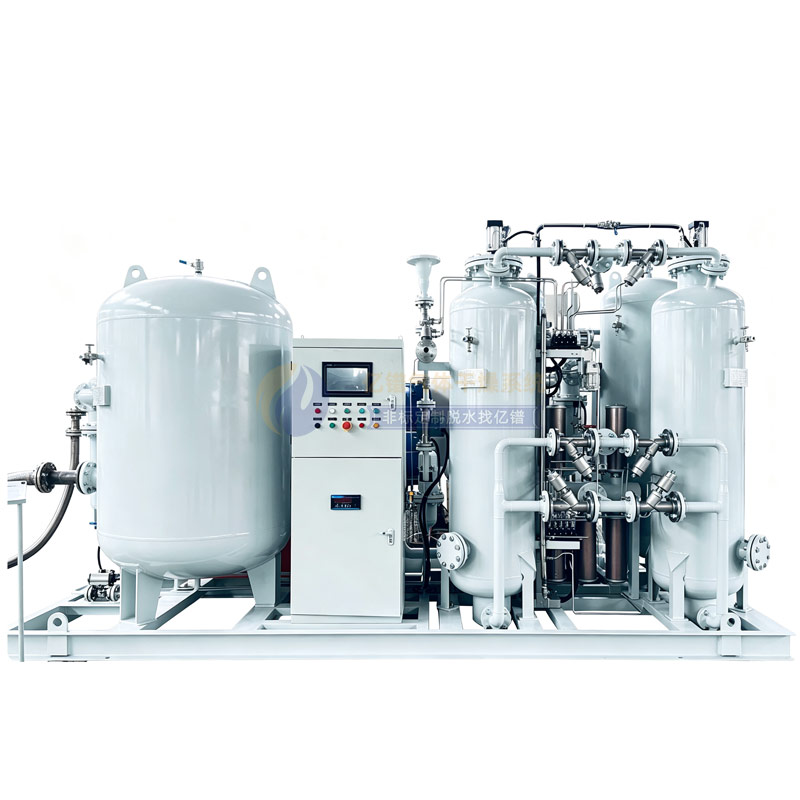
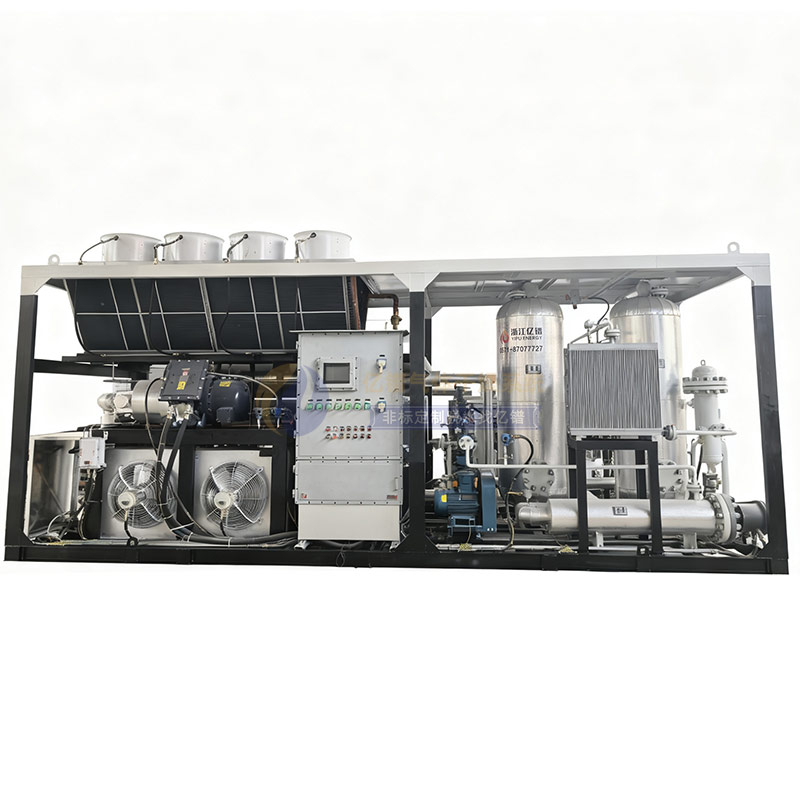
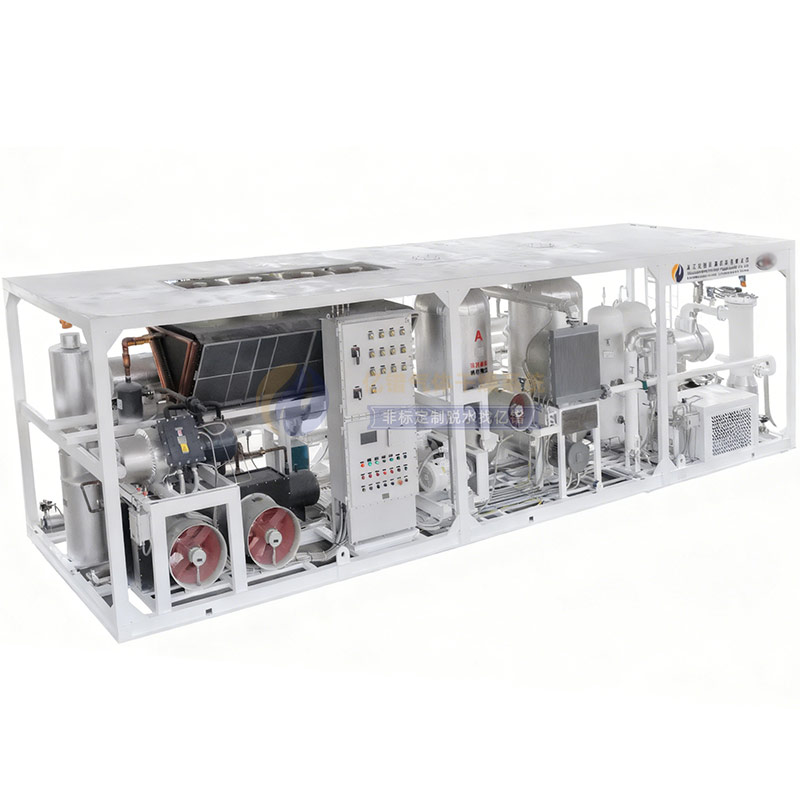
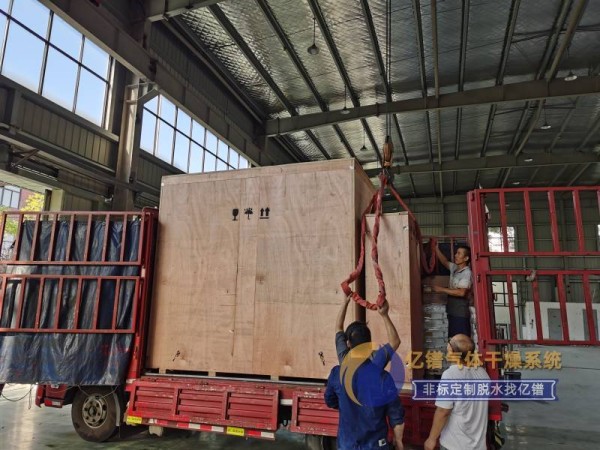
3. Skid-mounted integration: The overall structure is skid-mounted, integrating the separator, filter, drying tower, cooler, electric heater, PLC control cabinet, etc. all on a single base. It is compact in structure and small in footprint, facilitating transportation and rapid installation, and is particularly suitable for scenarios with limited space such as oil and gas field wellheads and gas filling stations.
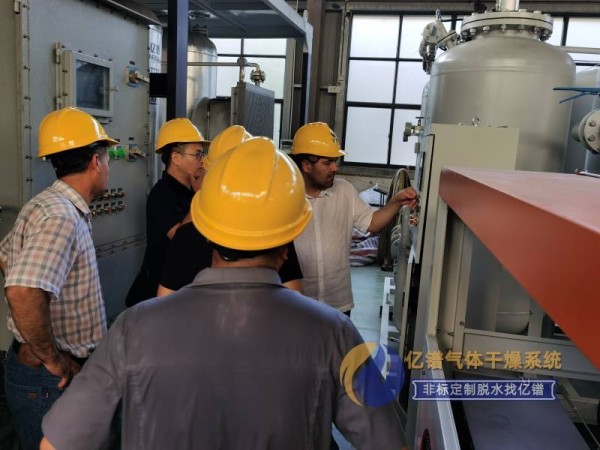
4. Intelligent control: Equipped with a Siemens PLC automatic control system, it supports automatic switching, automatic regeneration, real-time parameter monitoring, fault alarms and remote communication. The entire operation process requires no manual intervention, minimizing human operational errors.
5. Safe and reliable: The equipment is designed and manufactured strictly in accordance with GB150-2024 "Pressure Vessels" and TSG 21-2016 "Supervision Regulation on Safety Technology for Stationary Pressure Vessels". All electrical components are explosion-proof, meeting the explosion-proof requirements of GB3836.1-2021 and GB3836.2-2021, ensuring safe operation in flammable and explosive natural gas environments.
V. Technical Strength
Yipu Energy has been deeply engaged in the field of gas separation and purification for many years and has an R&D team composed of senior engineers, process equipment experts and automatic control engineers, accumulating rich engineering experience in natural gas dehydration, light hydrocarbon recovery and gas purification. The company's production base is located in Jiangsu and is equipped with advanced CNC machining centers, automatic welding robots, non-destructive testing equipment and performance testing platforms. From raw material incoming inspection to equipment delivery, every process strictly implements the ISO9001 quality management system. Yipu natural gas dehydration units have been operating stably in numerous oil and gas fields, gas filling stations and city gas projects at home and abroad, and have been exported to Central Asia, the Middle East and other regions, winning widespread praise from customers for their excellent performance and reliable quality.
VI. Product Introduction
The Yipu natural gas dehydration unit launched this time, model YP-TS-10715, is high-end equipment custom-designed for working conditions with a gas volume of 10715Nm³/h, an inlet pressure of 8.0MPa and an inlet temperature of ≤50°C. The unit integrates pre-cooling, separation, adsorption, regeneration, cooling, drainage and control, and can be widely used in various fields such as natural gas dehydration systems, natural gas dehydration equipment, natural gas dehydration skids, biogas drying and dehydration equipment, oilfield wellhead gas drying and dehydration systems, gas filling station natural gas dehydration units, associated gas dehydration units, coalbed methane dehydration units, LNG filling station drying and dehydration systems, CNG filling station drying and dehydration systems, city pipeline network gas dehydration units and molecular sieve regeneration adsorption dehydration systems. Whether for conventional natural gas processing or the purification of high-moisture unconventional natural gas, the Yipu natural gas dehydration unit can provide users with highly cost-effective overall solutions.
VII. Technical Specifications
- Working medium: natural gas
- Working pressure: 8.0MPa
- Design pressure: 9.2MPa
- Rated flow: 10715Nm³/h
- Inlet temperature: ≤50°C
- Ambient temperature: -37°C~50°C
- Inlet water content: saturated water content at 50°C
- Outlet atmospheric pressure dew point: ≤-60°C
- Dust particle size: ≤5μm
- Outlet temperature: ambient temperature +15°C
- Inlet/outlet pressure drop: ≤0.08MPa
- Regeneration method: isobaric semi-open countercurrent heating regeneration, zero emissions
- Cooling method: air cooling
- Control method: PLC automatic control
- Adsorbent: spherical molecular sieve
- Cyclic working cycle: 8 hours
- Regeneration time: ≤7.5 hours (adjustable)
- Working mode: dual-tower alternating, continuous operation
- Filter drainage method: automatic drainage
- Structural form: integral skid-mounted
- Dimensions: 8500×2600×3100mm
- Equipment mass: approx. 12000kg
- Total power consumption: ≤127kW