

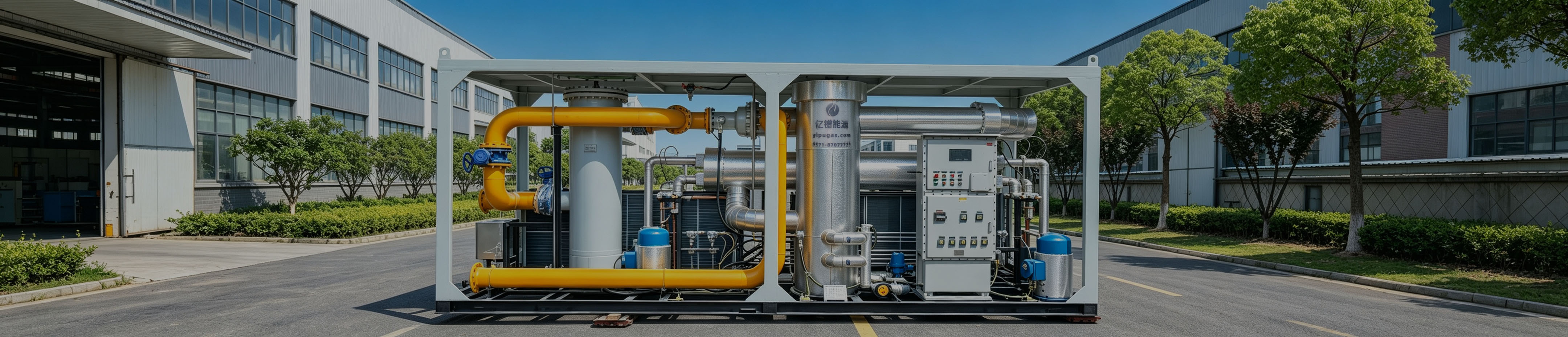
Yipu natural gas dehydration unit: efficient molecular sieve adsorption, solving gas field dehydration challenges
I. Market Pain Points
In the process of natural gas extraction, gathering and utilization, water vapor is a major hidden hazard affecting gas path safety and equipment service life. When natural gas contains a large amount of water vapor, under pressurization, cooling or low ambient temperatures, the gaseous water will precipitate in free form, and may even form solid hydrates with hydrocarbon components, blocking pipelines, valves, cylinder nozzles and filling nozzles, causing gas stations to be unable to refuel normally and vehicles to fail to start in cold climates. In addition, moisture can corrode pipelines and equipment, shortening the service life of downstream equipment such as compressors and dispensers and increasing maintenance costs. Especially in scenarios such as oilfield wellhead gas drying, coalbed methane dehydration and urban pipeline network gas treatment, deep dehydration is the key to ensuring stable system operation. Traditional dehydration methods such as cooling and glycol methods suffer from low efficiency, high energy consumption and failure to meet dew point requirements, and cannot satisfy modern industry's demand for high-purity dry gas. Therefore, choosing a reliable natural gas dehydration system is crucial.
II. Unit Process
The Yipu YNG series natural gas dehydration unit adopts a dual-tower alternating working process: one tower performs adsorption and drying while the other is on regeneration standby, achieving continuous and uninterrupted gas supply. The specific process is as follows:
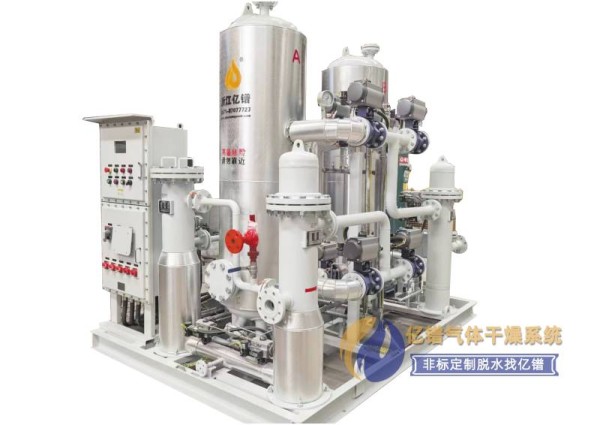
1. Adsorption process: The wet natural gas from upstream first enters the separation filter to remove free oil and water and large particulate impurities, and then enters adsorption tower A (or B) through a manual switching valve. When the gas flow passes through the 4A molecular sieve bed in the tower, under low temperature and high pressure, the molecular sieve selectively adsorbs water molecules. The dried gas is deeply purified by the dust filter and then output from the outlet, with a dew point of -40°C or below.
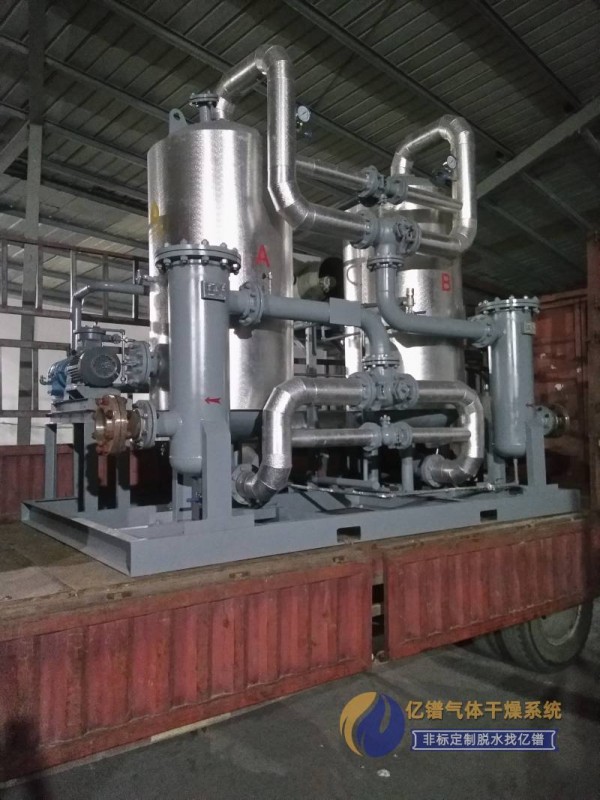
2. Regeneration process: When the adsorption tower reaches saturation (usually 12 hours), it enters the regeneration process through valve switching. A small amount of dry natural gas is pressurized by the booster and enters the explosion-proof electric heater; the high-temperature gas heated to 170-190°C enters the regeneration tower and heats the molecular sieve to desorb water. The desorbed high-moisture gas enters the cooler for cooling, the separated liquid water is discharged to the liquid storage tank, and the separated gas returns to the adsorption tower to continue participating in the adsorption cycle, realizing a closed regeneration loop. The entire regeneration process is automatically controlled to ensure thorough regeneration.
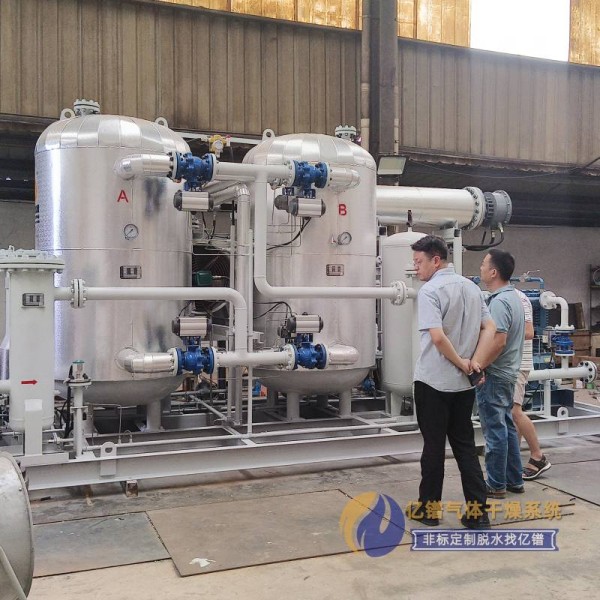
3. Blowdown and venting: The manual blowdown of the separator and filter regularly discharges oil and water, and the safety valve vent is routed to high-altitude discharge to ensure system safety.
III. Working Principle
The Yipu natural gas dehydration unit is based on the principles of molecular sieve adsorption and temperature swing adsorption (TSA). Molecular sieve is a crystalline material with a uniform microporous structure and high affinity for polar molecules (such as water). When wet natural gas passes through the molecular sieve bed, water molecules are adsorbed in the micropores, while hydrocarbon molecules pass through smoothly. As adsorption proceeds, the molecular sieve gradually saturates and needs to be regenerated to restore its adsorption capacity. The unit adopts a dual-tower structure: while one tower adsorbs, the other is desorbed and regenerated by high-temperature low-pressure gas, and the regenerated molecular sieve can be reused. The entire adsorption and regeneration process cycles to achieve continuous deep dehydration. The 4A spherical molecular sieve can not only efficiently remove water but also adsorb acidic gases such as H2S, NH3 and SO2 and trace impurities, improving gas purity.
IV. Core Advantages
1. Deep dehydration: High-quality 4A spherical molecular sieve is used, with a large filling amount and high bed height, and the dew point can reach -40°C or below, meeting the requirements of cryogenic processing.
2. Dual-tower continuous gas supply: One tower adsorbs while the other regenerates, and the output gas is stable without pressure fluctuations, suitable for uninterrupted operation scenarios such as gas stations and urban pipeline network gas supply.
3. Intelligent regeneration control: The regeneration process is automatically controlled, and the heater has triple over-temperature protection (explosion-proof thermal resistance, controller, temperature switch) to prevent dry burning; the booster and cooling fan have overload shutdown protection to ensure safety and stability.
4. Low energy consumption: Isobaric regeneration is adopted to reduce energy consumption; the molecular sieve has a long service life (>8000 hours), reducing replacement costs.
5. Efficient filtration configuration: A separation filter is installed at the inlet and a dust filter at the outlet, effectively removing oil, water and particulate matter and protecting the molecular sieve and downstream equipment.
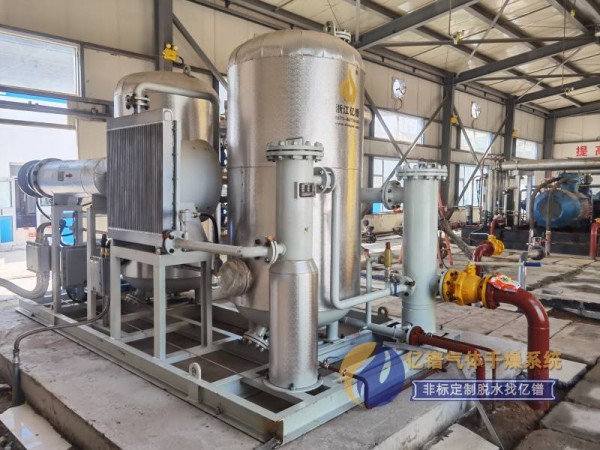
6. Skid-mounted integrated design: Overall skid-mounted structure, small footprint, convenient installation, and can be arranged indoors or outdoors (outdoor installation requires a protective canopy).
7. Branded core components: Siemens PLC, Schneider Electric, Shanghai High Pressure Valve, Yongyi Safety Valve, Jiangsu Zhongzhong Explosion-proof Electric Heater and other well-known domestic and international brands are used, ensuring high reliability.
8. Easy maintenance: The tower body is provided with separate loading and unloading ports, so the molecular sieve can be replaced without dismantling pipelines; the gas diffusion distributor prevents gas flow from impacting the molecular sieve and extends its service life.
V. Technical Strength
Zhejiang Yipu Energy Technology Co., Ltd. is a high-tech enterprise focusing on gas purification and separation equipment, with many years of R&D and manufacturing experience in the field of natural gas dehydration. The company's technical team is proficient in molecular sieve adsorption, temperature swing adsorption and pressure swing adsorption technologies, and can customize natural gas dehydration systems, natural gas dehydration units, natural gas dehydration equipment, natural gas dehydration skids and other series of products according to customer needs. The company strictly designs and manufactures in accordance with standards such as SY/T 0076-2008 Design Specification for Natural Gas Dehydration, GB150-2011 and TSG 21-2016, and its products are widely used in oilfield wellhead gas drying, gas station dehydration, coalbed methane dehydration, biogas drying, LNG/CNG gas station drying and other fields. The controller system independently developed by the company features touch screen wiring diagrams and fault solutions and is protected by intellectual property rights. From design, model selection and manufacturing to commissioning, Yipu provides full-process technical support and services to ensure long-term stable operation of the unit.
VI. Product Introduction
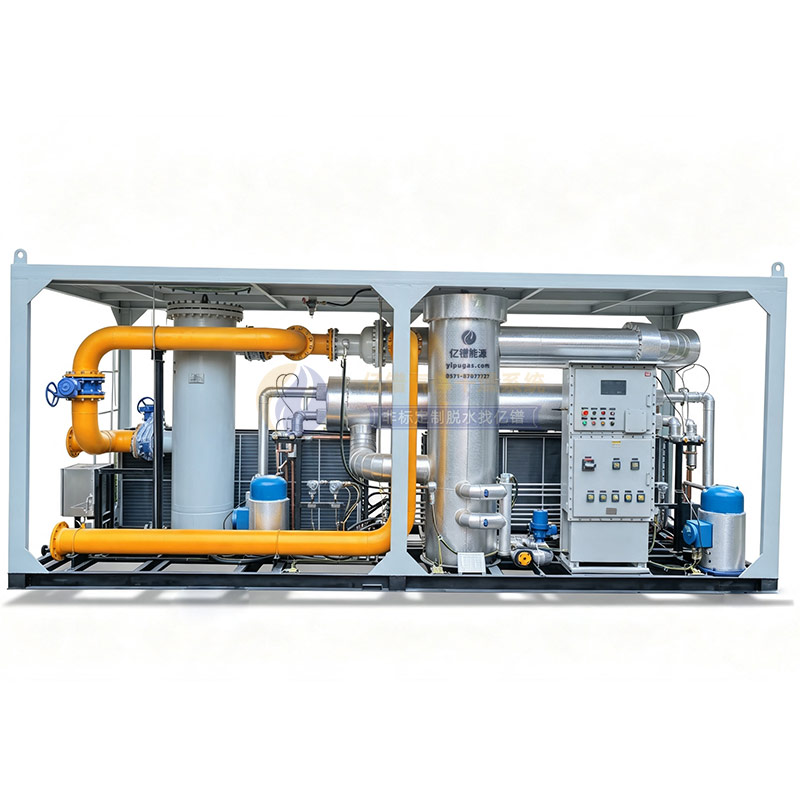
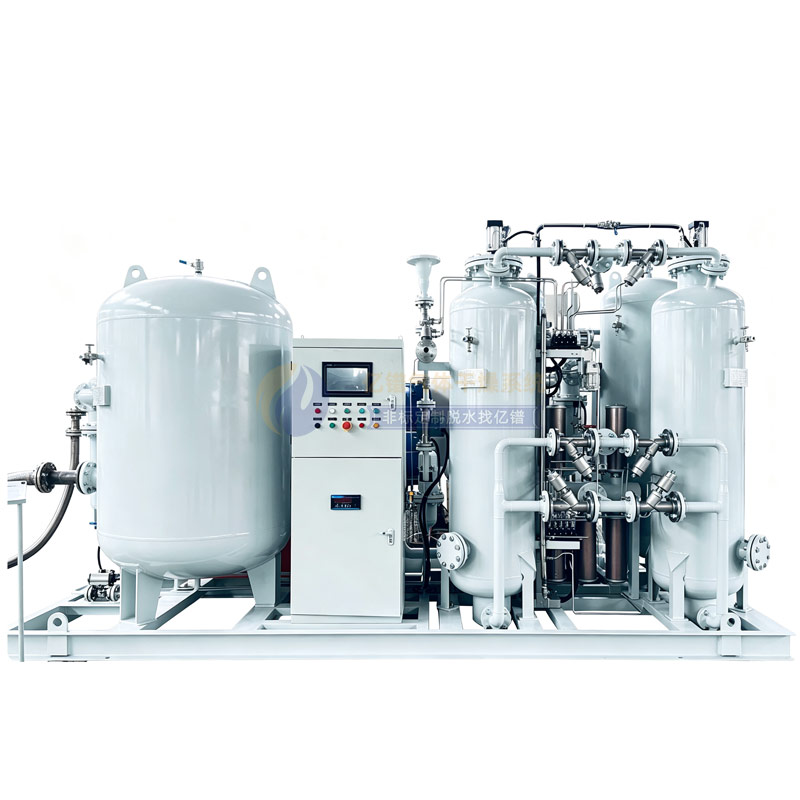
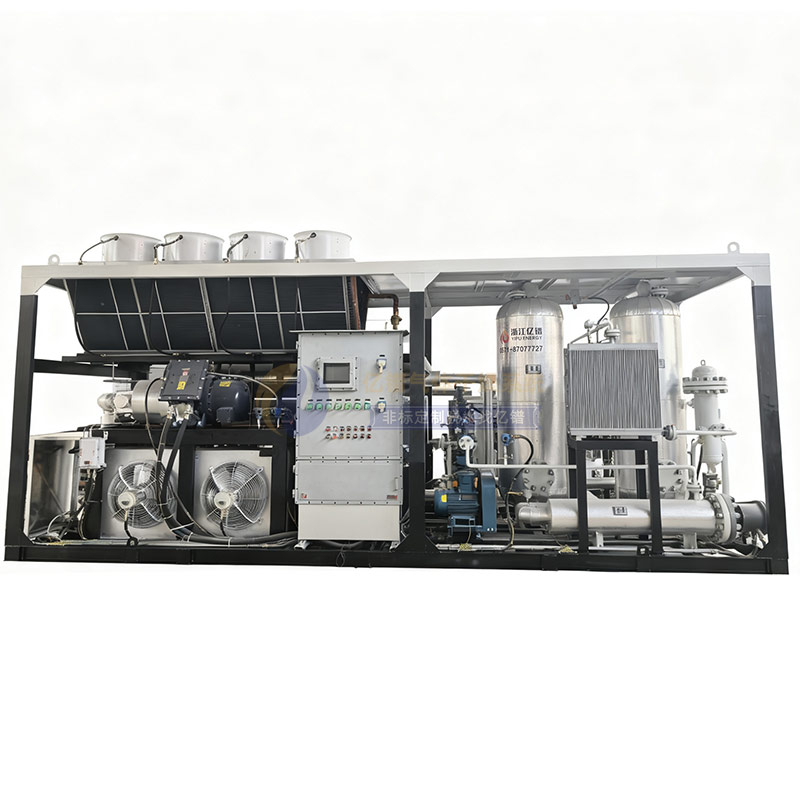
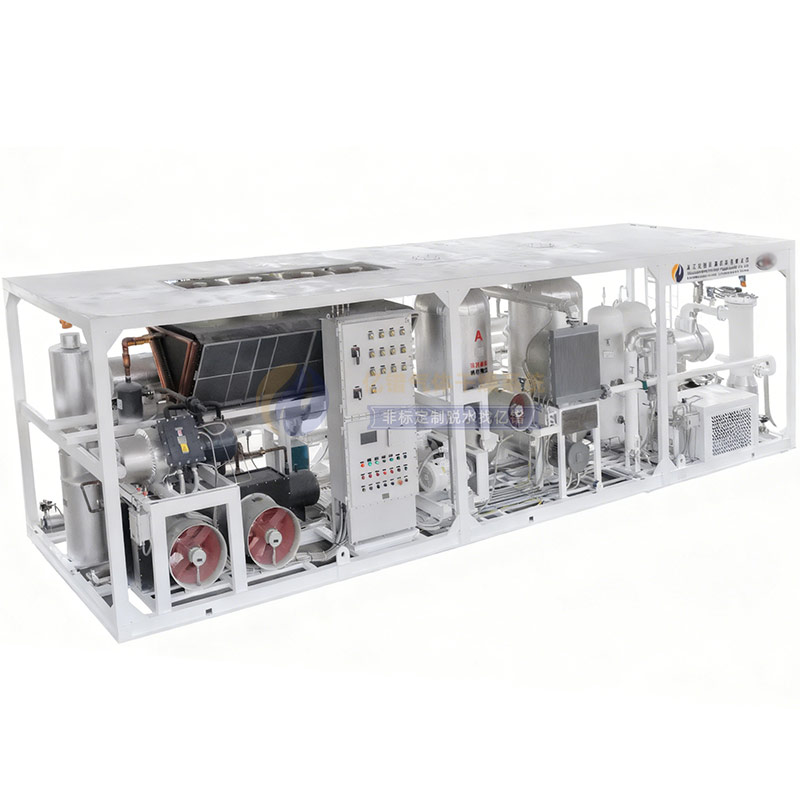
The Yipu YNG8-4170/2.0-SM natural gas dehydration unit is specially designed for medium and large gas stations, oilfield associated gas and urban pipeline network gas treatment. The equipment has a rated flow of 4170Nm³/h and a working pressure of 2.0MPa, and adopts dual-tower manual switching and automatic regeneration. The main body consists of adsorption towers A/B, safety valves, manual ball valves, an electric control cabinet, an explosion-proof electric heater (42kW), a booster (11kW), a cooling fan (1.1kW), a separator, a separation filter, a dust filter, a dew point meter and a piping system. The molecular sieve is 4A spherical with sufficient filling amount, and the design margin is enlarged by 10%; the adsorption cycle reaches 12 hours, the regeneration time is 8 hours, and the regeneration temperature is 170°C. The overall skid has compact dimensions and a total weight of about 7500kg. This unit is an ideal solution for deep natural gas dehydration, suitable for various complex working conditions and ensuring dry and clean output gas. In addition, Yipu also provides associated gas dehydration units, coalbed methane dehydration units, LNG gas station drying and dehydration systems, CNG gas station drying and dehydration systems, molecular sieve regeneration adsorption dehydration systems and other series of products to meet the needs of different scenarios.
VII. Technical Specifications
- Model: YNG8-4170/2.0-SM
- Rated working pressure: 2.0MPa
- Design pressure: 3.5MPa
- Safety valve set pressure: 3.2MPa
- Rated flow: 4170Nm³/h (10×10⁴Nm³/d)
- Inlet gas temperature: ≤40°C (typical)
- Inlet oil content: ≤3 mg/Nm³
- Outlet gas temperature: 10°C higher than ambient temperature
- Outlet particle diameter: ≤1μm
- Inlet/outlet pressure drop: ≤0.03MPa
- Regeneration method: Manual switching, isobaric regeneration
- Heater design temperature: 240°C
- Regeneration temperature: 170°C
- Working cycle: Adsorption 12 hours, regeneration 8 hours
- Adsorbent: 4A spherical molecular sieve
- Explosion-proof grade: dⅡBT4
- Total power consumption: about 54.1kW (including heater, booster and fan)
- Inlet/outlet pipe diameter: DN80 PN40
- Blowdown port diameter: DN15 PN40
- Vent port diameter: DN50 PN40
- Dimensions: According to skid-mounted design, to be confirmed on site
- Installation method: Indoor installation with foundation (outdoor installation requires a protective canopy)