

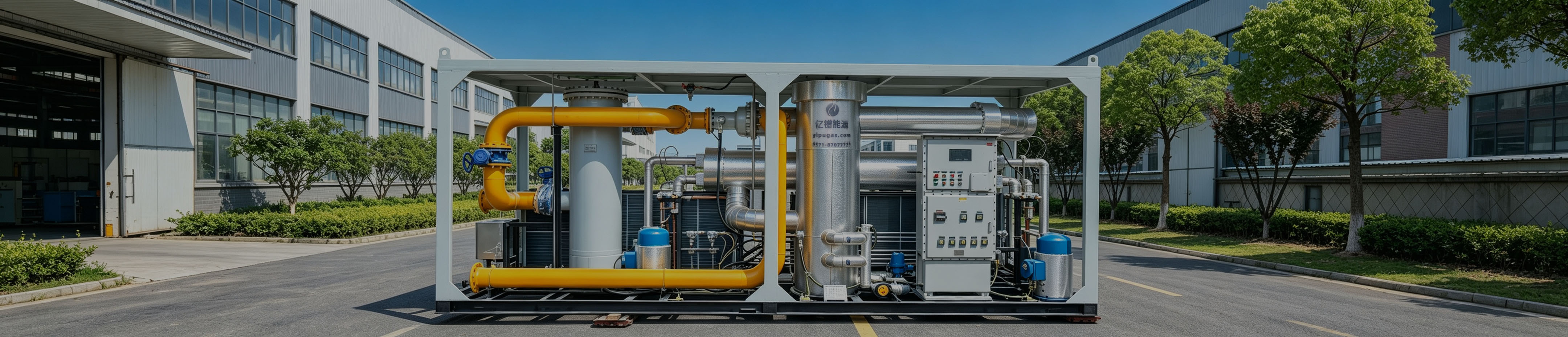
Yipu YNG11-2500-0.2~0.3-SM Natural Gas Dehydration Unit: Efficient water removal to ensure pipeline and equipment safety
Market Pain Points
In the process of natural gas extraction, processing, and transportation, the presence of water vapor is a hidden hazard that cannot be ignored. When natural gas is pressurized or cooled, water vapor condenses into liquid water and may even form hydrates with hydrocarbon components, blocking pipelines, valves, cylinder nozzles, and filling nozzles. This prevents filling stations from operating normally in low-temperature environments and prevents vehicles from starting in cold weather. In addition, moisture corrodes pipelines and equipment, shortens the service life of core components such as compressors and dispensers, and increases maintenance costs. Traditional dehydration methods such as cooling separation and glycol absorption often fail to meet deep dehydration requirements. Especially in scenarios requiring low-temperature cryogenic processing, residual moisture can cause ice blockage and affect the stable operation of the entire system. Therefore, choosing a high-performance natural gas dehydration unit is the key to solving these pain points. Unit Process
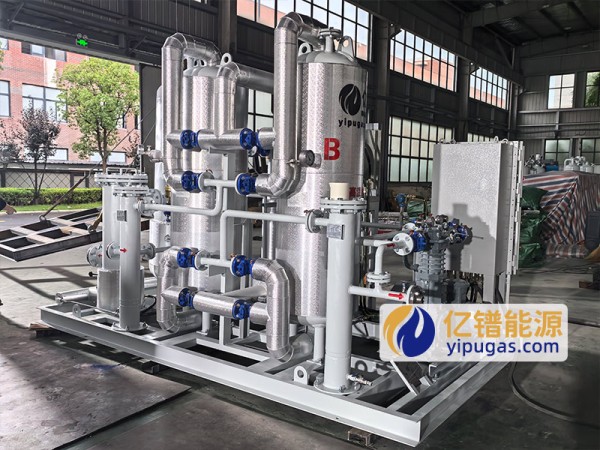
The Yipu YNG11-2500-0.2~0.3-SM natural gas dehydration unit adopts a dual-tower alternating workflow to ensure continuous gas supply. The overall process is divided into two stages: adsorption and regeneration.
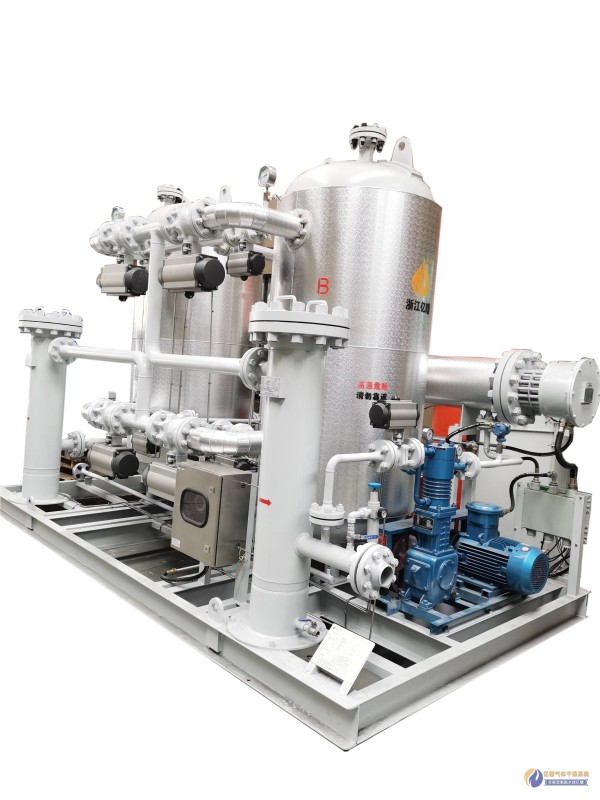
In the adsorption stage, wet natural gas enters through the gas inlet, first passes through a separation filter to preliminarily remove free oil and water and large particulate impurities, and then enters Tower A (adsorption tower). Tower A is filled with high-strength 3A molecular sieve. Under low temperature and high pressure, the molecular sieve adsorbs water molecules. The dried gas is further purified through a dust filter and then output from the gas outlet.
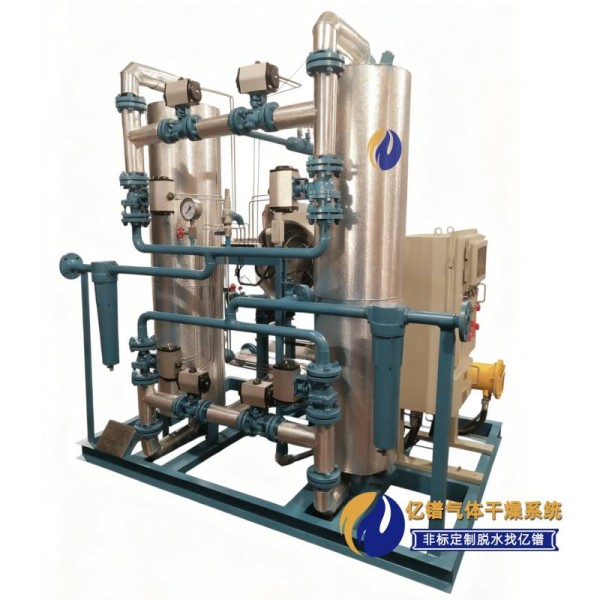
In the regeneration stage, when the molecular sieve in Tower A becomes saturated with adsorption, the system automatically switches to Tower B for adsorption, while Tower A enters the regeneration process. A small amount of dry natural gas is pressurized by a booster and then enters an explosion-proof electric heater, where it is heated to about 190°C. The high-temperature gas enters Tower A, causing the water in the molecular sieve to desorb. The desorbed high-moisture gas enters a cooler for cooling and separation, and the water is discharged to a liquid storage tank. The separated natural gas re-enters the adsorption tower for recycling. After regeneration is completed, Tower A stands by, and when the adsorption cycle of Tower B ends, the system switches.
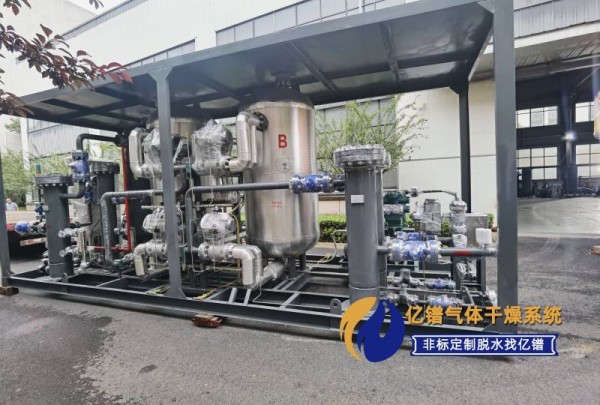
The entire process is automatically controlled by a PLC, combining manual switching with automatic regeneration to ensure simple, stable, and reliable operation.
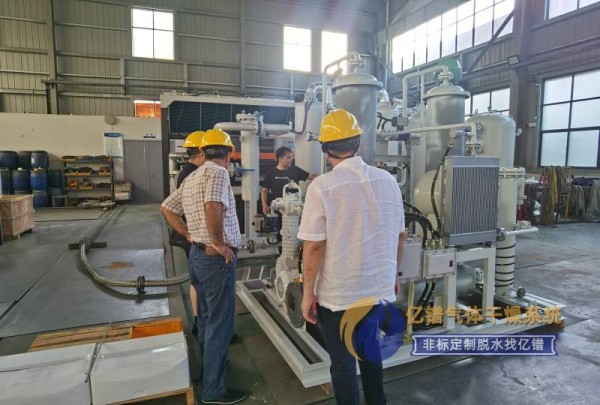
Working Principle
The core principle of this natural gas dehydration unit is temperature swing adsorption (TSA). It utilizes the high adsorption capacity of 3A spherical molecular sieve for water molecules, adsorbing moisture at low temperature and high pressure and desorbing and regenerating at high temperature and low pressure. Molecular sieve is a porous material whose pore diameter (about 3 angstroms) allows water molecules to enter while preventing larger molecules such as methane from passing through, thereby achieving selective adsorption. The adsorption process is a physical process and does not change the gas composition. When the molecular sieve becomes saturated with adsorption, it is regenerated by heating to restore its adsorption capacity, and this cycle repeats. The unit uses two towers working alternately. While one tower adsorbs, the other regenerates or stands by, ensuring continuous output of dry natural gas with a dew point below -55°C.
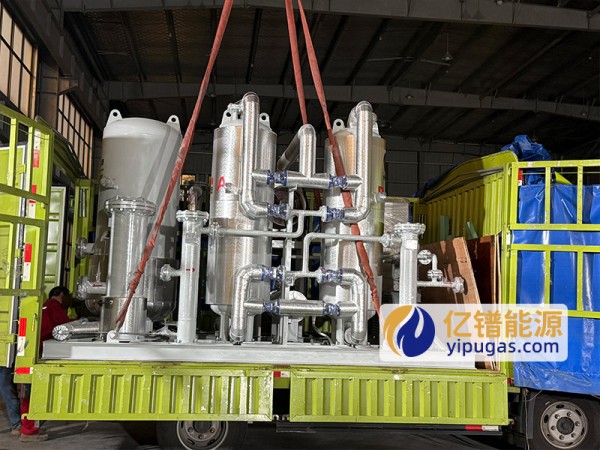
Core Advantages
1. Deep dehydration: High-strength 3A molecular sieve is used, achieving high dehydration depth. The outlet gas dew point can reach below -55°C, meeting the cryogenic processing requirements of LNG filling stations, CNG filling stations, and other applications.
2. Stable and reliable: The dual-tower structure design has a 10% enlarged margin, high adsorption bed height, large molecular sieve filling amount, and long adsorption cycle. It operates smoothly and continuously without pressure fluctuations.
3. Intelligent control: Equipped with a Siemens PLC controller and Schneider electrical components. The touch screen has built-in wiring diagrams and troubleshooting solutions, enabling semi-automatic control (manual switching, automatic regeneration).
4. Energy-saving and efficient: Regeneration gas is recycled. The explosion-proof electric heater adopts a U-shaped low-load design with high heating efficiency and features over-temperature protection and automatic fan start/stop functions to reduce energy consumption.
5. Long service life: Regeneration valves use high-temperature resistant products from Germany's ROP or Shanghai High Pressure Valve. The sealing material is added with wear-resistant carbon fiber for temperature and wear resistance. The normal service life of the molecular sieve is more than 8,000 hours.
6. Safe and explosion-proof: All explosion-proof products (thermal resistors, junction boxes, heaters, axial flow fans, etc.) meet CT6 standards. The safety valve uses a full-lift enclosed stainless steel valve core, ensuring safe operation in hazardous environments.
7. Easy to maintain: The tower body is separately provided with a loading port and a discharge port, allowing replacement of the molecular sieve without disassembling pipelines. The separator and filter are manually drained, making operation simple.
Technical Strength
Zhejiang Yipu Energy Technology Co., Ltd. specializes in gas purification and separation and energy gas recovery, and has obtained multiple patents: software copyright for natural gas dehydration unit (Patent No. ZL201420278523.8), skid-mounted device for recovering BOG from tanker storage tanks and venting (ZL201420287770.4), and skid-mounted device for recovering residual gas from long tube trailers (ZL201420290913.7). The company adheres to its own brand, with registered trademarks covering Class 7 and Class 11. Products are strictly designed and manufactured in accordance with standards such as SY/T 0076-2008 "Design Specification for Natural Gas Dehydration," GB150-2011, and TSG 21-2016, and are equipped with a complete quality inspection system. The company has an experienced technical team and can customize natural gas dehydration systems according to customer needs, providing a full range of services from design to installation.
Product Introduction
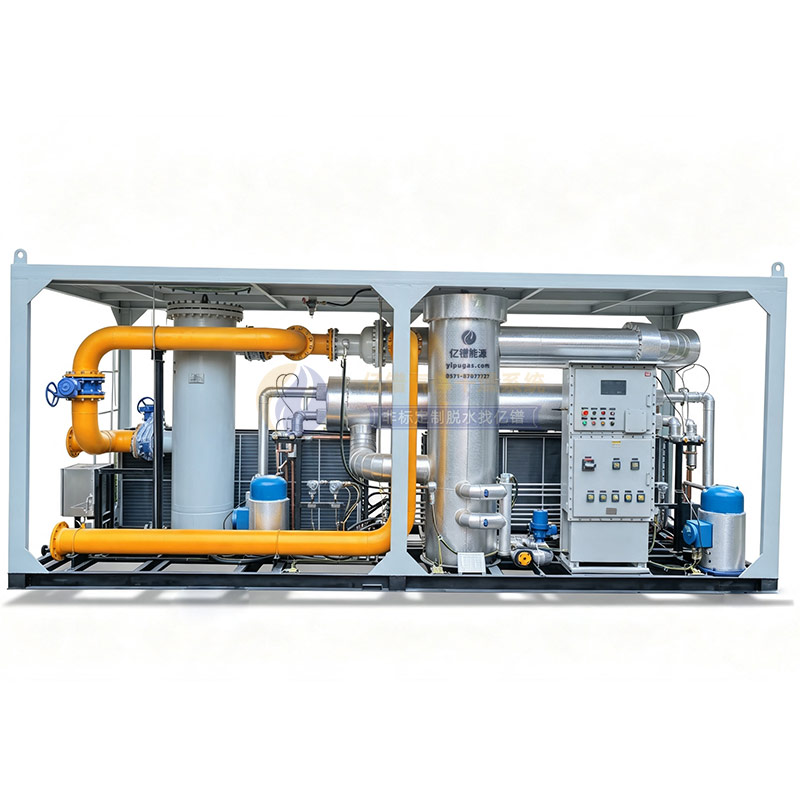
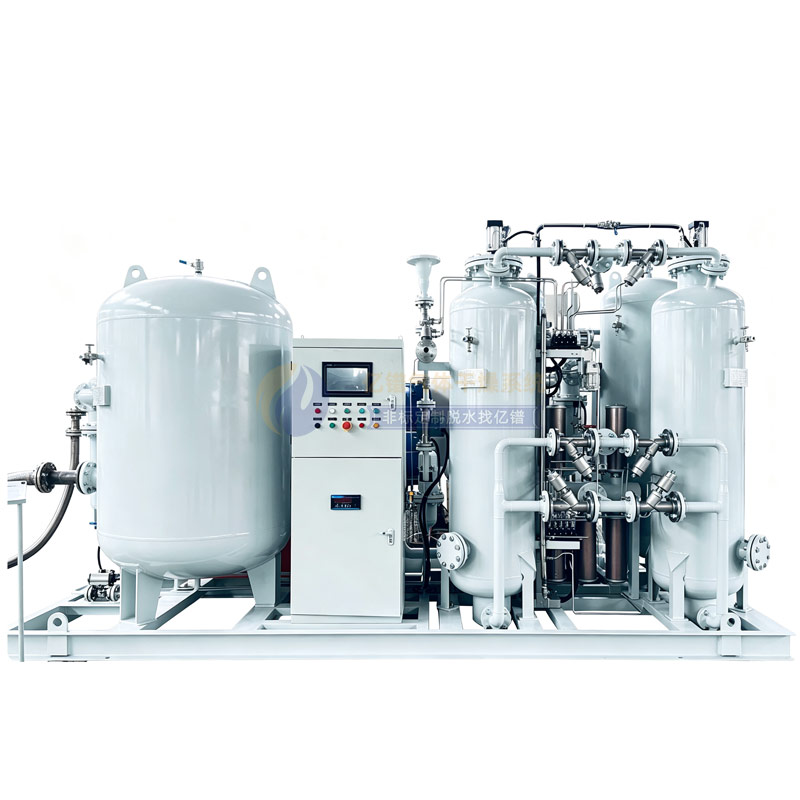
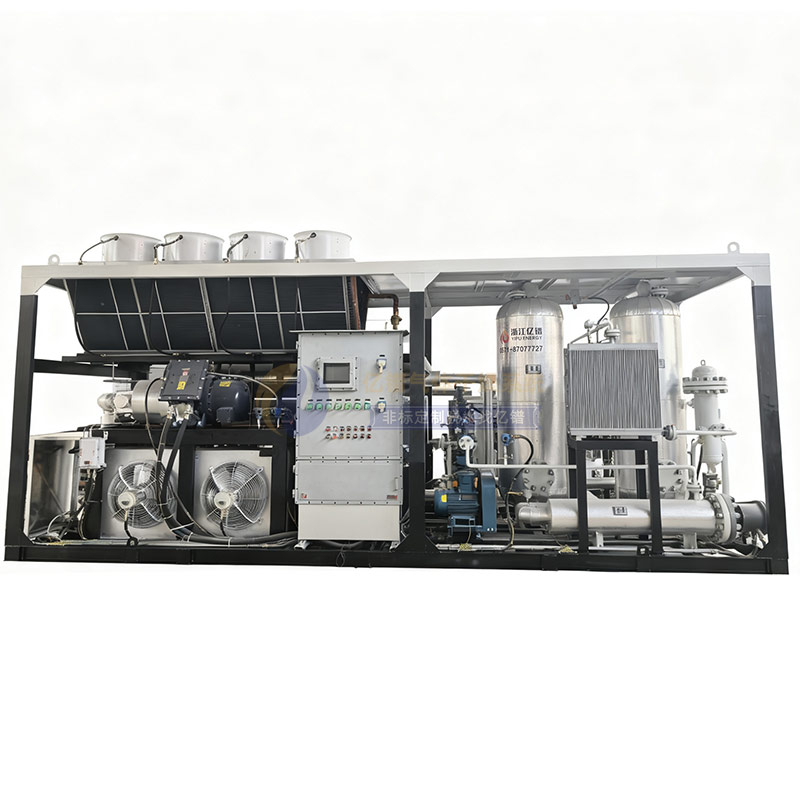
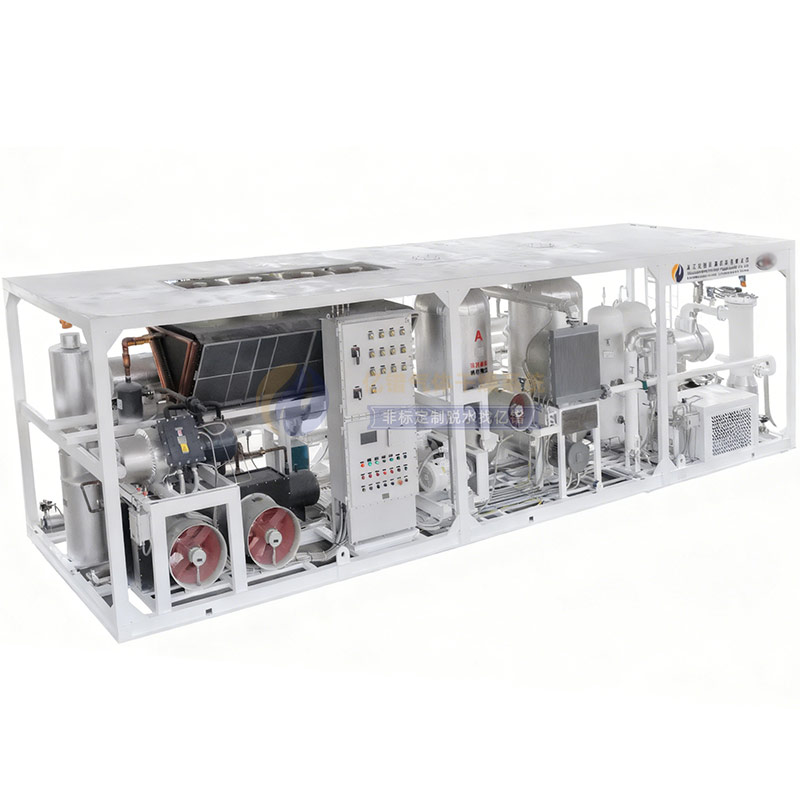
The Yipu YNG11-2500-0.2~0.3-SM natural gas dehydration unit is a skid-mounted device specially designed for deep dehydration of natural gas, with a rated processing capacity of 2500Nm³/h and an operating pressure of 0.2~0.3MPa. The equipment consists of adsorption towers A/B, safety valves, manual ball valves, electrical control cabinet, explosion-proof electric heater (90kW), booster (22kW), cooler, separator, separation filter, dust filter, explosion-proof thermal resistor, pressure gauge, dew point meter, piping system, control system, etc. The overall skid-mounted structure occupies a small area and is convenient for transportation and installation. It is suitable for indoor or outdoor installation (protective canopy required) and is widely used in scenarios such as natural gas dehydration units for filling stations, oilfield wellhead gas drying and dehydration systems, city pipeline network gas dehydration units, associated gas dehydration units, coalbed methane dehydration units, LNG filling station drying and dehydration systems, and CNG filling station drying and dehydration systems. This natural gas dehydration unit can also be used as biogas drying and dehydration equipment with reliable performance.
Technical Specifications
- Product model: YNG11-2500-0.2~0.3-SM
- Rated working pressure: 0.2~0.3MPa
- Design pressure: 0.6MPa
- Safety valve set pressure: 0.55MPa
- Rated flow: 2500Nm³/h
- Inlet gas temperature: ≤40°C (based on oil content of 3mg/Nm³)
- Outlet gas temperature: 10°C higher than ambient temperature
- Maximum particle diameter at outlet: ≤1μm
- Pressure drop across inlet and outlet: ≤0.03MPa
- Regeneration method: Manual switching, isobaric regeneration
- Heating element design temperature: 240°C
- Regeneration temperature: 170~190°C
- Working mode: Dual-tower alternating, continuous operation
- Control mode: Semi-automatic control (manual switching, automatic regeneration)
- Adsorption cycle: 12 hours
- Regeneration time: 8 hours
- Adsorbent: 3A spherical molecular sieve
- Explosion-proof electric heater: AC380V 90kW dⅡBT4 - Booster motor: AC380V 22kW dⅡBT4 - Cooling fan motor: AC380V 2.2kW dⅡBT4
- Structural form: Overall skid-mounted
- Inlet/outlet pipe diameter: Flange SO150-16RF
- Total equipment mass: Approx. 12000kg
- Total power consumption: Approx. 114.2kW