

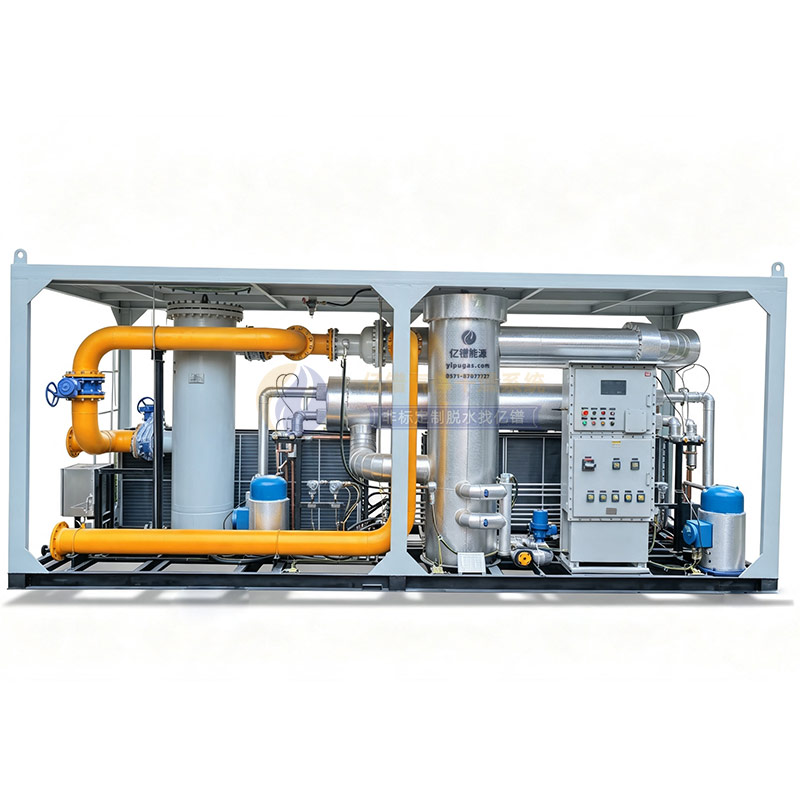
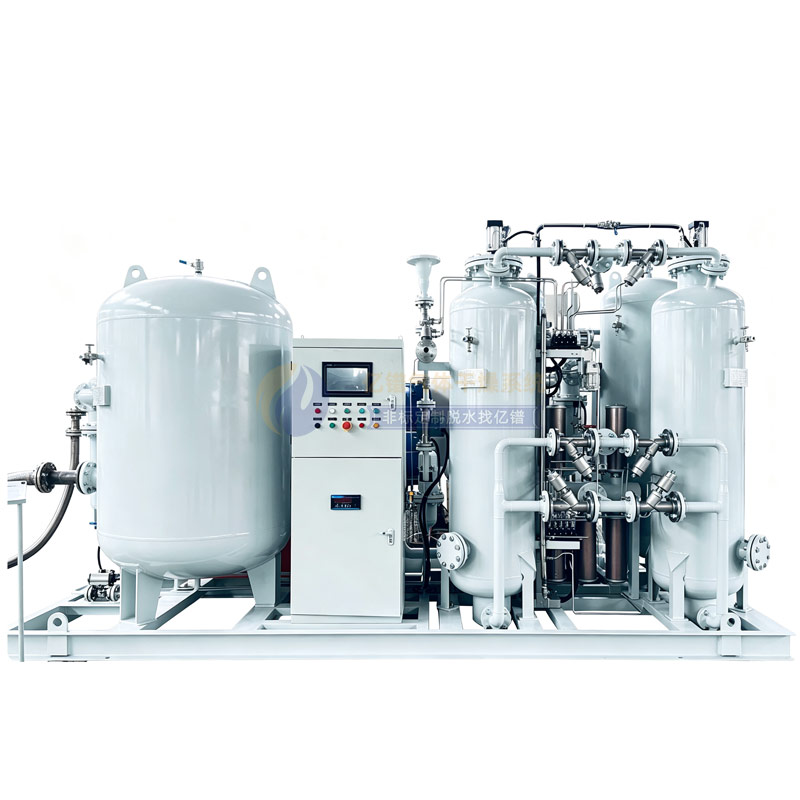
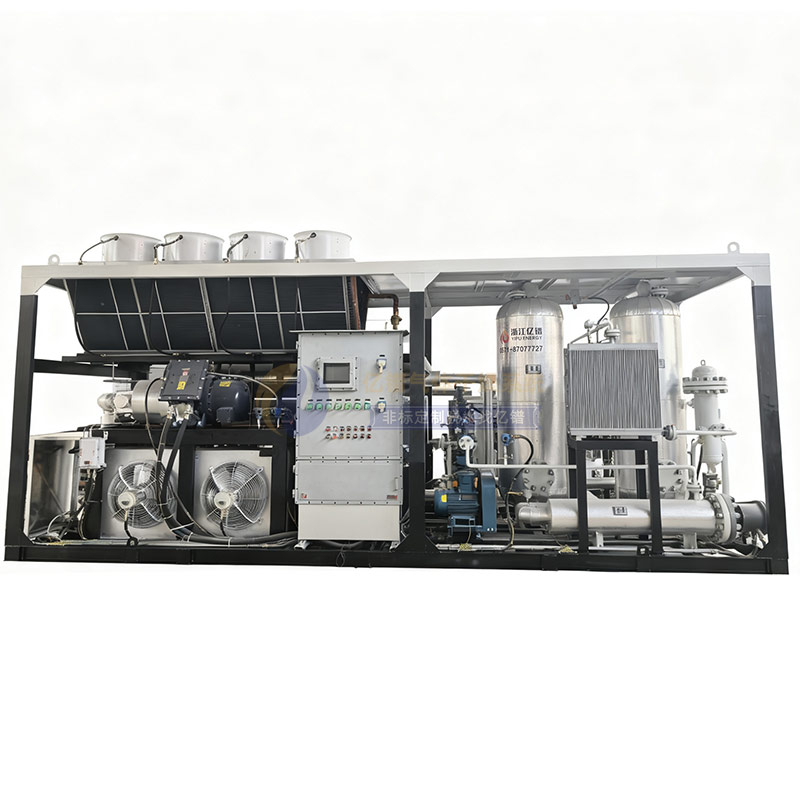
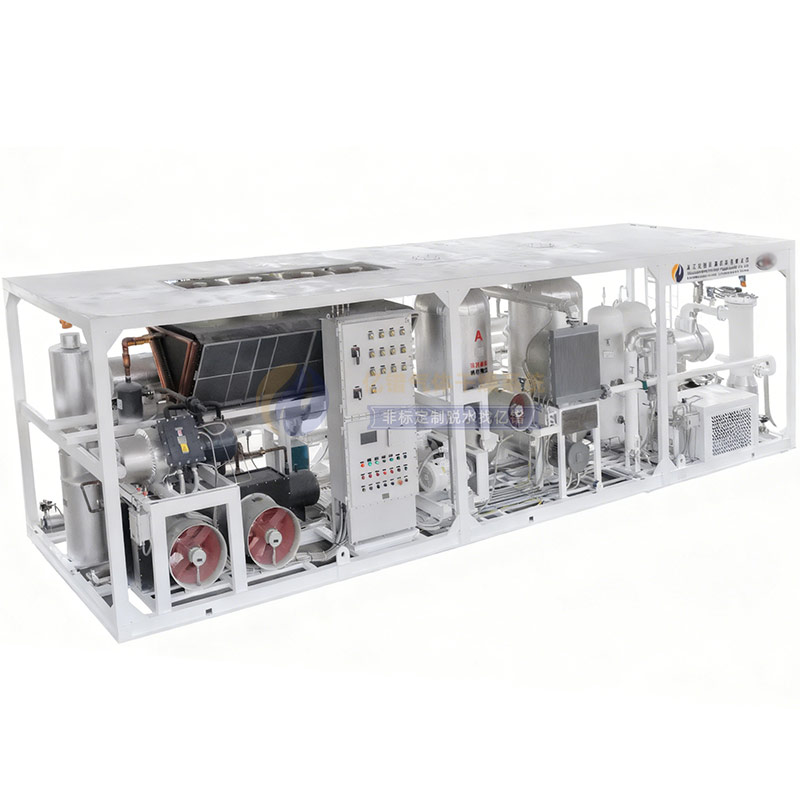
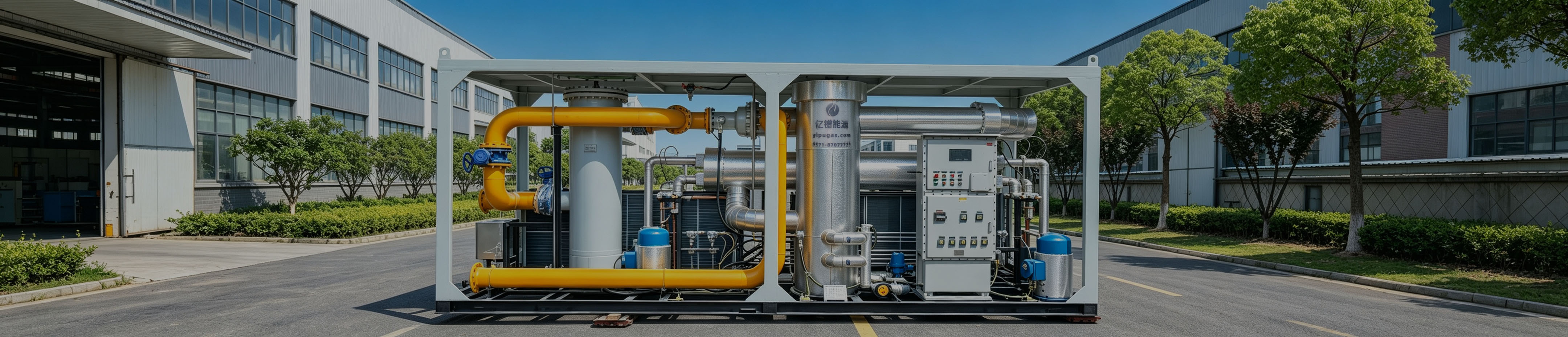
Yipu natural gas dehydration unit: efficient water removal to ensure stable gas field production and pipeline safety
Market Pain Points
As a clean energy source, natural gas faces its greatest hidden risk during extraction, processing, and transportation: the presence of moisture. Moist natural gas not only reduces heating value but also forms hydrates under low temperatures and high pressures, blocking pipelines, valves, and equipment, causing production interruptions and even safety accidents. Traditional dehydration technologies such as glycol absorption require large investments, have high operating costs, and cause serious environmental pollution; simple cooling separation cannot achieve deep dehydration requirements. Scenarios such as gas field wellheads, gathering stations, and filling stations urgently need an efficient, stable, and intelligent natural gas dehydration solution. It is precisely based on such market pain points that Yipu Energy has launched the new-generation Yipu natural gas dehydration unit, which uses molecular sieve adsorption as its core and integrates pre-cooling technology to achieve ultra-deep dehydration with atmospheric dew point ≤-60℃, thoroughly solving users' "water problems."
Unit Process
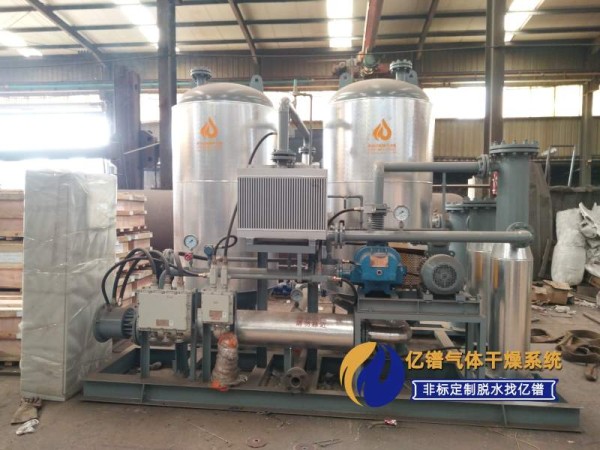
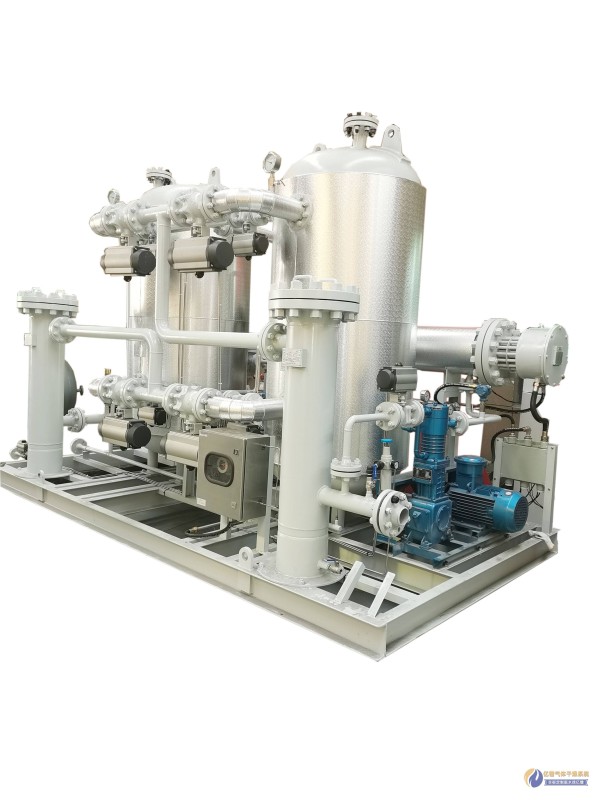
The Yipu natural gas dehydration unit (also known as the Yipu natural gas dehydration equipment) adopts an overall dual-tower alternating operation mode, with the process divided into three main stages: pre-cooling, adsorption drying, and regeneration.
Pre-cooling process: The feed natural gas first enters the separation filter to remove entrained free liquids and solid particles from the gas. It then enters the pre-cooler, where it is cooled to 25-28℃, removing most of the saturated water. The condensed water is discharged from the system through the gas-liquid separator, greatly reducing the dehydration load of the subsequent adsorption tower. This design optimizes molecular sieve adsorption efficiency and extends adsorbent life. 2. Drying process: The natural gas dehydrated by pre-cooling enters the adsorption tower (taking Tower A as an example), and the gas passes through the molecular sieve bed inside the tower. The special molecular sieve used by Yipu performs deep adsorption of residual moisture in the natural gas under low temperature and high pressure. The dried gas after water removal is finally purified through a dust filter and output from the outlet after meeting the dew point index required by the user.
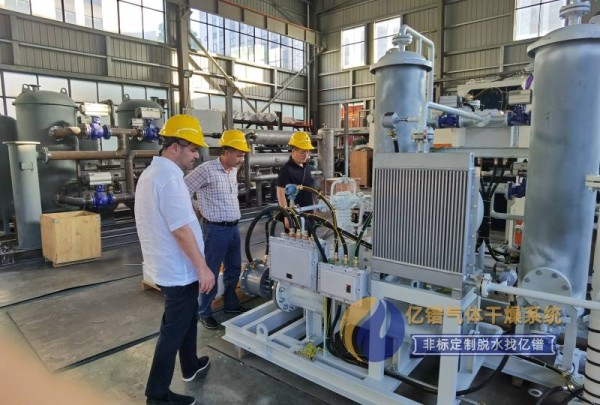
3. Regeneration process: During the adsorption period of Tower A, Tower B undergoes regeneration. The regeneration gas is taken from a small amount of associated natural gas within the system. After being pressurized by the booster, it is first heated to about 180℃ by the explosion-proof electric heater to form high-temperature regeneration gas, which enters Tower B in a countercurrent direction, heating the saturated molecular sieve and desorbing the adsorbed water. The regeneration gas rich in water vapor is discharged from the top of the tower, cooled by the air-cooled condenser, and the water is separated into the liquid storage tank, while the dehydrated regeneration gas re-enters the inlet end for recycling. Towers A and B automatically switch according to the set time (usually 8 hours), achieving continuous, uninterrupted deep dehydration of natural gas.
Working Principle
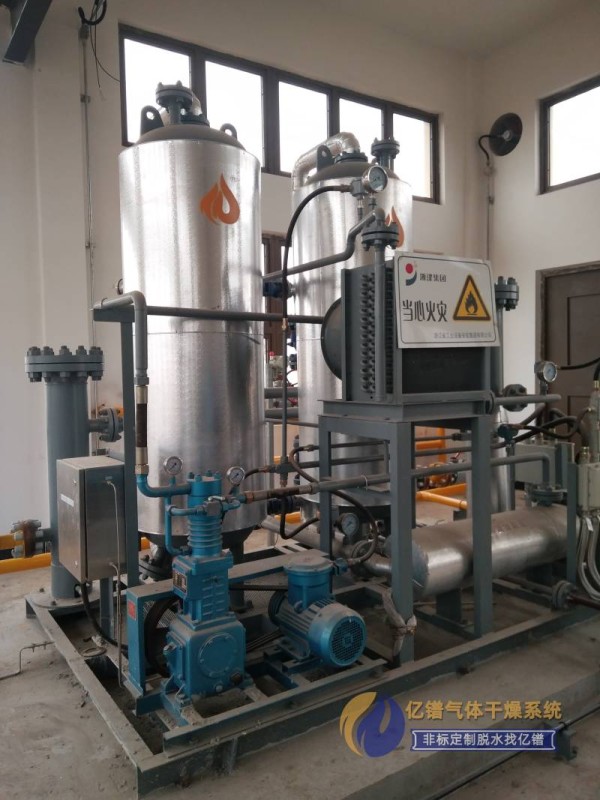
The core working principle of the Yipu natural gas dehydration unit is the synergistic effect of "cooling condensation + molecular sieve adsorption." First, the feed gas temperature is reduced from possibly as high as 50℃ to 25-28℃ through the pre-cooler. Utilizing the principle that saturated vapor pressure decreases as temperature decreases, a large amount of water vapor condenses into liquid water and is separated. This step can remove about 70%-80% of the moisture in the feed gas. Then, the natural gas dehydrated by pre-cooling enters the adsorption tower filled with new molecular sieve adsorbent. Molecular sieve is a aluminosilicate crystal with uniform micropores, whose pore diameter (about 4Å) only allows molecules smaller than water molecules to pass through, while water molecules are adsorbed by the strongly polar surface of the channels, thereby achieving deep dehydration. During regeneration, the molecular sieve is heated by high-temperature regeneration gas, providing the energy required for desorption and restoring the adsorption activity of the molecular sieve. The entire process is carried out under isobaric conditions, with the regeneration pressure basically equal to the working pressure (about 8.0MPa), known as isobaric regeneration, avoiding system pressure fluctuations. Fully automatic PLC control ensures smooth switching between the two towers.
Core Advantages
1. Ultra-low dew point, deep dehydration: The outlet gas atmospheric dew point of the Yipu natural gas dehydration unit can stably reach ≤-60℃, meeting the strictest requirements for pipeline transmission and liquefied natural gas (LNG) feed gas. After multiple on-site measurements, the dew point is stably better than the design value.
2. Zero emissions, environmental protection and energy saving: The regeneration method is isobaric semi-open countercurrent heating regeneration. The regeneration gas is returned to the inlet end after cooling and separation, achieving zero emissions. The overall energy consumption of the system is low, with total power consumption of only 127kW (including 55kW for the pre-cooler, 60kW for the electric heater, cooling fans, booster, etc.), and unit energy consumption is far lower than similar products.
3. Intelligent control, unattended operation: Adopting Siemens SMART-200 PLC and 10-inch Kunlun Tongtai touch screen, it can achieve fully automatic switching, regeneration, alarm, and remote monitoring. Users can set the cycle time (adjustable from 8-24 hours), and the system automatically optimizes the switching cycle according to the dew point. The dew point meter (optional) displays the dew point in real time, and can automatically switch to the standby tower or alarm in case of abnormality.
4. Overall skid-mounted, easy installation: The entire Yipu natural gas dehydration skid (including pre-cooler, separation filter, adsorption tower, dust filter, cooler, electric heater, booster, control cabinet, etc.) is integrated on the base, with overall dimensions of only 8500×2600×3100mm and a total weight of about 12 tons. On site, only the inlet pipe, outlet pipe, drain pipe, vent pipe, and power supply need to be connected for operation, greatly saving on-site installation time and cost.
5. Strong adaptability, wide application: The unit is not only suitable for conventional natural gas dehydration but also has mature solutions for complex gas sources such as shale gas, coalbed methane, and oilfield associated gas. The Yipu shale gas dehydration unit adds high-efficiency filtration and separation in the pre-cooling section to address the high dust and liquid content of shale gas; the Yipu coalbed methane dehydration unit optimizes the molecular sieve bed height and regeneration process to address the large fluctuations in methane content and low pressure of coalbed methane. In addition, the Yipu LNG filling station drying and dehydration system, CNG filling station drying and dehydration system, filling station natural gas dehydration unit, city pipeline network gas dehydration unit, associated gas dehydration unit, etc. have all been reliably operating at hundreds of sites across the country.
Technical Strength
Yipu Energy Technology Co., Ltd. has long focused on the field of gas separation and purification, possessing an R&D team composed of PhDs and master's degree holders, and has established industry-university-research cooperation with multiple universities and research institutes. The company has pressure vessel design and manufacturing qualifications (compliant with GB150-2024, TSG21-2016), and all core components use high-end brands: the pre-cooler uses a well-known brand compressor, and the explosion-proof electric heater, explosion-proof air-cooled cooler, and explosion-proof booster are all selected according to the GB3836 series standards. The molecular sieve uses Yipu's customized special 4A/13X composite molecular sieve, featuring large specific surface area, high adsorption capacity, and low regeneration temperature, with a service life of 3-5 years. The company also provides customers with full life-cycle services from solution design, equipment manufacturing, installation and commissioning to after-sales operation and maintenance.
Product Introduction
The Yipu natural gas dehydration unit, Yipu natural gas dehydration equipment, and Yipu natural gas dehydration skid are core products of Yipu Energy, suitable for various terminals. The unit has a design pressure of 9.2MPa, working pressure of 8.0MPa, and processing capacity of 10715Nm³/h (other specifications can be customized). The dehydration method adopts pre-cooling + molecular sieve adsorption. It is equipped with a three-stage filtration system of separation filter, dust filter, and gas-liquid separator, with a dust particle size of ≤5μm. The inlet and outlet pipe diameter is flange WN80(B)-100FM, the drain port is WN15(A)-100FM, and the vent port is WN32(A)-40RF (led to high altitude or flare).
Technical Specifications
- Working medium: Natural gas
- Design pressure: 9.2MPa
- Working pressure: 8.0MPa
- Rated flow: 10715 Nm³/h
- Inlet temperature: ≤50℃
- Ambient temperature: -37℃~50℃
- Inlet water content: Saturated water content at 50℃
- Outlet atmospheric dew point: ≤-60℃
- Dust particle size: ≤5μm
- Outlet temperature: Ambient temperature +15℃
- Inlet and outlet pressure drop: ≤0.08 MPa
- Regeneration method: Isobaric semi-open countercurrent heating regeneration, zero emissions
- Regeneration pressure: About 8.0MPa (isobaric)
- Cooling method: Air cooling
- Control method: PLC automatic control
- Adsorbent: Spherical molecular sieve (Yipu customized)
- Cycle time: 8 hours (adjustable)
- Regeneration time: ≤7.5 hours (adjustable)
- Working mode: Dual-tower alternating, continuous operation
- Filter blowdown: Automatic blowdown
- Structural form: Skid-mounted (outdoor shelter with foundation)
- Overall dimensions: 8500×2600×3100 mm
- Equipment weight: About 12000 kg
- Total power consumption: ≤127 kW