
PSA Nitrogen Generator Solutions

Focusing on Non-Standard Customization for Special Operating Conditions

Get a Quote >

Industry Pain Points

Insufficient gas source pretreatment, molecular sieve prone to failure
Insufficient purification level of ordinary systems, oil, water, and particulate matter entering the adsorption tower, causing carbon molecular sieve poisoning and pulverization, rapid decay of nitrogen purity, frequent shutdowns for maintenance, unable to meet continuous operation conditions of 8000h per year.
Weak automation and integration capabilities, difficult to match large-scale chemical plants
Local displays of most nitrogen generation equipment are rudimentary, lacking standard industrial communication interfaces and unable to interface with DCS; lacking online purity monitoring and automatic vent protection for non-conforming gas, there is a risk of non-conforming nitrogen intruding into process pipelines.
On-site loose-parts installation, long construction cycle and poor consistency
Traditional loose-parts supply, with air compressor, drying and nitrogen generation units purchased separately; heavy on-site piping and wiring workload, installation quality depends on construction personnel, and long commissioning cycle.
Poor adaptability to working conditions, unstable operation in extreme environments
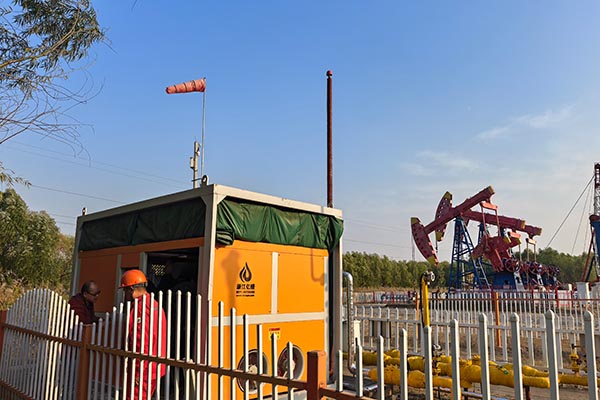
Large temperature differences and low winter temperatures in northern projects cause dew point and pressure indicators of ordinary equipment to drift under high and low temperature fluctuations; the lack of complete skid-mounted design and safety interlock, and pressure vessel and electrical safety configurations that do not meet the specification requirements of chemical projects.

System Overview

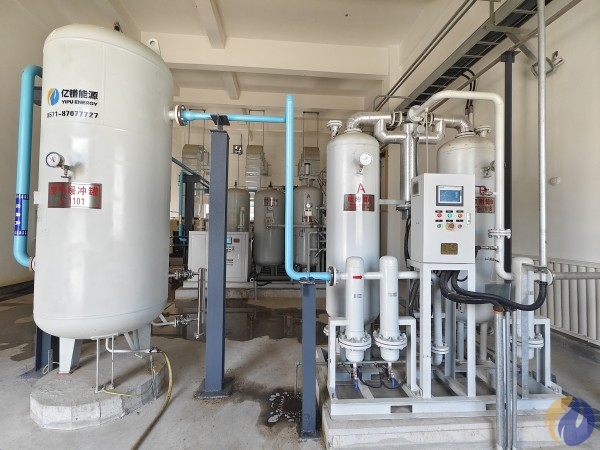
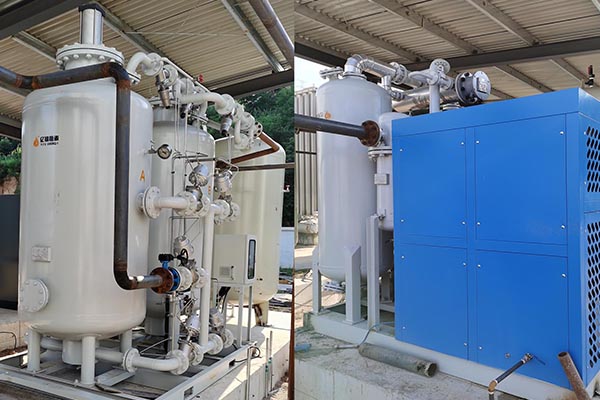
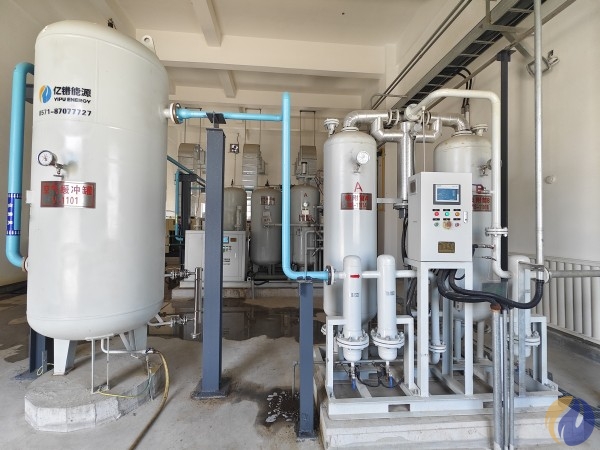
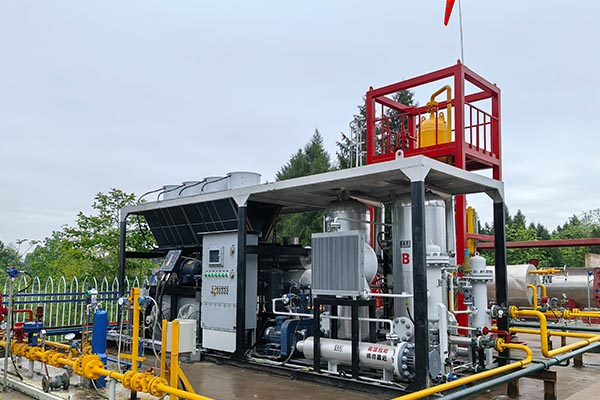
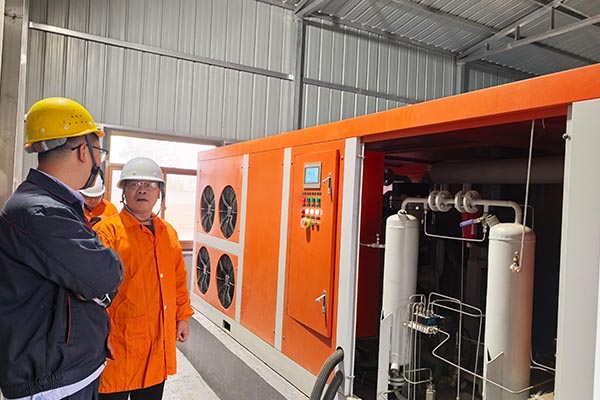
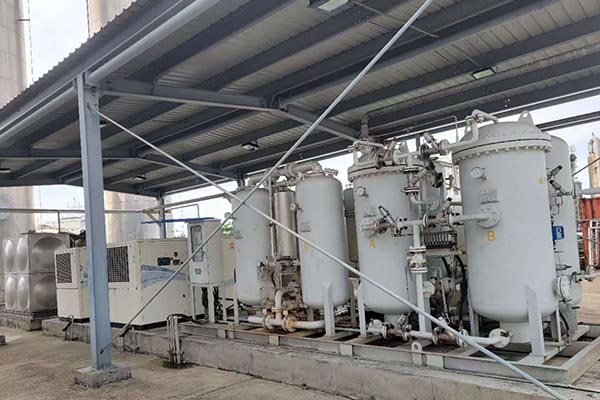
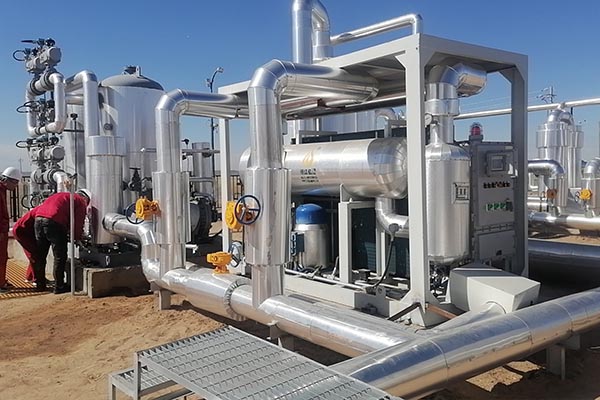
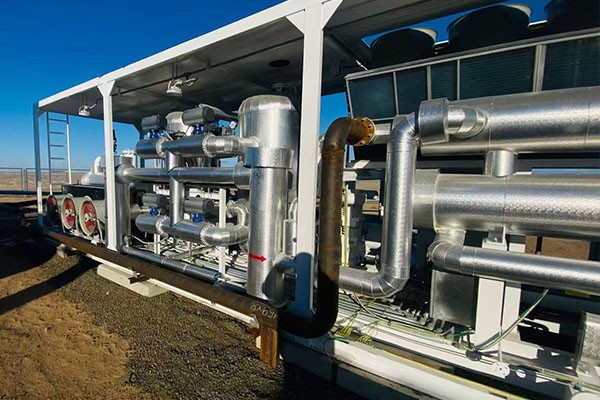
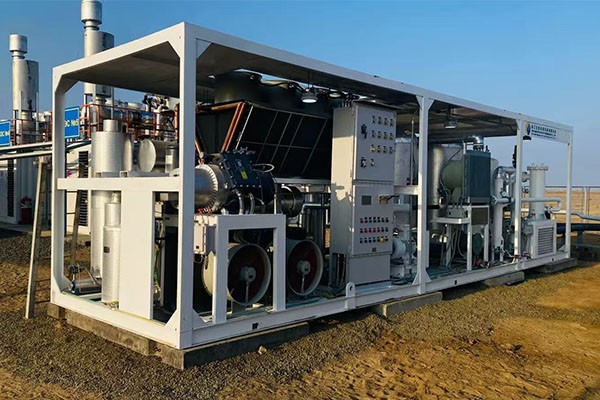
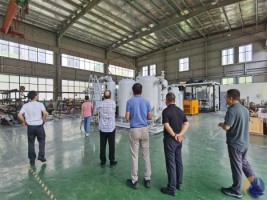
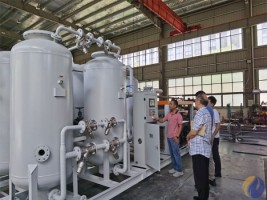
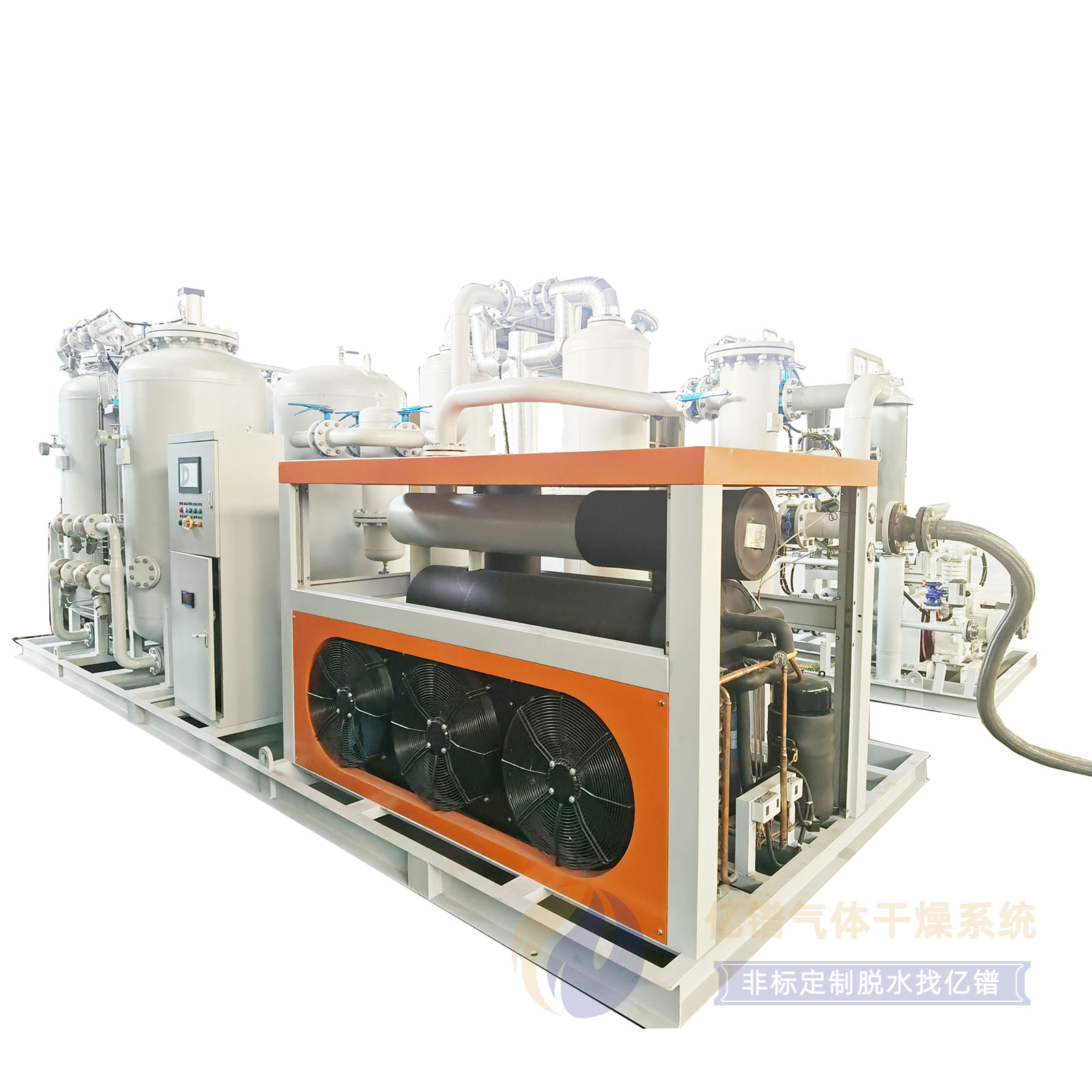
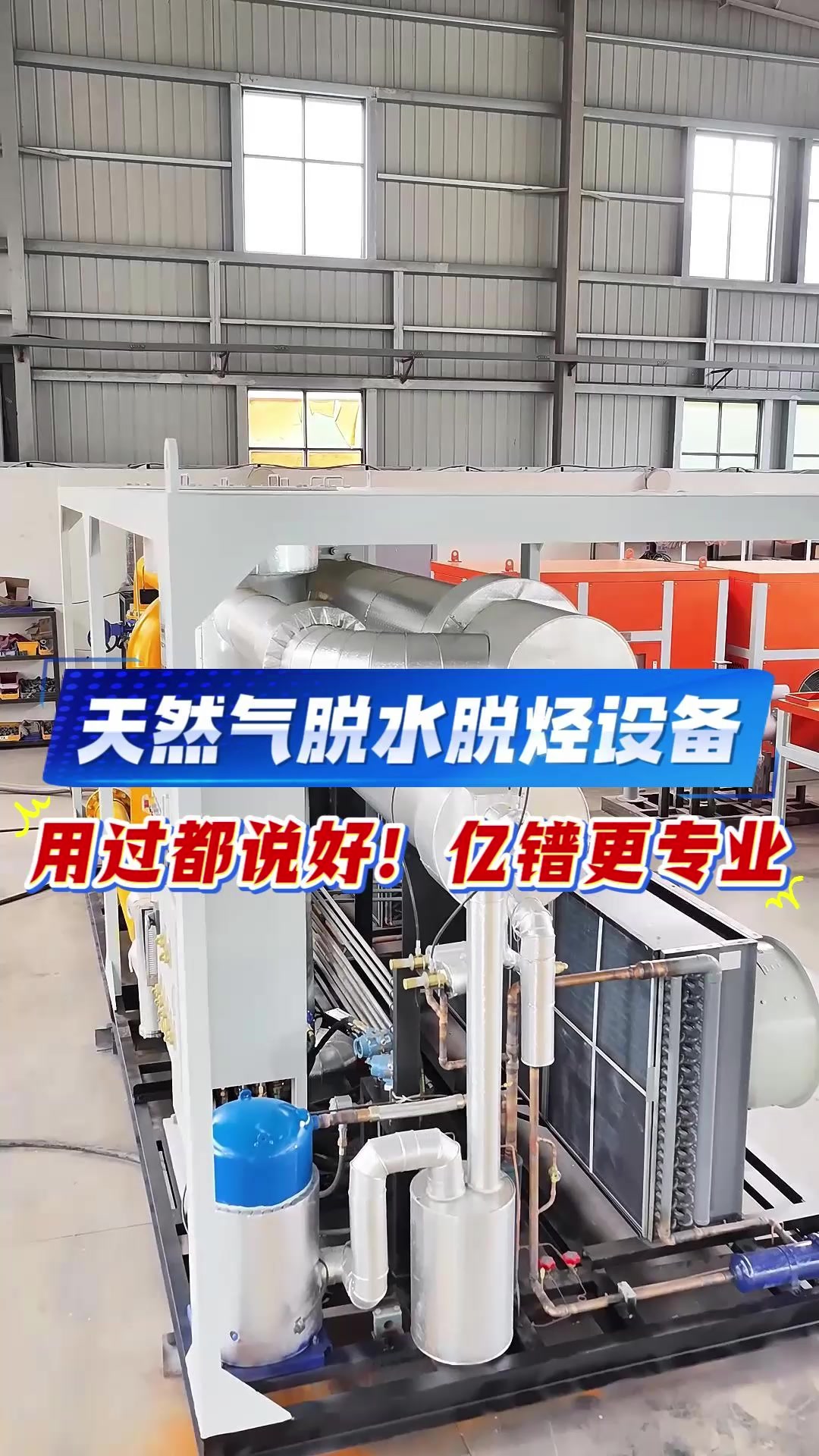
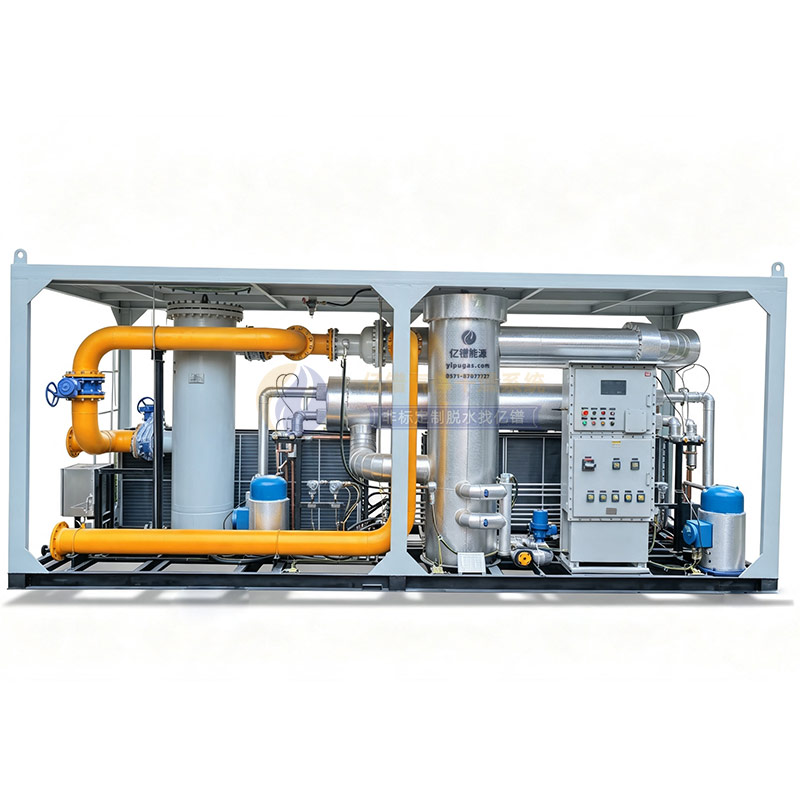
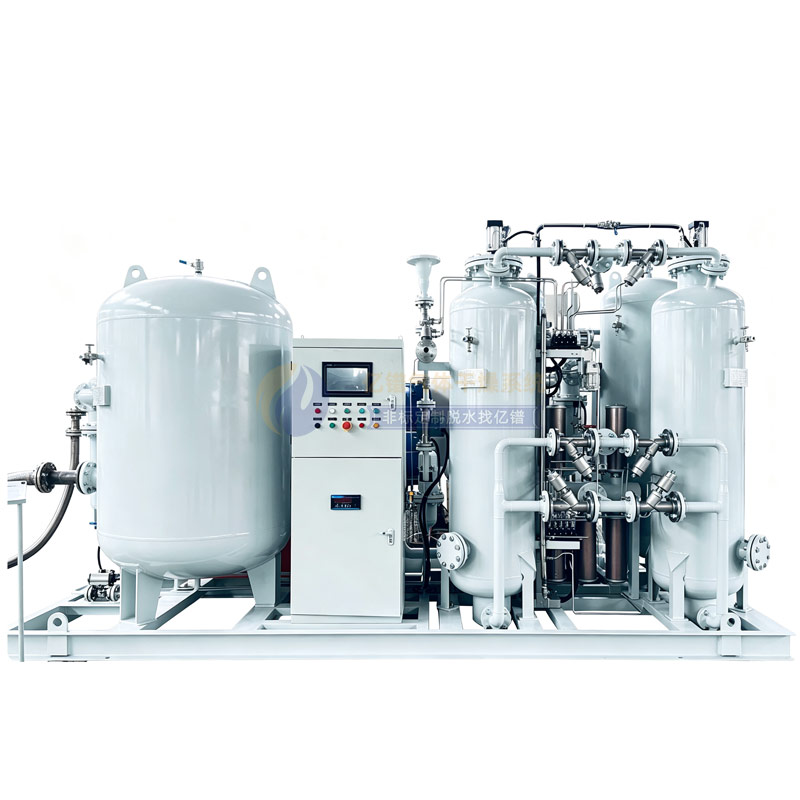
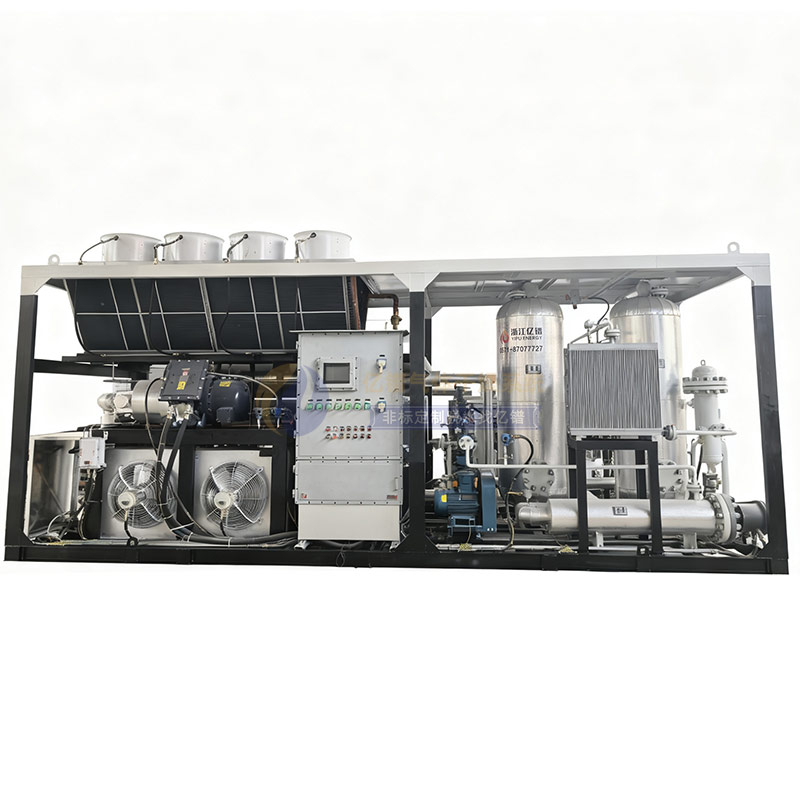
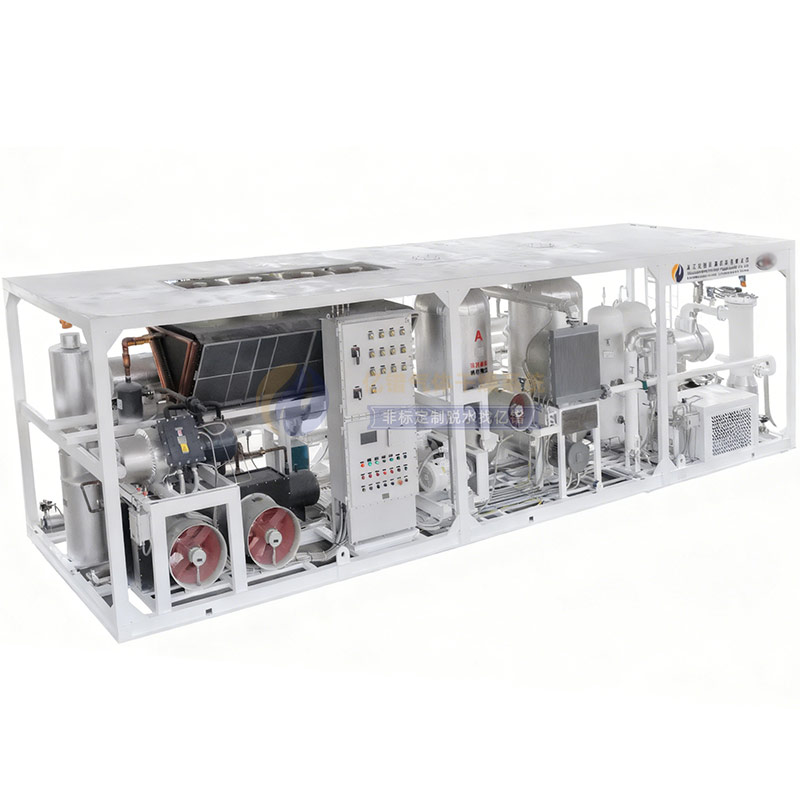
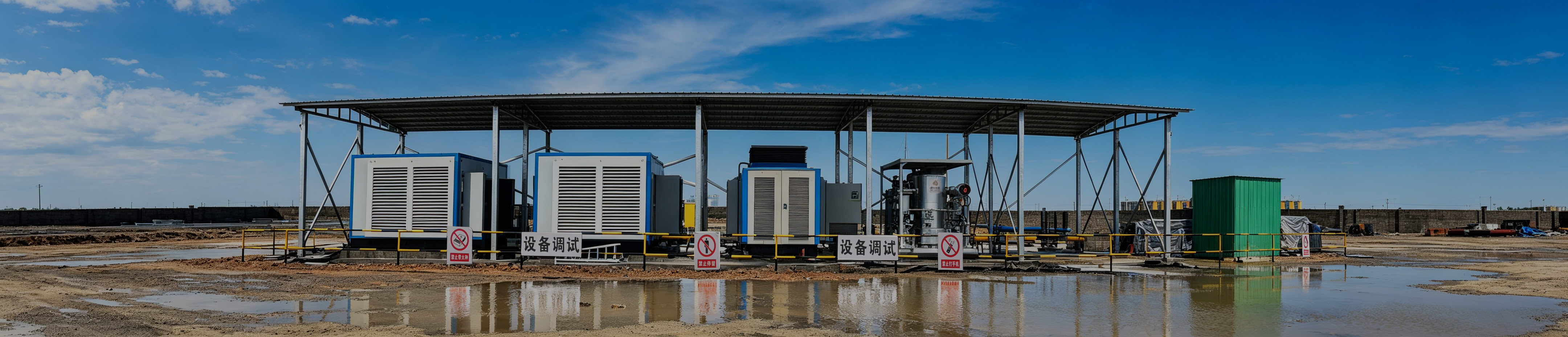
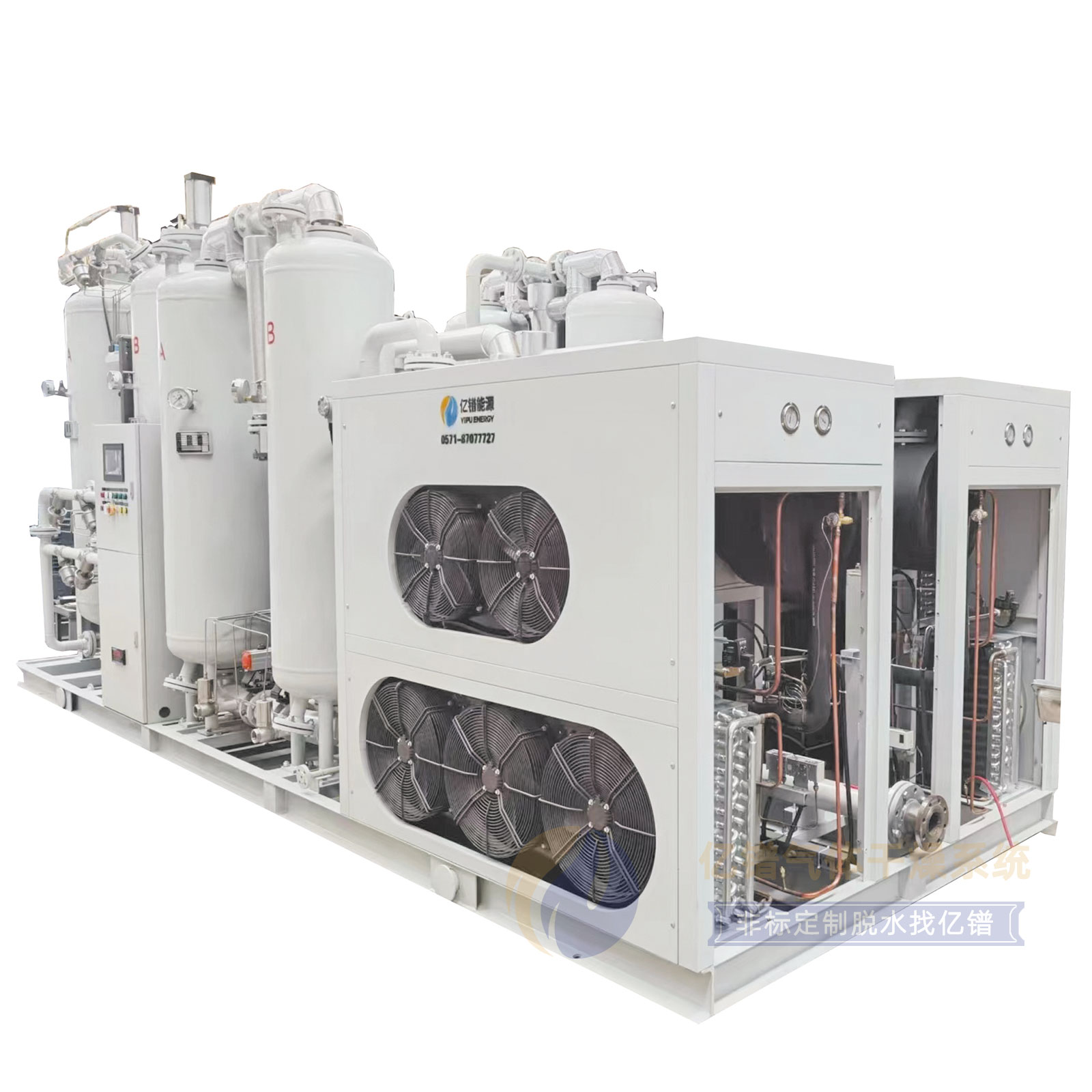
The Yipu air compression nitrogen skid-mounted system can be customized for gas production capacities of 5~2500Nm³/h, achieving integrated supply of instrument air + nitrogen. The entire set is divided into an air compressor skid, instrument air skid, nitrogen generation skid, and buffer tank, with an overall skid-mounted integrated design and a design service life of 20 years. It can produce instrument air (0.8MPaG, dew point ≤-40℃) and 5~1500Nm³/h nitrogen (purity ≥99.5%, atmospheric dew point ≤-70℃), supporting ≥8000h / year continuous operation; the system adopts Siemens PLC automatic control, touch screen local operation, is equipped with Modbus-RTU communication, and connects to the factory DCS via hardwired + RS485 dual links. It features online monitoring, fault alarms, venting of non-compliant nitrogen, automatic tightening of molecular sieves, and other functions, adapting to on-site working conditions and meeting the safe and stable gas supply requirements of chemical liquefaction units.

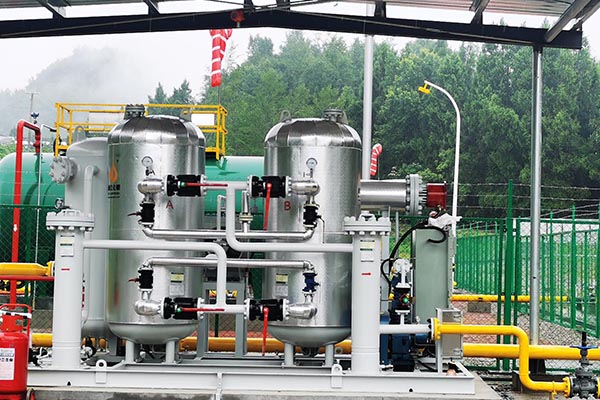
Separation mechanism: Utilizes the difference in adsorption rates of carbon molecular sieve for oxygen (smaller molecules, faster diffusion) and nitrogen (larger molecules, slower diffusion). Oxygen is preferentially adsorbed, and nitrogen is enriched in the gas phase, thereby achieving separation. Pressure Swing Adsorption (PSA): Through the cyclic process of adsorption under pressure (oxygen is adsorbed) and regeneration under reduced pressure (oxygen is released), combined with a dual-tower parallel design, continuous nitrogen production is achieved. Intelligent control: The software automatically switches the adsorption/regeneration cycles, allows adjustment of purity and flow rate, supports remote monitoring, and offers a high degree of automation (capable of unattended operation).
Solutions

SolutionsAchieved results
Equipped with multi-stage precision filtration + micro-heat / combined drying unit; filters use imported filter elements; multiple buffer tanks installed; automatic molecular sieve compaction mechanismCompressed air oil content ≤0.01ppm, dust ≤0.01μm, deep water removal; inhibits molecular sieve pulverization, extends molecular sieve life, ensures long-term purity stability
PLC + touch screen local control; hardwired upload of running/fault signals; Modbus-RTU (RS485) communication; PT100 temperature measurement, 4-20mA instrument output; online monitoring of purity and flow; audible and visual alarm + automatic venting for non-conforming nitrogenComplete data upload to DCS, remote start/stop; prevents non-conforming nitrogen from entering process pipelines, enabling unattended continuous operation
Whole unit supplied as modular skids: air compressor skid, instrument air skid, nitrogen generation skid, buffer tank; internal wiring, piping assembly and testing completed at factory; complete foundation drawings, PID drawings, and wiring schematic diagrams providedReduces on-site welding and wiring workload, shortens on-site installation and commissioning cycle, high equipment consistency
Equipment selected for ambient temperature of -18℃~+45℃; pressure vessels manufactured per GB150-2011 with inspection certificates; complete safety valves and grounding protection; electrical IP54 protection, TN-S grounding system; full set complies with chemical industry standardsAdapts to large temperature differences across four seasons in northern regions; complies with chemical project safety standards; whole-unit design life of 20 years

Technical Principle

Air compression

The air compressor compresses the air and delivers it to the air buffer tank for pressure stabilization, reducing airflow pulsation.
Air compression

Air purification

The compressed air passes through the pre-filter and precision filter to remove oil and dust, and is deeply dehydrated by the micro-heat / combined dryer to obtain low dew point, clean compressed air; the clean air is divided into two paths: one is output as instrument air, and the other is supplied to the nitrogen generation unit.

Air purification

Pressure Swing Adsorption Nitrogen Generation (PSA)

PLC program controls pneumatic valve switching, and purified air alternately enters towers A/B; carbon molecular sieve preferentially adsorbs O₂ and CO₂ from air, and N₂ molecules penetrate the adsorption tower to obtain product nitrogen; the saturated adsorption tower is depressurized, oxygen is desorbed and discharged to regenerate the molecular sieve, and the dual towers alternate to achieve continuous gas production.

Pressure Swing Adsorption Nitrogen Generation (PSA)

Product Output

The produced nitrogen enters the nitrogen buffer tank for pressure stabilization, passes through the dust filter, and purity, flow, and dew point are monitored online; unqualified nitrogen is automatically vented; qualified nitrogen is output externally after pressure regulation. The adsorption tower is equipped with an automatic molecular sieve tightening device to reduce molecular sieve pulverization caused by airflow erosion.

Product Output

Core Advantages

Integrated skid-mounted design

Complete instrument air and nitrogen generation system, modular skid-mounted factory delivery, reducing on-site installation workload; overall design life of 20 years; pressure vessels have supervision and inspection certificates.

Integrated skid-mounted design

high and stable gas quality

Multi-stage purification; instrument air and nitrogen achieve low dew point, low oil content, and low dust content; nitrogen atmospheric dew point ≤-70°C, CO₂ ≤30ppm, meeting the stringent specifications of coalbed methane liquefaction processes.

high and stable gas quality

Complete intelligent automatic control capability

PLC + touch screen operation, supporting local + DCS remote control; hard-wired + RS485 communication dual upload; online monitoring of purity, flow, temperature, and dew point; audible and visual alarm + automatic venting for non-conforming nitrogen; automatic compaction of molecular sieve.

Complete intelligent automatic control capability

High continuous operation reliability

Equipment designed for annual operation of ≥8000 hours; uses well-known brand air compressors, solenoid valves, and PLCs; comprehensive factory testing for airtightness and pressure resistance, suitable for wide temperature range on-site conditions in northern regions.

High continuous operation reliability

Adaptability to harsh working conditions

Fully matched to the on-site environment of northern China with high frozen soil, large temperature differences, and strong monsoons; circulating water system parameters precisely match the project utilities; the water-cooled air compressor system meets the project's circulating water inlet/outlet pressure, temperature, and fouling factor requirements

Adaptability to harsh working conditions

Complete Delivery and Service Guarantee

Delivery of full set of PID, electrical drawings, pressure vessel certificates, and certificate of origin documentation; warranty period is 30 months from arrival or 24 months from successful commissioning (whichever comes first), with on-site commissioning, operation training, and technical guidance provided.

Complete Delivery and Service Guarantee

Technical Strength

Standards Compliance

Standards Compliance

Equipment manufacturing complies with JB/T 6427-2001 pressure swing adsorption nitrogen generation equipment standard; pressure vessels comply with GB150-2011 and TSG21-2016 specifications; electrical complies with GB/T52261-2019 and other national and chemical industry specifications; welding inspection is performed per NB/T47013-2015.
factory inspection system

factory inspection system

Before equipment leaves the factory, valve action testing, safety valve calibration, electrical testing, full-index testing of instrument air, and full-index testing of nitrogen are completed; only qualified products can leave the factory.
Component Supply Chain Control

Component Supply Chain Control

Air compressors use Ingersoll Rand; PLC uses Siemens; solenoid valves use Nikeson; filters use imported filter elements.
Project Engineering Capability

Project Engineering Capability

Capable of complete skid-mounted engineering design for air compression-purification-nitrogen generation, and can output basic condition drawings, PID diagrams, outline drawings, and electrical schematic diagrams, suitable for large industrial projects such as coal chemical industry and coalbed methane liquefaction.
Customized Design Capability for Operating Conditions

Customized Design Capability for Operating Conditions

Targeted custom design can be carried out based on the project's local meteorological and utility parameters, including circulating water parameter matching, flange standard selection, ambient temperature and humidity, and verification of frozen soil and wind load conditions. Equipment interfaces directly match the project boundary conditions, reducing on-site design changes and modification work.
After-sales System

After-sales System

Provide on-site installation guidance, startup commissioning, and free operator training; remote telephone support for faults, on-site technical services available, and quotation for a two-year spare parts list supported.

Advantage Comparison

Comparison dimensionsYipu integrated skid-mounted air compression nitrogen generation systemTraditional decentralized procurement nitrogen generation solution
Supply modeAir compressor, purification, nitrogen generation, and buffer tank are shipped as separate skids, with internal piping and wiring completed in the factoryAir compressors, dryers, and nitrogen generators are procured from separate manufacturers and assembled, welded, and wired on site
Gas supplySimultaneously provides two media, instrument air + nitrogen, with unified indicators matched to project requirementsTwo independent systems for instrument air and nitrogen, making parameter matching and coordination difficult
Automation capabilityLocal operation via touch screen; dual-link DCS integration via hardwired + Modbus-RTU; full parameter upload of dew point, purity, and flow; automatic venting of non-compliant nitrogenEquipment from multiple manufacturers, inconsistent communication protocols, only simple alarms; difficult to fully integrate into DCS, lacking vent protection logic
On-site construction and commissioningAfter the skid is in place, only external water, power, and process pipe connections are required, resulting in a short commissioning cycleExtensive on-site piping and wiring, cross-coordination among multiple manufacturers, long construction cycle, quality affected by construction level
Equipment life and safetyUnified pressure vessel design, 20-year design life for the complete unit, full set of inspection certificates, unified electrical grounding and protectionDesign service life varies across equipment, pressure vessel certificates are scattered, and electrical grounding and protection require on-site secondary rectification
Document deliveryComplete delivery of PID drawings, foundation drawings, electrical drawings, pressure vessel inspection certificates, and origin documentation for imported componentsdocuments are scattered, each manufacturer provides their own, there are many drawing versions, and the collation workload is heavy
Warranty and serviceUnified overall responsibility by Party B,unified warranty,unified commissioning and training;single point of contact to handle all issuesMultiple suppliers; responsibility division after failure is complex and coordination is difficult
Applicable scenariosLarge continuous chemical plants such as coal chemical and coalbed methane liquefactionSmall and medium-sized simple working conditions with low requirements for automation and completeness; project

FAQ

Under standard operating conditions, the complete equipment can stably achieve an outlet dew point of -55℃~-70℃. Actual dew point indicators are affected by inlet gas composition, operating pressure, and inlet temperature; we will optimize them specifically according to the operating conditions during the solution design stage.
When the equipment operates according to specifications and the regeneration process is executed normally, the service life of the molecular sieve packing can reach 2~5 years. Good front-end pretreatment and operation and maintenance strictly in accordance with operating procedures can further extend the service cycle of the packing.
Supported. Dual-tower or multi-tower configurations enable adsorption in one tower while simultaneous regeneration occurs in the other, ensuring 24-hour uninterrupted system operation and continuous, stable gas supply without shutdowns that interrupt production.
Routine maintenance includes filter element replacement, valve condition inspection, regular instrument calibration, and routine overall inspection. The equipped PLC control system has operation monitoring and fault alarm functions, effectively reducing manual maintenance pressure.
Yes. Each unit is specially designed according to actual gas composition, processing flow rate, working pressure, ambient temperature, and site conditions, providing customized dehydration solutions for natural gas, biogas, and various industrial gas scenarios.

Send Inquiry