

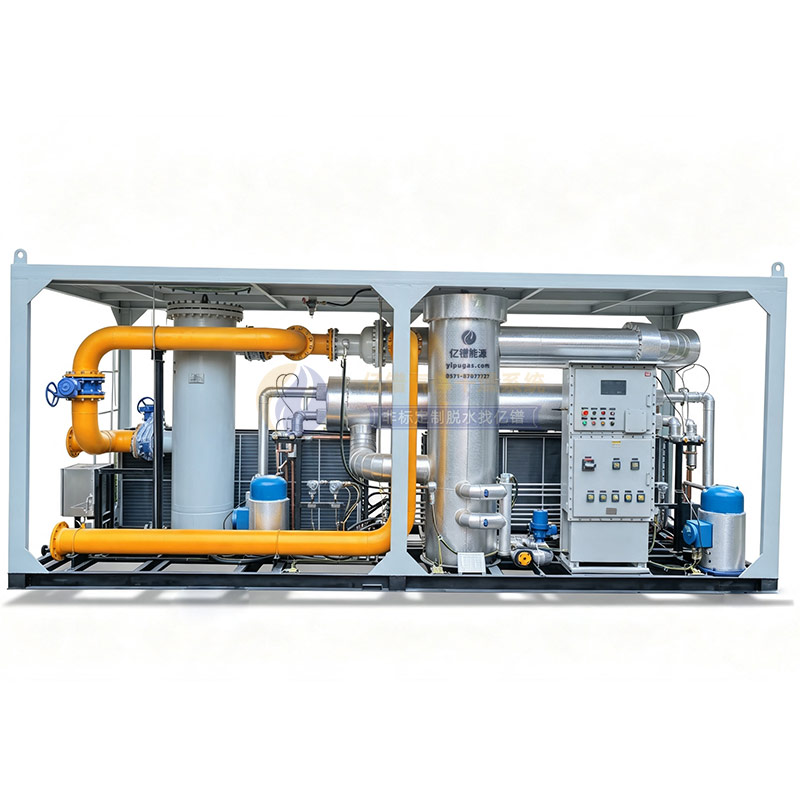
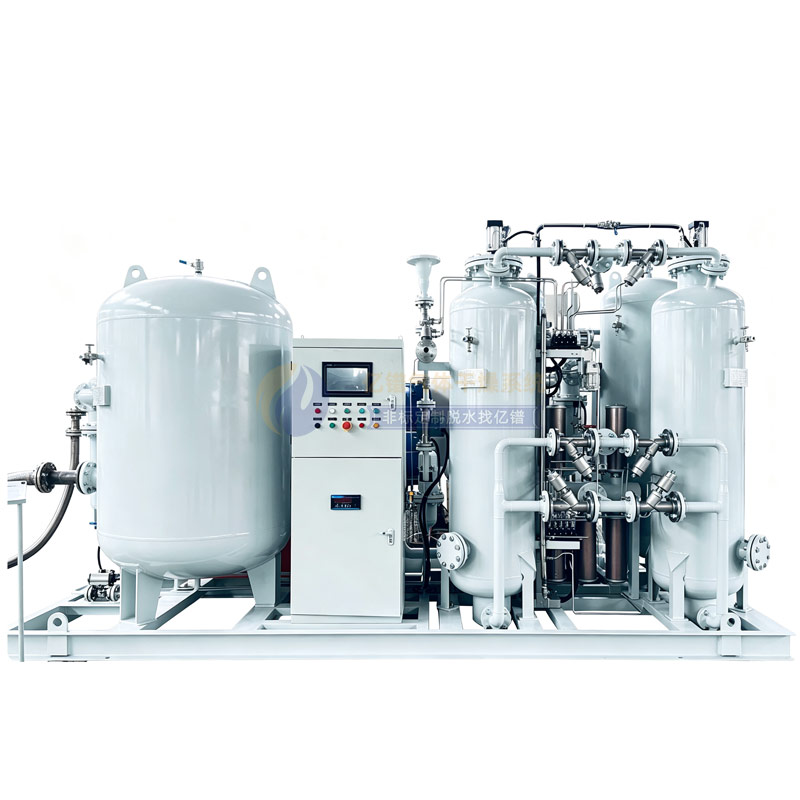
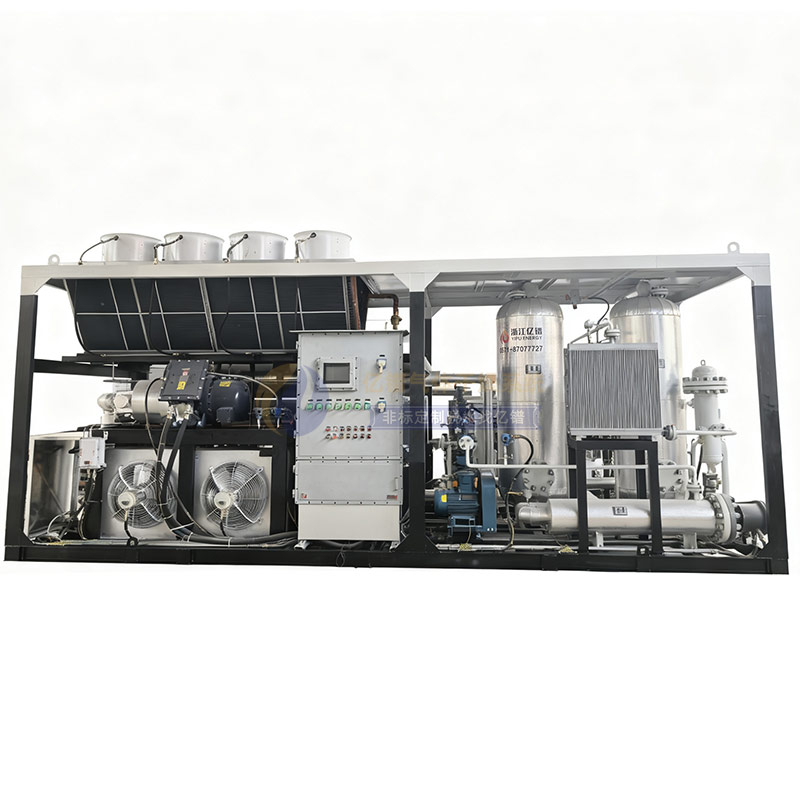
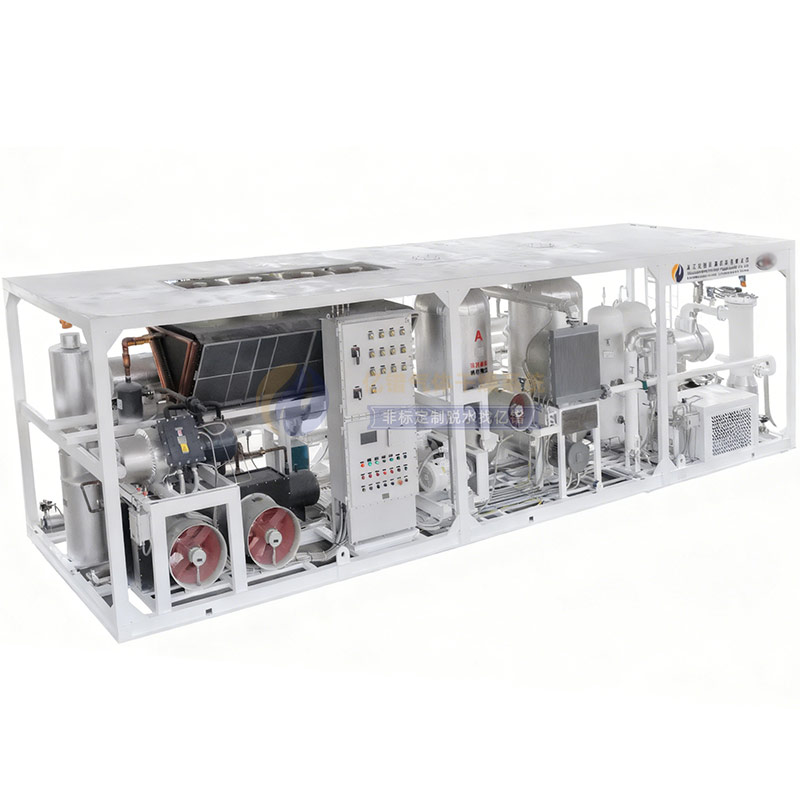
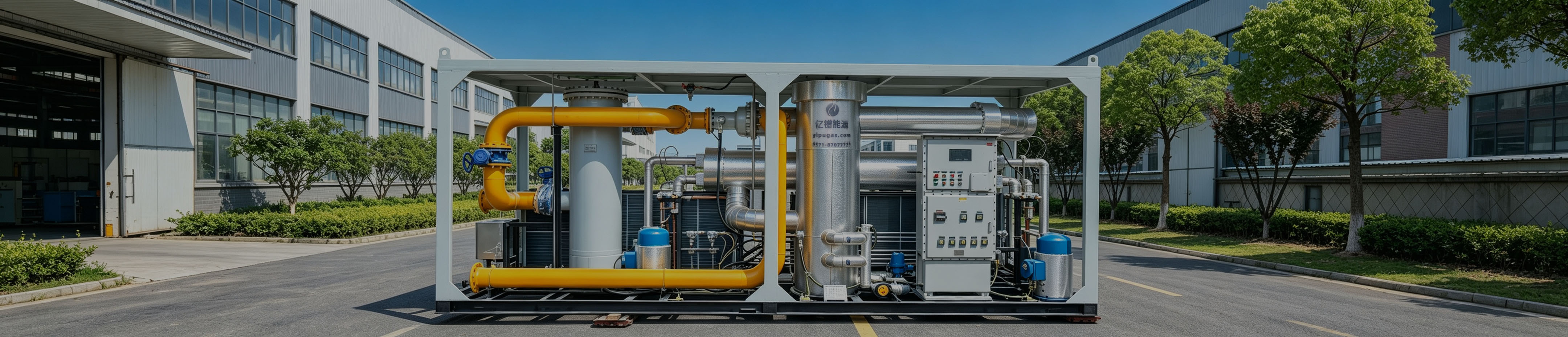
Yipu city pipeline network gas dehydration unit: 26,000 m³/day, 1.5 MPa fully automatic operation, making every cubic meter of pipeline gas dry and pure.
I. Market Pain Points
In natural gas city pipeline network transmission systems, the hazards of moisture are often underestimated. The gas sources in city pipeline networks are complex, including natural gas from dry gas fields, associated gas and coalbed methane that have undergone preliminary treatment but still contain saturated water, and even gas after LNG vaporization. When these gases enter the city pipeline network, if the water content is too high, liquid accumulation will form at low-lying points of the pipeline, which not only reduces pipeline transmission efficiency but also causes hydrate freezing and blockage. Especially in winter, key equipment such as valves, pressure regulators, and metering instruments are very easily stuck by ice crystals, leading to interruption of gas supply. More seriously, water combined with acidic components such as hydrogen sulfide and carbon dioxide in natural gas will form highly corrosive acid liquid, accelerating the corrosion and aging of pipelines and equipment and bringing safety hazards.
For gas filling stations and city gas companies, excessive dew point will also affect the liquefaction efficiency of CNG and LNG, and may even cause frequent compressor failures. Traditional dehydration methods often have high energy consumption, incomplete regeneration, or require frequent replacement of adsorbents, resulting in high operation and maintenance costs. Many city pipeline network gas dehydration units in operation have problems such as large pressure fluctuations, low automation, and the need for 24-hour manual duty. All of these urgently require deep dehydration equipment that truly understands natural gas and adapts to city pipeline network operating conditions.
II. Unit Process
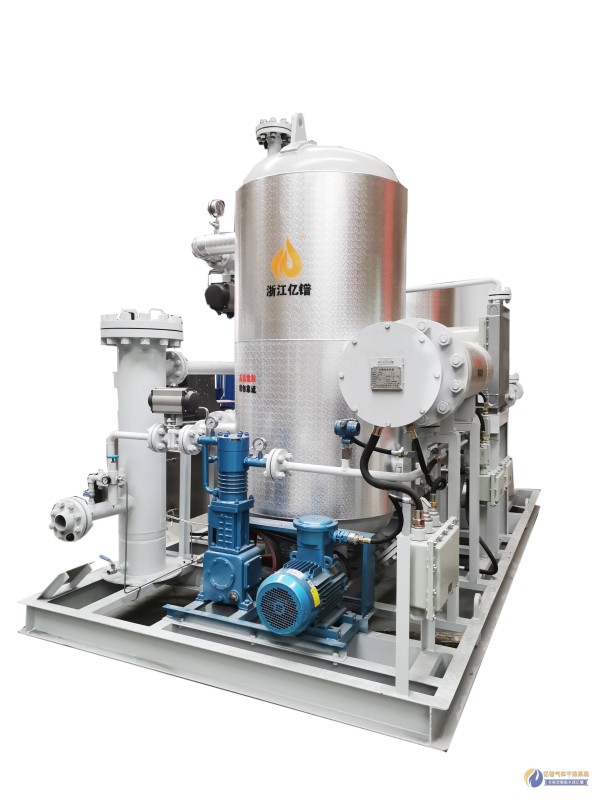
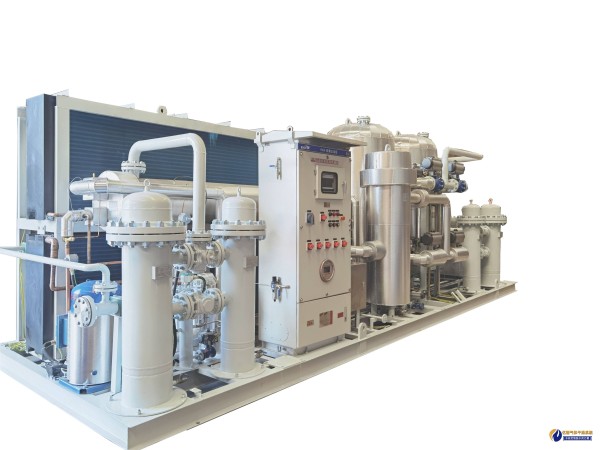
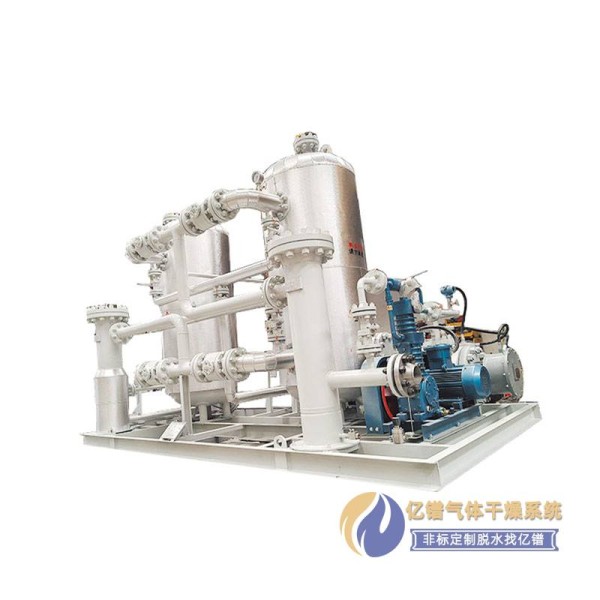
The Yipu city pipeline network gas dehydration unit adopts a dual-tower alternating adsorption and isobaric semi-open countercurrent regeneration process. The entire system consists of a gas-liquid separator, separation filter, drying towers A/B, dust filter, explosion-proof booster, explosion-proof electric heater, cooling fan, PLC explosion-proof control cabinet, valves, piping, and other components.
The process flow is divided into two main stages: adsorption and regeneration. In the adsorption stage, the incoming natural gas first enters the gas-liquid separator to remove free water droplets and liquid hydrocarbons, and then passes through the separation filter to further remove oil mist and solid particles. The clean feed gas enters from the bottom of drying tower A and flows upward through the molecular sieve bed. Under low temperature and high pressure, the molecular sieve selectively adsorbs water molecules. The dried gas flows out from the top of the tower, then passes through the dust filter to intercept any adsorbent powder that may be carried over, and finally enters the downstream pipeline network. At the same time, drying tower B is in the regeneration or cooling stage.
The regeneration stage adopts isobaric semi-open countercurrent regeneration. A small amount of dried natural gas is pressurized by the booster, enters the explosion-proof electric heater and is heated to about 180°C, then enters from the top of the regeneration tower and flows downward through the molecular sieve bed. The high-temperature gas causes the water adsorbed by the molecular sieve to desorb. The regeneration gas carrying water vapor is discharged from the bottom of the tower and enters the cooler for temperature reduction. The water vapor condenses into liquid water and is discharged into the liquid storage tank through the automatic drain valve. The separated natural gas returns to the inlet of the adsorption tower for recycling, achieving zero emissions. After regeneration is completed, the cold purge treatment can reduce the temperature in the tower to the adsorption requirement. Then the valves are switched and the roles of the two towers are exchanged to ensure continuous and uninterrupted gas supply.
III. Working Principle
The core of the Yipu city pipeline network gas dehydration unit is the molecular sieve regenerative adsorption dehydration system, whose principle is based on the strong affinity of molecular sieves for water molecules. Under normal temperature and high pressure, the cavities in the molecular sieve crystal structure have extremely strong adsorption capacity for water molecules, while hydrocarbon molecules such as methane and ethane in the gas cannot enter the micropores of the molecular sieve due to their larger diameter or weaker polarity, thereby achieving deep removal of moisture. When the molecular sieve is saturated with adsorption, the bed is heated with high-temperature gas to increase the kinetic energy of water molecules, causing them to break away from the adsorption force of the molecular sieve and desorb. The regeneration method of the unit is isobaric semi-open countercurrent regeneration. The regeneration pressure is close to the working pressure, avoiding the energy consumption and service stress caused by frequent pressure increase and decrease. Countercurrent flow ensures that the regeneration outlet end is always relatively dry gas, so that the bottom of the bed (i.e., the adsorption outlet end) is most thoroughly regenerated, thereby ensuring that the dew point after drying stably reaches below -40°C.
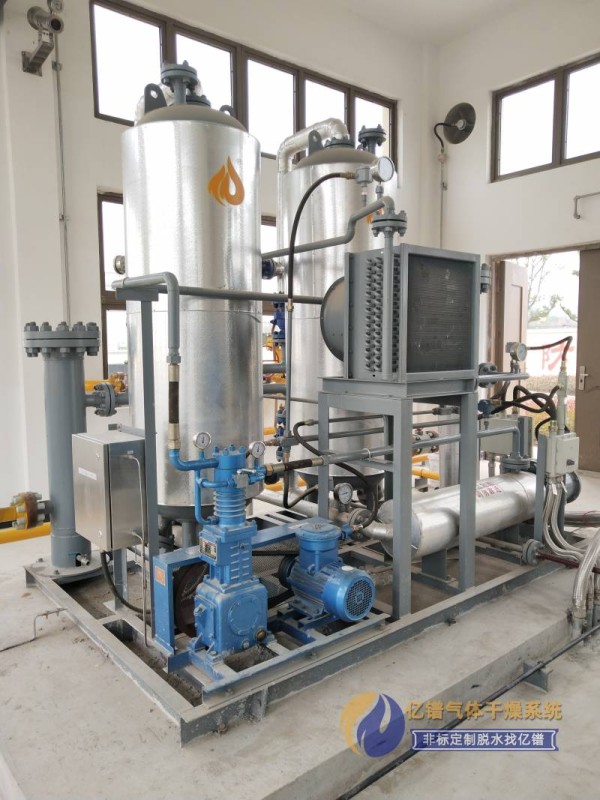
The dual-tower structure design ensures that one tower adsorbs while the other tower regenerates or stands by. Through PLC automatic control of valve switching, 24-hour continuous operation is achieved. The entire cycle is 12 hours, of which the regeneration cycle does not exceed 8 hours and is adjustable, ensuring both adsorption performance and energy utilization efficiency.
IV. Core Advantages
The Yipu city pipeline network gas dehydration unit has multiple core advantages and truly solves the urgent and difficult problems of users.
The first is deep dehydration capability: it uses high-quality molecular sieve adsorbent, with a processing capacity of 1100Nm³/h (under 1.2MPa working conditions, equivalent to 26,000 cubic meters/day), and the outlet dew point can be as low as -40°C@1.2MPa, fully meeting the water dew point index requirements for commercial gas in GB17820-2018 Natural Gas.
The second is the zero-emission energy-saving design: the semi-open countercurrent regeneration process does not discharge natural gas. All regeneration gas is recovered to the inlet after cooling and separation, with no product gas loss. Compared with traditional vent-type regeneration, it can save a large amount of natural gas. At the same time, the heater has power-off protection for excessive temperature and automatic power-on function for low temperature, ensuring precise control of regeneration temperature and greatly reducing comprehensive energy consumption.
The third advantage is high automation. The entire unit adopts Siemens SMART-200 PLC control, combined with a Kunlun Tongtai touch screen, achieving one-button start, automatic operation, and automatic blowdown. The equipment can monitor the working status of the heater, booster, and cooling fan in real time, and users can adjust operating parameters according to the on-site environment. Communication interfaces and remote start/stop interfaces are reserved, supporting the Modbus RTU protocol, and can be seamlessly connected to the SCADA system, truly achieving unattended operation.
The fourth advantage is safety and reliability. The explosion-proof grade of the unit is ExdⅡBT4, and all electrical components are explosion-proof. The electric heater has built-in multiple temperature protections, including triple over-temperature power-off protection, to prevent dry burning. The booster and cooling fan have overload shutdown protection. The regeneration pressure transmitter monitors system pressure in real time to protect key components. The equipment is designed and manufactured in accordance with GB150-2024 and TSG 21-2016 standards, and the safety of pressure vessels is fully guaranteed.
The fifth advantage is skid-mounted integration and convenient installation. The whole machine is skid-mounted, and all nozzles and cables are connected to the skid edge. On site, only the inlet, outlet, and power supply need to be connected before commissioning, greatly shortening the construction period. The filter adopts a flange structure, and the filter element can be replaced without disassembling the pipeline. The adsorption tower is provided with a loading port and a unloading port, so no pipeline needs to be disassembled when replacing the molecular sieve, making maintenance convenient and labor-saving.
V. Technical Strength
Yipu Energy has long focused on the field of natural gas dehydration and has profound R&D experience in molecular sieve regenerative adsorption dehydration systems. The company's technical team has in-depth mastery of the core technologies of natural gas dehydration processes, pressure vessel design, and automatic control systems. The Yipu city pipeline network gas dehydration unit strictly follows national and industry standards such as SY/T 0076-2023 Natural Gas Dehydration Design Code, GB150-2024 Pressure Vessels, and TSG 21-2016, with the entire process from design and manufacturing to inspection under control.
In the selection of key components, we strive for excellence: the drying tower is made of high-quality carbon steel or stainless steel with anti-corrosion treatment, and the inlet and outlet ports adopt a flat diffusion structure, effectively reducing the impact of gas on the molecular sieve and extending the service life of the adsorbent. The adsorbent adopts Yipu customized molecular sieve, with large adsorption capacity and high strength, and a designed service life of more than 20,000 hours. The valves adopt high-temperature resistant ball valves with reliable sealing. The instruments adopt domestic first-tier brands such as Hongrun and Shangrun to ensure accurate measurement.
The company is equipped with professional production lines and testing equipment, and all pressure vessels hold special equipment manufacturing licenses. Every Yipu city pipeline network gas dehydration unit must undergo strict pressure tests, airtightness tests, and performance tests before leaving the factory to ensure successful one-time commissioning on site. At the same time, we provide comprehensive after-sales service, including technical consultation, installation guidance, commissioning training, and free maintenance during the warranty period.
VI. Product Introduction
The Yipu city pipeline network gas dehydration unit is deep dehydration equipment specially designed for scenarios such as city gas pipeline networks, gas filling stations, and LNG/CNG mother stations. It is also suitable for LNG filling station drying and dehydration systems, CNG filling station drying and dehydration systems, as well as oilfield wellhead gas drying and dehydration systems, associated gas dehydration units, coalbed methane dehydration units, and other occasions. According to different inlet gas conditions, we can customize natural gas dehydration units, natural gas dehydration equipment, or natural gas dehydration skids with different processing capacities and different pressure levels.
The product model is YNG4-1100-1.0-1.2-AM, with a processing capacity of 1100Nm³/h (1.2MPa), working pressure of 1.0-1.2MPa, design pressure of 1.5MPa, adopting molecular sieve adsorption dehydration process, and dual-tower alternating continuous operation. The inlet gas water saturation is as low as 10°C@1.2MPa, and the outlet dew point is ≤-40°C@1.2MPa. The equipment pressure drop is ≤50kPa, which will not affect the downstream pipeline network pressure. The power is ≤25kW, and the power supply is AC380V/50Hz, which can adapt to the power distribution conditions of most city gas stations.
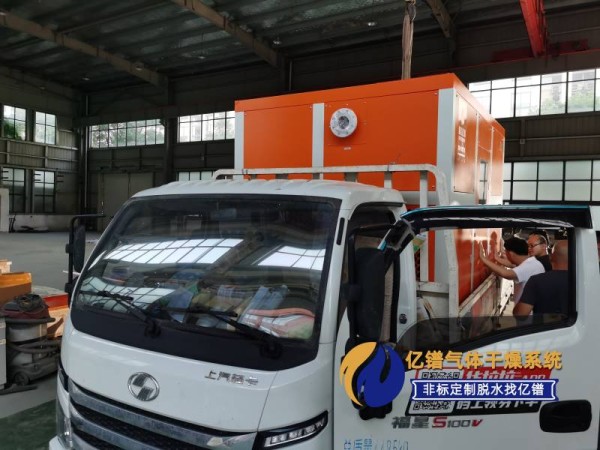
The unit is skid-mounted with overall dimensions of 3200×2100×2600mm, occupying minimal space. All piping, valves, instruments, and electrical control systems are integrated within the skid, facilitating transportation and enabling rapid commissioning after lifting into position. The equipment features an embossed aluminum plate insulation enclosure, which is aesthetically pleasing, durable, and capable of stable long-term operation in harsh environments.
VII. Technical Specifications
- Equipment Model: YNG4-1100-1.0-1.2-AM
- Working Medium: City pipeline network natural gas
- Processing Capacity: 1100Nm³/h@1.2MPa (equivalent to 26,000 m³/day) - Working Pressure: 1.0-1.2MPa; Design Pressure: 1.5MPa
- Working Temperature: 35℃; Outlet Temperature: Ambient temperature +15℃
- Inlet Water Content: 10℃@1.2MPa (i.e., water dew point below 10℃)
- Outlet Dew Point: ≤-40℃@1.2MPa
- Dehydration Method: Adsorption dehydration (molecular sieve)
- Operating Mode: Dual-tower alternating, continuous operation
- Regeneration Method: Isobaric semi-open countercurrent regeneration
- Regeneration Temperature: 180℃; Cooling Method: Air cooling
- Adsorbent: Molecular sieve (Yipu custom)
- Equipment Pressure Drop: ≤50kPa
- Working Cycle: 12h; Regeneration Cycle: ≤8h (adjustable)
- Inlet/Outlet Pipe Diameter: Flange WN40(A)-16RF
- Explosion-proof Rating: ExdⅡBT4
- Equipment Power: ≤25kW
- Power Supply: AC380V/50Hz
- Structural Form: Complete unit skid-mounted
- Overall Dimensions: Approx. 3200×2100×2600mm
- Control Mode: PLC automatic control; Blowdown Method: Automatic blowdown
Utility Requirements: Power supply 380V/50Hz; Instrument air 0.6~0.8MPaG (optional).
The unit design strictly complies with the following standards:
- GB12241-2021 "Safety Valves"
- GB17820-2018 "Natural Gas"
- GB/T8163-2018 "Seamless Steel Pipes for Fluid Transportation"
- GB150-2024 "Pressure Vessels"
- TSG 21-2016 "Supervision Regulation on Safety Technology for Stationary Pressure Vessels" - GB3836.1-2021 "General Requirements for Explosion-proof Electrical Equipment for Explosive Atmospheres" - SY/T 0076-2023 "Design Specification for Natural Gas Dehydration" - GB50156-2021 "Code for Design and Construction of Automobile Filling Stations" - GB50183-2020 "Fire Protection Code for Petroleum and Natural Gas Engineering Design" - GB50058-2014 "Code for Design of Electrical Installations in Explosive and Fire Hazardous Environments"