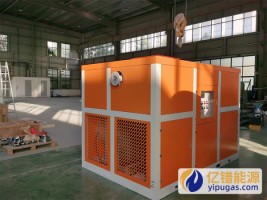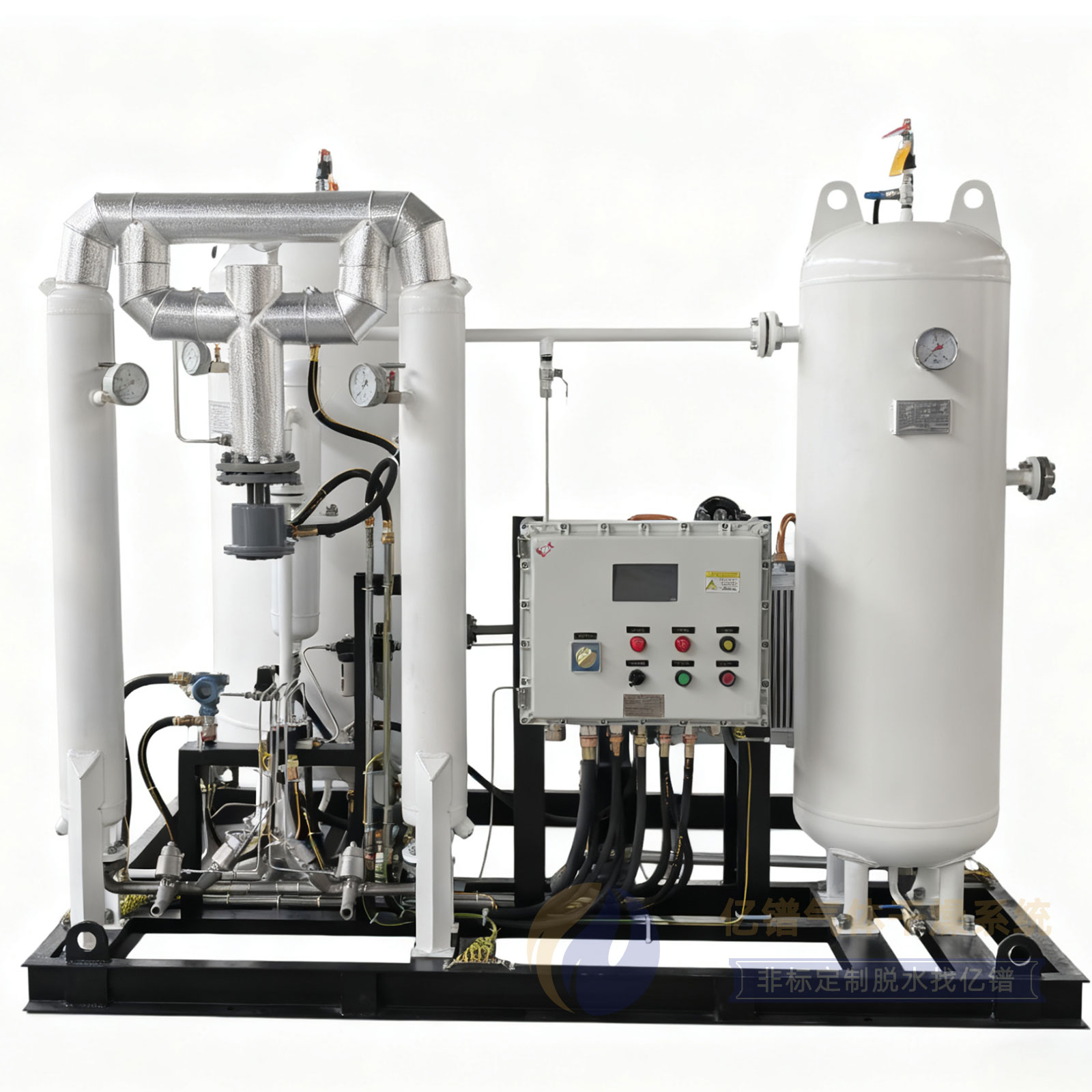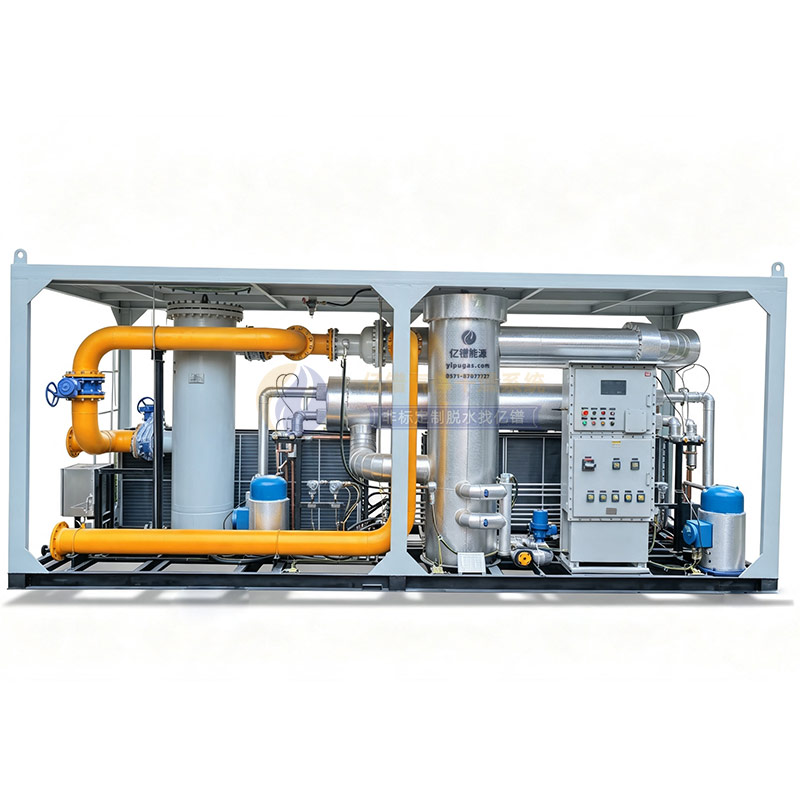
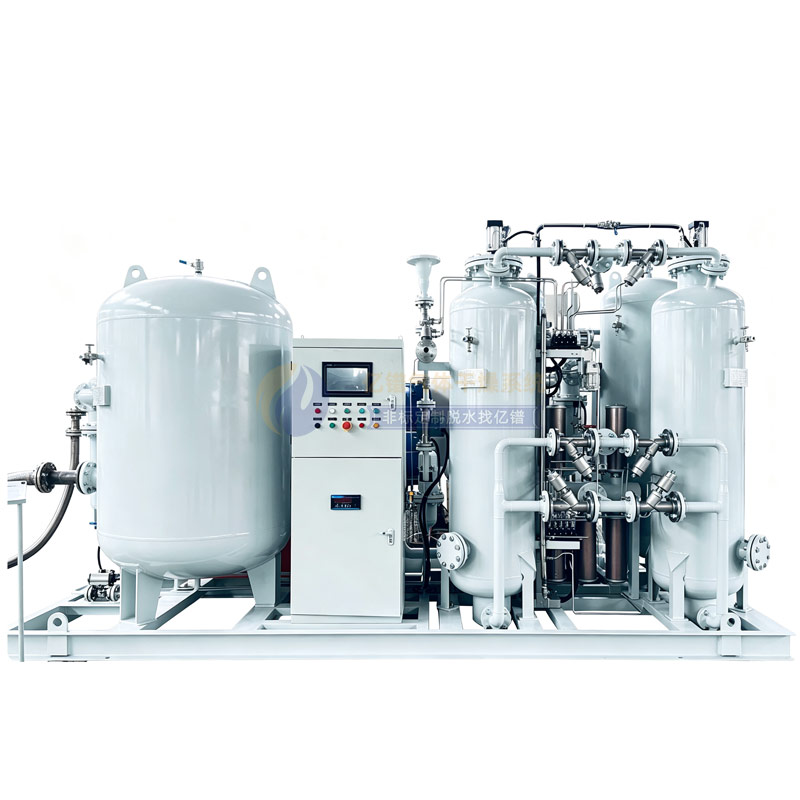
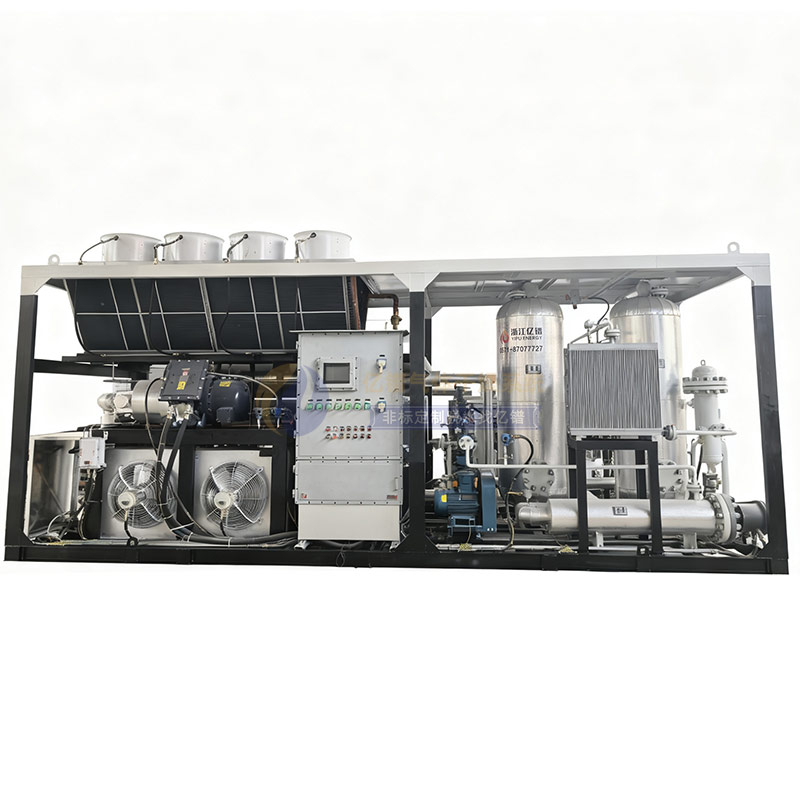
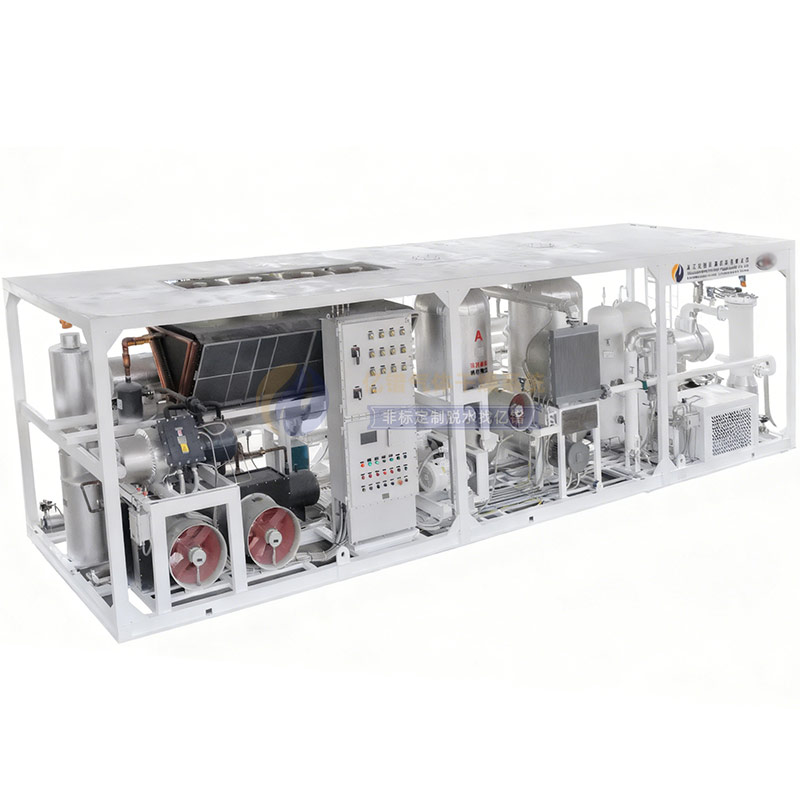
System Overview


System Overview
| Industry Pain Points | Yipu Corresponding Solutions |
|---|---|
| Heat exchange component welds prone to leakage, fault shutdown | Adopts punched hole + top flaring process evaporator, equipped with longitudinal tie-rod fixing structure, improves welding strength, resists airflow excitation and pressure impact, reduces leakage risk from structural root causes |
| Incomplete gas-liquid separation, gas carries water | Adopts three-stage separation structure: direct collision + low-speed centrifugation + 150-mesh stainless steel wire mesh demisting, can remove 5μm tiny droplets, liquid water separation efficiency 99% |
| Poor working condition adaptability, unstable operation under high and low parameter conditions | Customized by model: large flow high pressure conditions use water cooling + SS316 stainless steel heat exchanger; low pressure small flow conditions use air cooling copper heat exchanger; parameter design reserves sufficient design margin, adapts to wide inlet temperature and pressure ranges |
| Incomplete protection mechanism, large cooling loss, components easily damaged | Siemens PLC control system, equipped with refrigerant high/low pressure and current overload multiple protection; uses Armstrong foam flame-retardant insulation material to reduce cooling loss; full set of imported famous-brand refrigeration core components ensure stable operation |
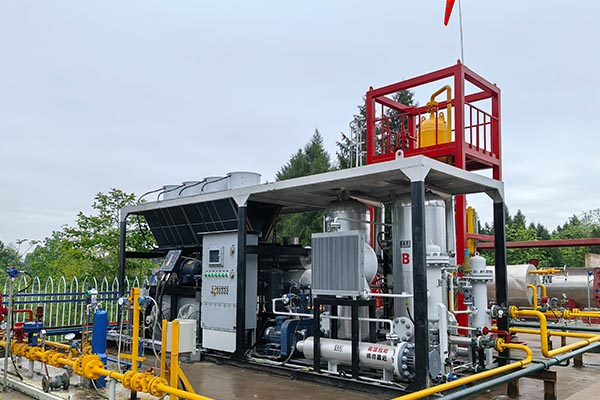
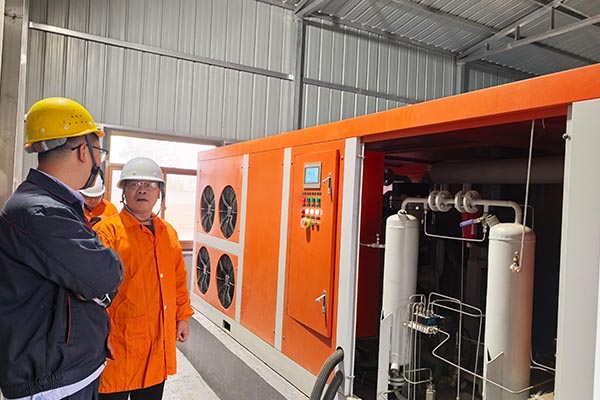
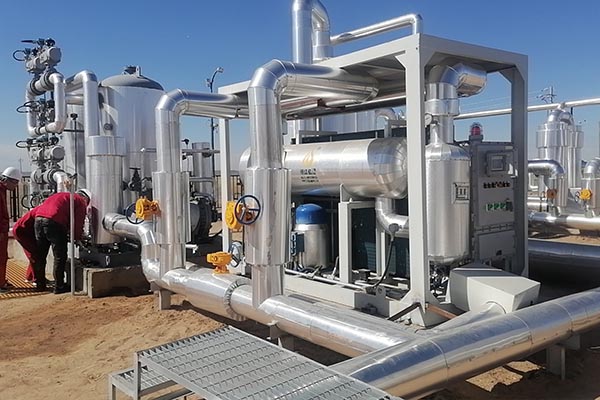
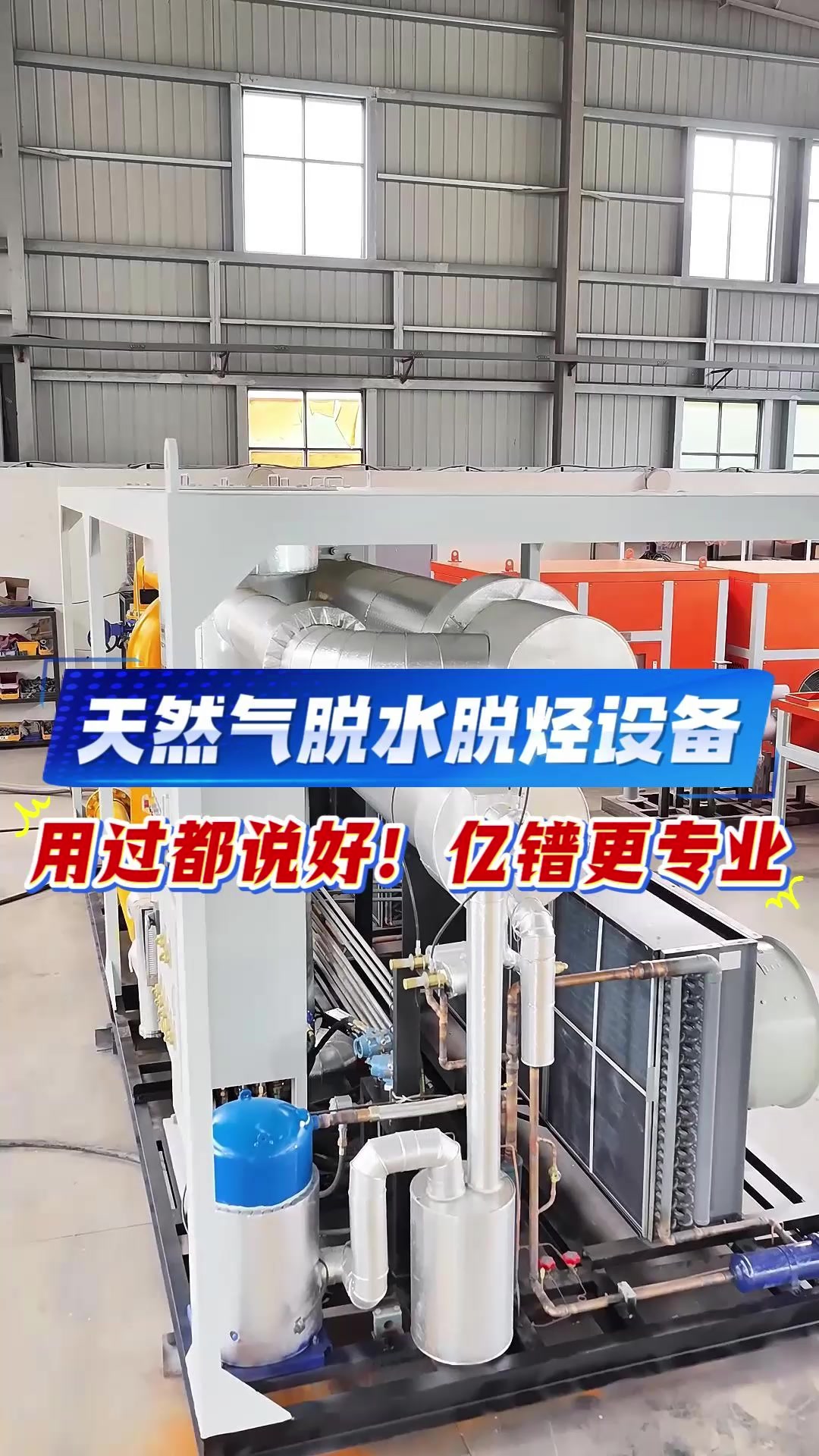
The air to be processed first flows through the precooling heat exchanger for pre-cooling, then enters the evaporator for forced cooling, where the saturated water vapor in the air is cooled and condensed into liquid water droplets; the gas-liquid mixed fluid enters the three-stage gas-liquid separator to complete gas-water separation; the separated liquid water is discharged through an automatic + manual dual-mode drainage system; the dehumidified dry air flows back to the heat exchanger for reheating, and finally outputs a dry air source to the outside.
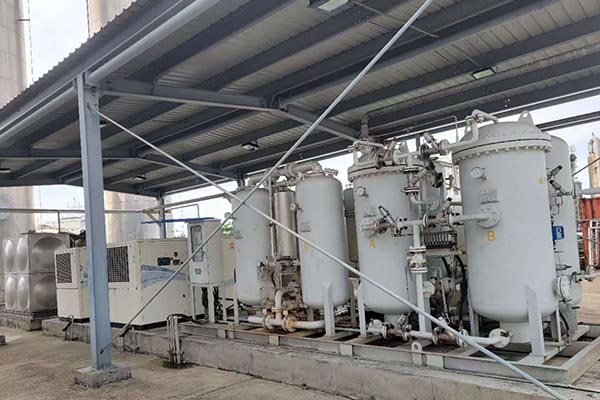
Adopts a three-stage separation structure of direct impingement separation + low-speed centrifugal separation + 150-mesh stainless steel wire mesh demisting. First, airflow impingement is used to intercept large droplets above 10μm; then, the flow velocity is reduced to gather droplets through centrifugal action; finally, a 150-mesh stainless steel wire mesh captures mist particles as small as 5μm, removing 99% of liquid moisture and efficiently preventing gas from carrying liquid water into downstream process systems.

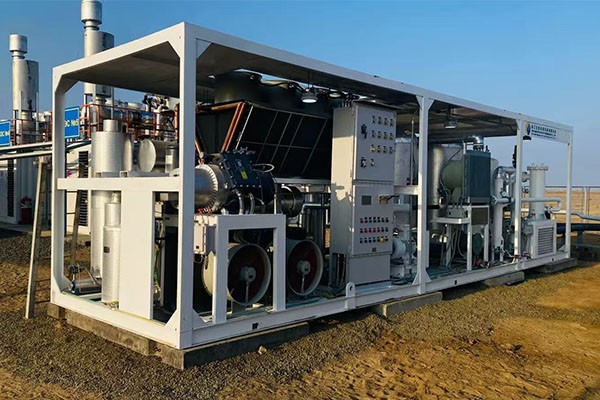
Powered by a well-known brand refrigeration compressor to drive refrigerant circulation and achieve continuous refrigeration and heat exchange; equipped with a hot gas bypass mechanism that automatically adjusts when the gas load fluctuates, ensuring stable evaporator refrigeration performance and avoiding abnormal conditions such as low-temperature freezing.

The whole machine's Siemens PLC system collects operating parameters such as temperature and pressure in real time and completes monitoring of the equipment's operating status; at the same time, it executes protection logic such as refrigerant high/low pressure and current overload, triggering protection when abnormalities occur, ensuring safe and continuous operation of the entire unit.

Hole-piercing and flaring welding process + tie-rod vibration-resistant fixation, eliminating heat exchange core leakage failures caused by airflow impact and pressure fluctuations.

Three-stage combined separation, capable of removing 5μm mist particles, with a liquid water separation efficiency of 99%, and the moisture content of the output gas is stable and controllable.

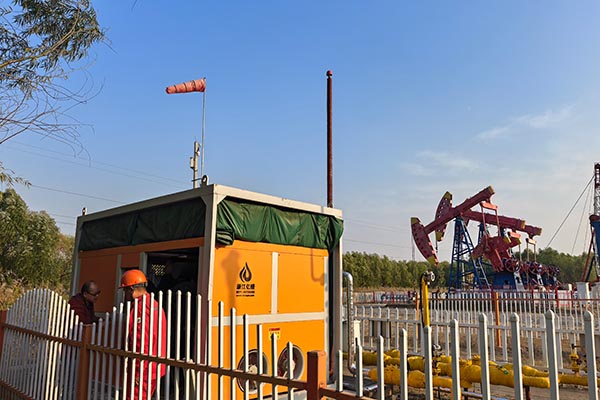
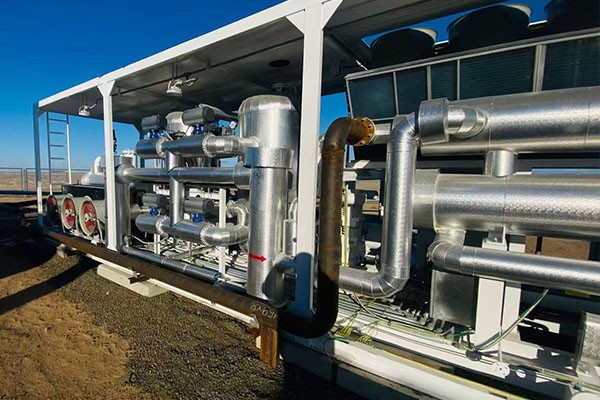
Supports air cooling / water cooling, with two heat exchange materials: 316 stainless steel / red copper, covering multiple scenarios from low pressure and small flow to high pressure and large flow.

Siemens PLC control, with refrigerant high/low pressure and current overload protection, supports local/remote switching, and real-time display of multiple parameters.

Armstrong flame-retardant foam insulation cladding reduces cooling loss and lowers overall unit energy consumption.

Core refrigeration components are selected from internationally renowned brands, with design parameters reserving ample margin, adapting to 7×24-hour continuous operation duty.







| Project | Conventional ordinary refrigerated dryers | Yipu air refrigerated drying unit |
|---|---|---|
| Evaporator reliability | Ordinary welding process, airflow vibration easily causes weld leakage, many failures | Punched-hole flaring + tie-rod anti-vibration fixing, impact and vibration resistant, leakage risk greatly reduced |
| Gas-liquid separation capability | Single/two-stage separation, only removes large droplets above 10μm, easily carries water mist | Three-stage separation structure, can capture 5μm mist droplets, water separation efficiency 99% |
| Working condition adaptability | Narrow adaptation range, large pressure loss and effect attenuation under high-temperature and low-pressure conditions | Air-cooled/water-cooled dual types, stainless steel/copper materials optional, wide pressure and temperature adaptability, design leaves ample margin |
| System protection functions | Basic start-stop control, lacks complete high/low pressure and overload protection | PLC intelligent control, multiple protections for refrigerant high/low pressure and current overload, local and remote dual modes |
| Cooling capacity loss | Ordinary insulation material, large cooling loss, high energy consumption | Armstrong flame-retardant foam insulation, low cooling loss, more energy-saving operation |
| Pressure-bearing and compliance | Some products are not manufactured according to pressure vessel codes, posing safety hazards | Pressure-bearing components designed according to GB150 and pressure vessel regulations, complete documentation, meeting project acceptance requirements |
Xiaoxu Group Site Customer Acquisition focuses on network customer acquisition pipeline construction, always adhering to the values of "Do what you say, simple and trustworthy", striving to become the first brand in internet marketing execution, insisting on content as the center, through group sites + media account groups + short video groups to clearly tell enterprises: Who am I? Who really needs it? Why should they buy from you instead of from the neighbor? Always adhering to the marketing co