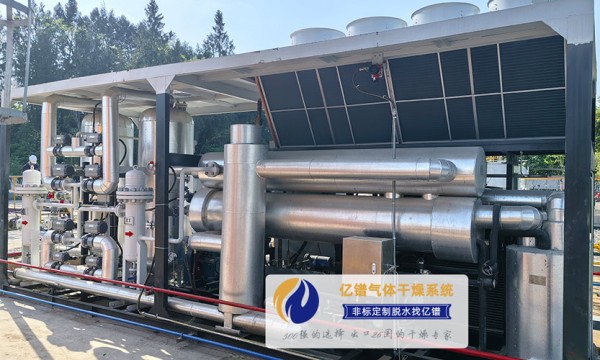

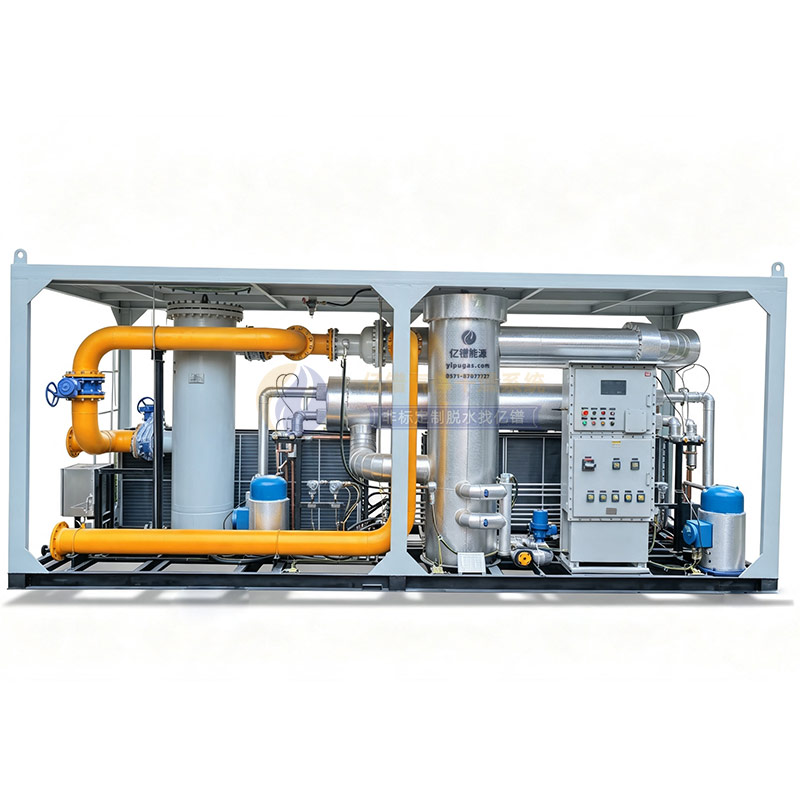
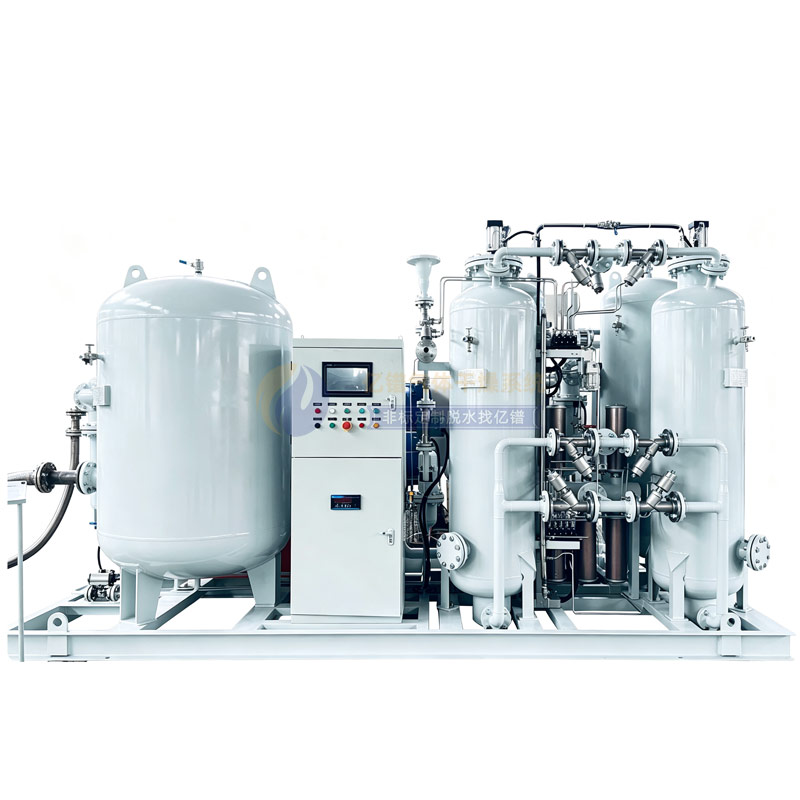
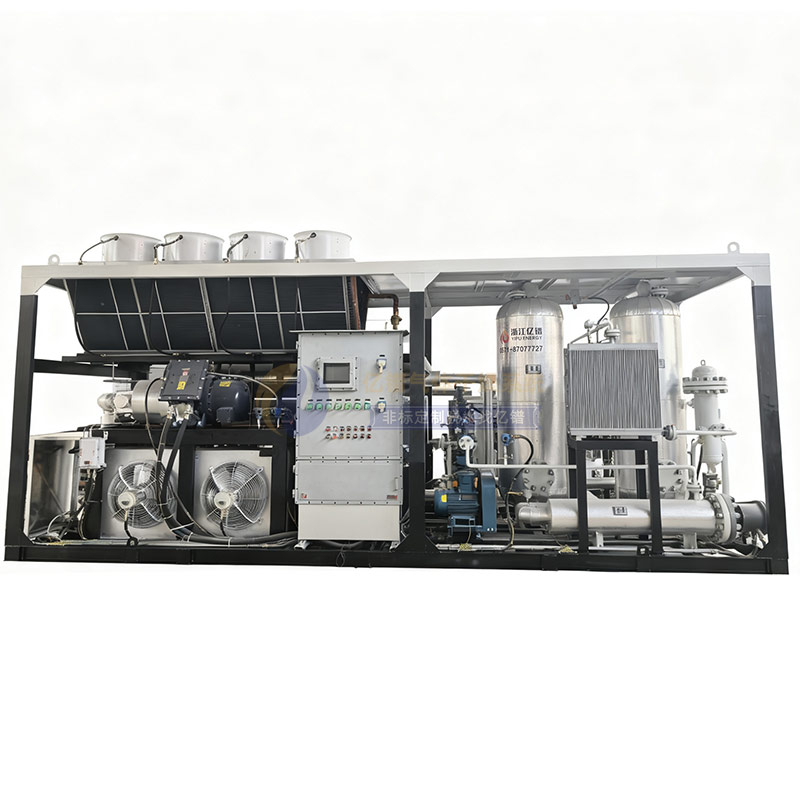
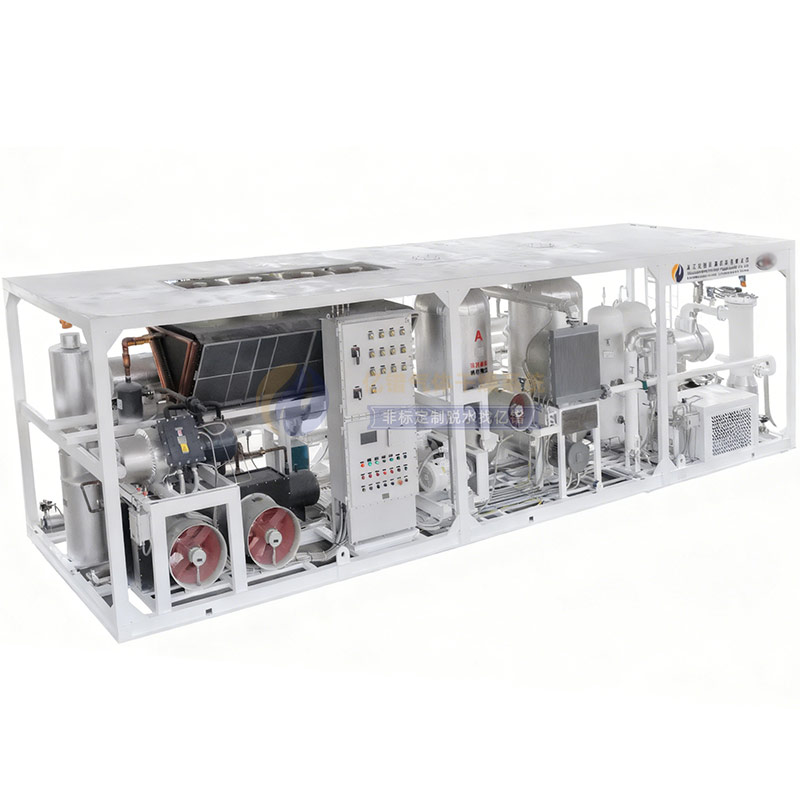
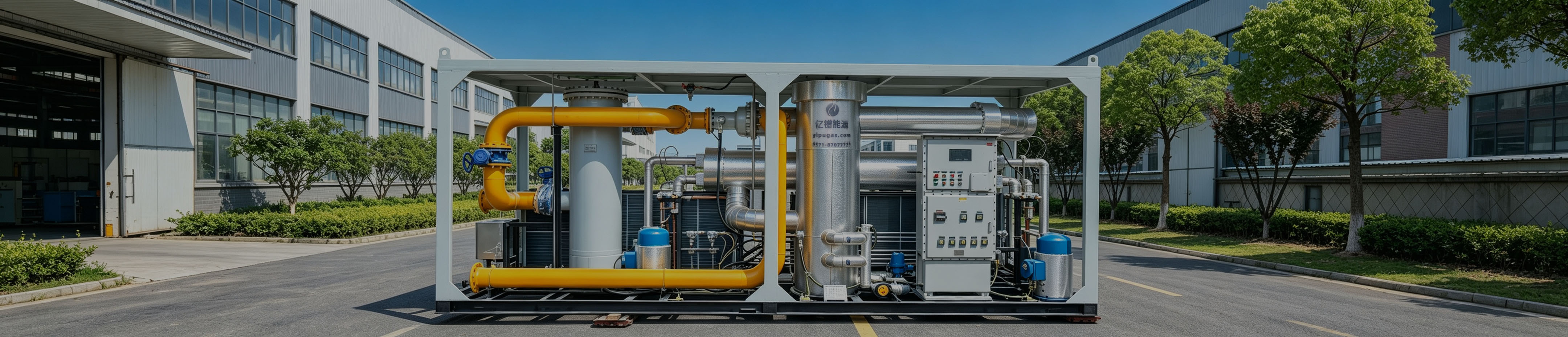
Highly efficient and energy-saving associated gas dehydration and dehydrocarbonization unit: Yipu YNG6-600-50-AM helps improve the quality and efficiency of natural gas
I. Market Pain Points
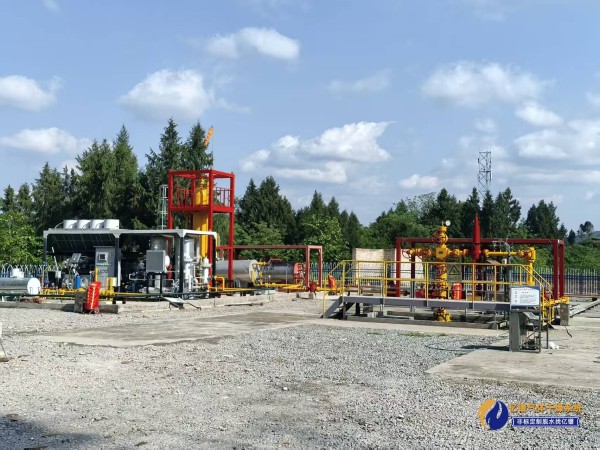
During natural gas extraction and processing, associated gas often contains large amounts of saturated water and light hydrocarbon components. These impurities not only cause pipeline corrosion, ice blockage and liquid hydrocarbon blockage, but also reduce the heating value and transmission efficiency of natural gas. Traditional dehydration and dehydrocarbonization processes have high energy consumption and large footprint, and the regeneration process is often accompanied by a certain amount of gas loss. Many oilfield wellhead gas and shale gas projects urgently need a set of skid-mounted equipment that integrates dehydration and dehydrocarbonization with low operating costs and a high degree of automation. The Yipu shale gas dehydration and dehydrocarbonization equipment is designed precisely to solve these pain points. Its associated gas dehydration and dehydrocarbonization unit adopts a "refrigeration + adsorption" dual-effect process, ensuring an outlet gas dew point ≤-55°C and C1 content ≥80%, and achieving zero-emission regeneration, greatly reducing operating costs.
II. Unit Process
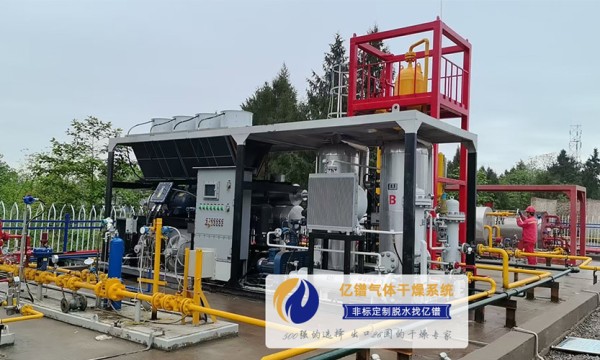
The overall process of the Yipu associated gas dehydration and dehydrocarbonization unit is divided into four stages: pre-cooling, drying, regeneration and dehydrocarbonization. 1. Pre-cooling process: The associated gas first enters the separation filter to remove entrained liquid and solid particles, then enters the pre-cooler and is cooled to 15~20°C to remove most of the saturated water. The gas-liquid separator discharges the condensed water out of the system, thereby reducing the size and dehydration load of the subsequent adsorption tower. 2. Drying process: The associated gas after pre-cooling dehydration enters Tower A (adsorption tower). When the gas passes through the molecular sieve bed in the tower, the molecular sieve adsorbs the moisture in the natural gas under low temperature and high pressure. The dried gas after adsorption passes through a dust filter for deep purification and reaches the outlet, completing the adsorption drying process. 3. Regeneration process: When the molecular sieve in Tower A is saturated with water, valve switching is controlled by PLC to enter the regeneration process. A small amount of associated gas is pressurized by a booster and enters an explosion-proof electric heater to be heated to 180~200°C, then enters Tower B (regeneration tower) for high-temperature desorption of the molecular sieve. The high-moisture natural gas after desorption enters a cooler for cooling and separation, the water is discharged to a liquid storage tank, and the separated gas returns to the inlet end for adsorption drying again. Towers A and B operate alternately to achieve continuous gas supply. 4. Dehydrocarbonization process: The dried associated gas (30~35°C) enters the pre-cooler of the chiller, is cooled to 20~25°C, then enters the evaporator, where it exchanges heat with refrigerant R22 and is cooled to -30°C, causing the light hydrocarbon components to condense and liquefy. The gas-liquid separator separates the liquid mixed hydrocarbons (C1 content >80%), and the gas phase is rewarmed in the pre-cooler and sent downstream.
III. Working Principle
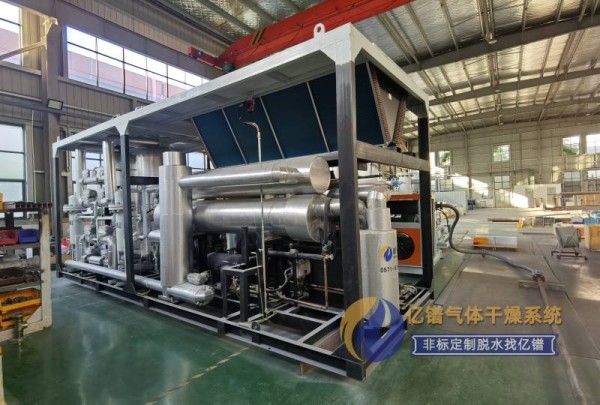
The unit comprehensively applies two principles: cooling dehydration and adsorption dehydration. Cooling dehydration uses a pre-cooler and a chiller to lower the temperature of the associated gas below the saturated dew point, causing most of the water vapor to condense into liquid water and be discharged; adsorption dehydration uses the strong adsorption capacity of molecular sieve for trace moisture under low temperature and high pressure to further reduce the dew point below -55°C. The dehydrocarbonization part liquefies and separates C2+ hydrocarbons through deep cooling to -30°C, thereby increasing methane purity. The regeneration stage adopts isobaric semi-open countercurrent heating regeneration; the regeneration gas is taken from the process gas itself, and the gas after regeneration is recycled, with no product gas loss.
IV. Core Advantages
1. Zero-emission regeneration: The semi-open circulating countercurrent heating regeneration method is adopted, requiring no gas discharge, saving energy and protecting the environment without losing product gas.
2. Dual-tower alternating continuous gas supply: One tower adsorbs while the other regenerates or stands by, ensuring stable output without pressure fluctuations.
3. Deep dehydration and dehydrocarbonization: The combined refrigeration + adsorption process achieves an atmospheric dew point ≤-55°C and C1 content ≥80% after dehydrocarbonization, meeting stringent specifications.
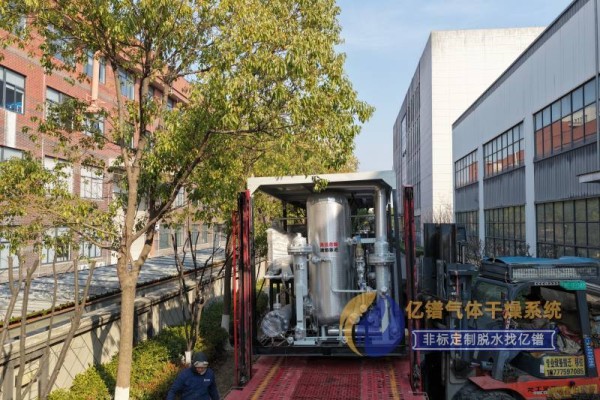
4. Integrated skid-mounted whole unit: All equipment is integrated on a skid, facilitating transportation, installation and on-site deployment, suitable for oilfield wellhead gas and shale gas sites.
5. Fully automatic PLC control: Siemens PLC and touch screen enable automatic operation, valve switching, temperature and pressure monitoring, and remote communication.
6. High efficiency and energy saving: The pre-cooler reduces the adsorption load, the condensing fans are controlled in groups, the refrigeration compressor is frequency-controlled, and the overall energy consumption is low.
V. Technical Strength
Zhejiang Yipu Energy Technology Co., Ltd. was established in 2013 with a registered capital of 10.013 million yuan, focusing on gas purification, separation and recovery technology. The company has 7 patents, 7 trademarks and 12 software copyrights, and has passed ISO9001, ISO14001, ISO45001 and other system certifications. Yipu natural gas dehydration and dehydrocarbonization skids have been widely used by well-known domestic and international enterprises such as PetroChina, ENN Group, Xindi Energy, China Minmetals Group, Zhejiang Energy Group, Ganfeng Lithium and Honeywell, and have been exported to 26 countries including Indonesia, Myanmar and Kazakhstan. Yipu shale gas dehydration and dehydrocarbonization equipment is designed and manufactured in strict accordance with SY/T 0076-2023 "Design Specification for Natural Gas Dehydration", GB150-2024 "Pressure Vessels" and other standards, with reliable quality.
VI. Product Introduction
The associated gas dehydration and dehydrocarbonization unit launched this time, model YNG6-600-50-AM, has a processing capacity of 600Nm³/h, working pressure of 50psig, and design pressure of 0.6MPa. The equipment consists of a pre-cooling system, dual adsorption towers, regeneration system, refrigeration dehydrocarbonization system, PLC control cabinet, explosion-proof electric heater, air cooler, etc. The molecular sieve is a custom high-quality product from Yipu, with a service life of more than 20,000 hours. The overall skid dimensions are approximately 9500×2600×3000mm, power ≤90kW, explosion-proof rating ExdⅡBT4. This oilfield wellhead gas dehydration and dehydrocarbonization unit can be custom-designed according to the customer's gas source composition to meet different working conditions.
VII. Technical Specifications
1. Processing capacity: 600Nm³/h (customizable)
2. Working pressure: 50psig (design pressure 0.6MPa)
3. Inlet temperature: 50~65°C
4. Outlet temperature: ≤30°C
5. Inlet water content: saturated water content at 65°C
6. Atmospheric dew point: ≤-55°C
7. Refrigeration temperature: ≤-30°C
8. Regeneration temperature: 180~200°C
9. Adsorbent: molecular sieve
10. Control mode: PLC automatic control
11. Blowdown mode: automatic blowdown
12. Working cycle: 12h
13. Regeneration cycle: ≤10h (adjustable)
14. Equipment pressure drop: ≤30kPa
15. Explosion-proof rating: ExdⅡBT4
16. Power supply: AC380V/50Hz
17. Structural form: whole-unit skid-mounted
18. Inlet/outlet pipe diameter: flange WN80-16RF