

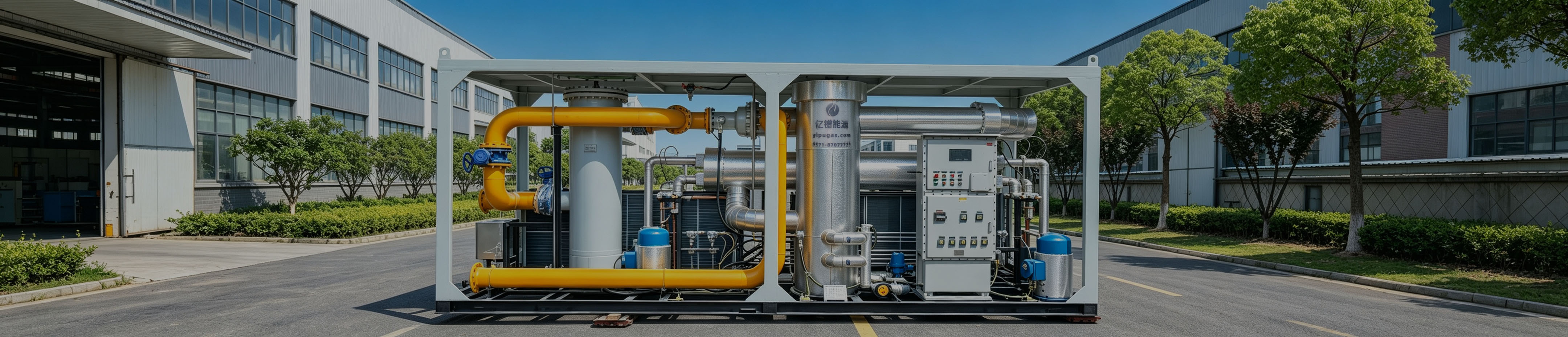
Yipu natural gas dehydration unit: efficiently solves hydrate blockage and improves gas station operational stability
I. Market Pain Points
In the process of natural gas extraction, gathering and transportation, and CNG station operation, water vapor is the root cause of pipeline blockage, equipment corrosion and ice blockage. When natural gas contains a large amount of water vapor, under pressurization or cooling, the gaseous water will condense into liquid water, and may even form hydrates with hydrocarbons, blocking pipelines, gas cylinder nozzles, filling nozzles and other key parts. Especially in cold regions, CNG stations may be unable to refuel normally due to hydrate problems, making it difficult to start vehicles. Traditional dehydration methods such as cold separation and glycol absorption have shortcomings such as insufficient dehydration depth, high energy consumption and complicated maintenance. Yipu natural gas dehydration unit adopts molecular sieve adsorption technology to deeply remove moisture from natural gas, ensuring a dew point below -60°C, completely solving the hydrate problem and ensuring safe and stable operation of the system.
II. Unit Process
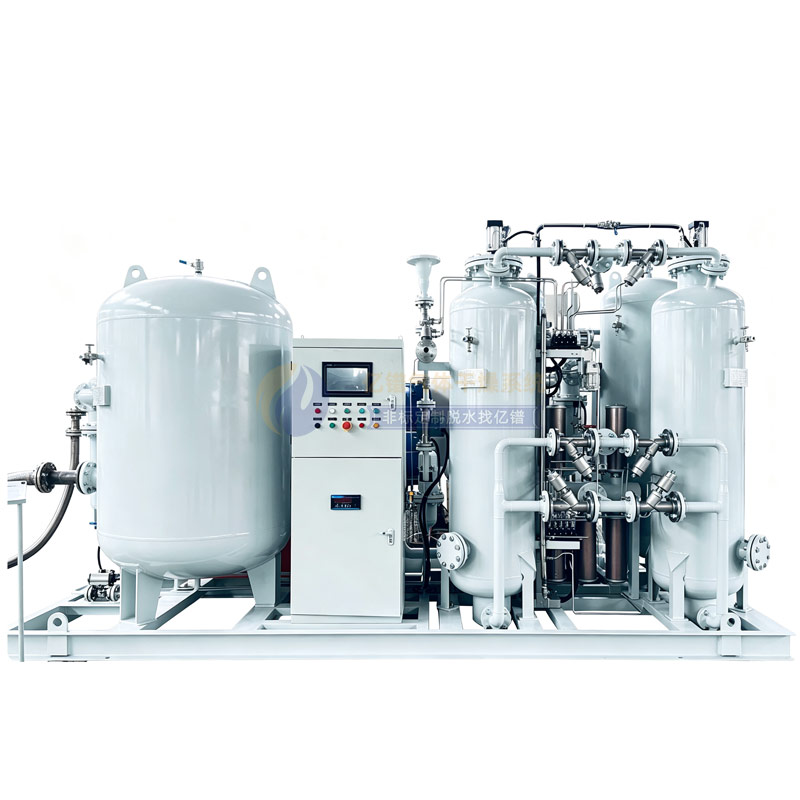
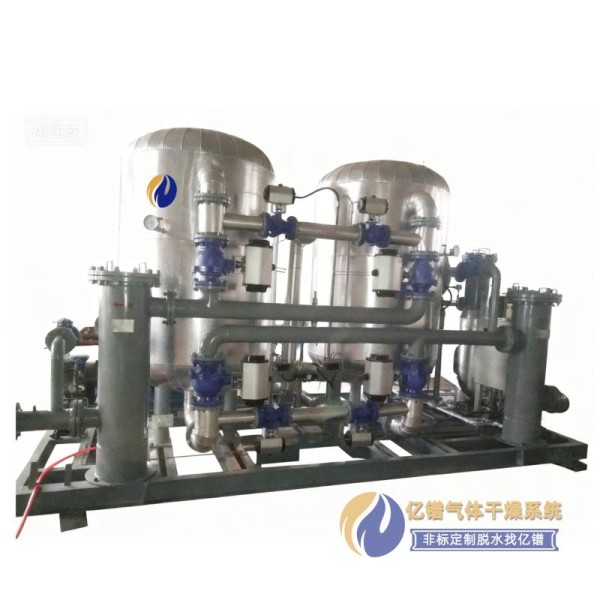
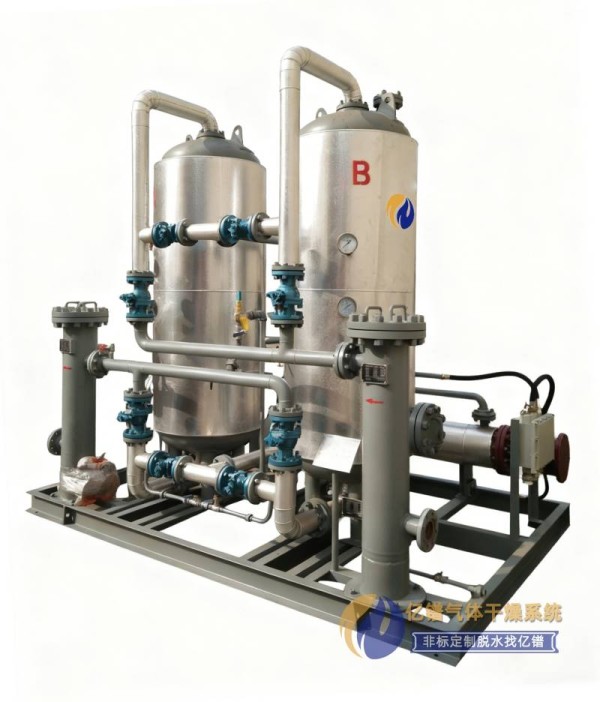
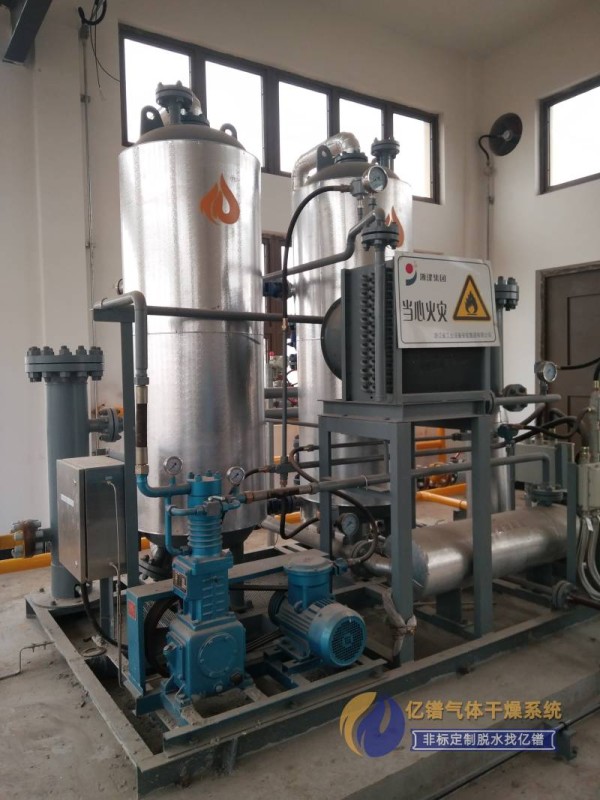
Yipu natural gas dehydration unit adopts a dual-tower alternating working process: one tower adsorbs while the other regenerates. Adsorption process: wet natural gas enters adsorption tower A from the gas inlet through the separation filter, and when passing through the molecular sieve bed, moisture is adsorbed, and the dry gas is output after passing through the dust filter. Regeneration process: when the molecular sieve is saturated, through valve switching, a small amount of dry natural gas is pressurized by the circulation compressor and enters the explosion-proof electric heater to be heated to about 190°C, then enters the regeneration tower to desorb the molecular sieve. The desorbed natural gas with high water content is condensed and separated by the cooler, the separated water is discharged, and the remaining gas is recycled. The entire process is automatically controlled by PLC to achieve continuous gas supply.
III. Working Principle
Yipu natural gas dehydration unit is based on the principle of temperature swing adsorption (TSA), utilizing the characteristic that the adsorption capacity of 4A spherical molecular sieve for water molecules varies with temperature. At low temperature and high pressure, the molecular sieve adsorbs water molecules; at high temperature and low pressure, the molecular sieve releases water molecules to achieve regeneration. The adsorption process is physical adsorption, which does not change the gas composition. While removing water vapor, it can also adsorb impurities such as H2S, NH3 and SO2, thereby obtaining pure and dry natural gas. The dual-tower design ensures continuous gas supply from one tower while the other is regenerating, without pressure fluctuations.
IV. Core Advantages
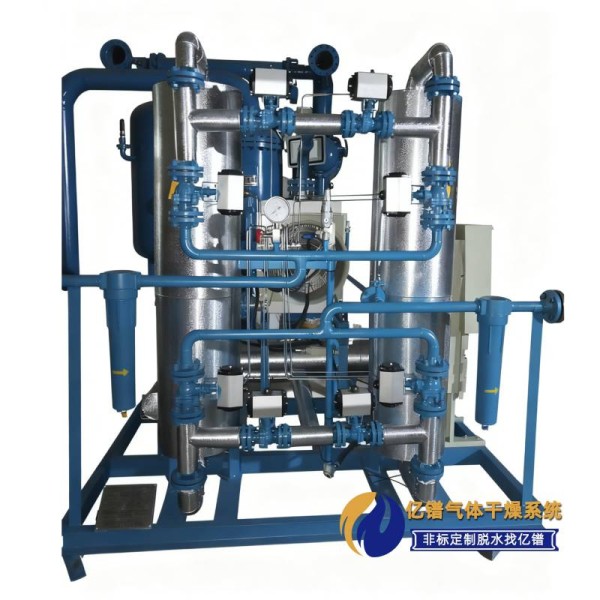
1. Deep dehydration: High-strength 4A molecular sieve is used, with high dehydration depth; the outlet dew point can reach below -60°C, meeting the requirements of LNG, CNG and pipeline gas transmission.
2. High efficiency and energy saving: Isobaric regeneration technology is used, with low regeneration gas consumption; the heater adopts a U-shaped low-load design, combined with a synchronous cooling system, reducing energy consumption by 15%.
3. Safe and reliable: Explosion-proof electric heaters, explosion-proof junction boxes and explosion-proof thermal resistors all meet CT6 standards; triple over-temperature protection prevents dry burning; the safety valve opening pressure is 2.4 MPa, ensuring equipment safety.
4. Intelligent control: Siemens PLC controller, touch screen displays fault solutions, supports time switching, dew point switching and mixed mode, and reserves a Modbus RTU communication interface for remote monitoring.
5. Long-life design: Large molecular sieve filling amount, high bed layer, adsorption cycle up to 16 hours, molecular sieve service life over 8000 hours; the tower body is provided with independent loading and unloading ports for easy replacement.
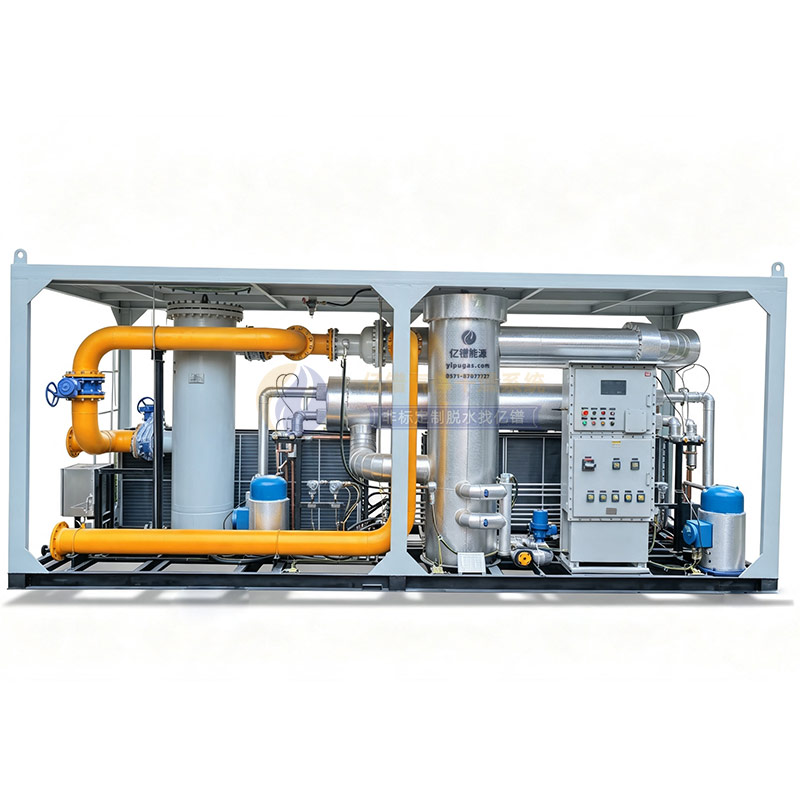
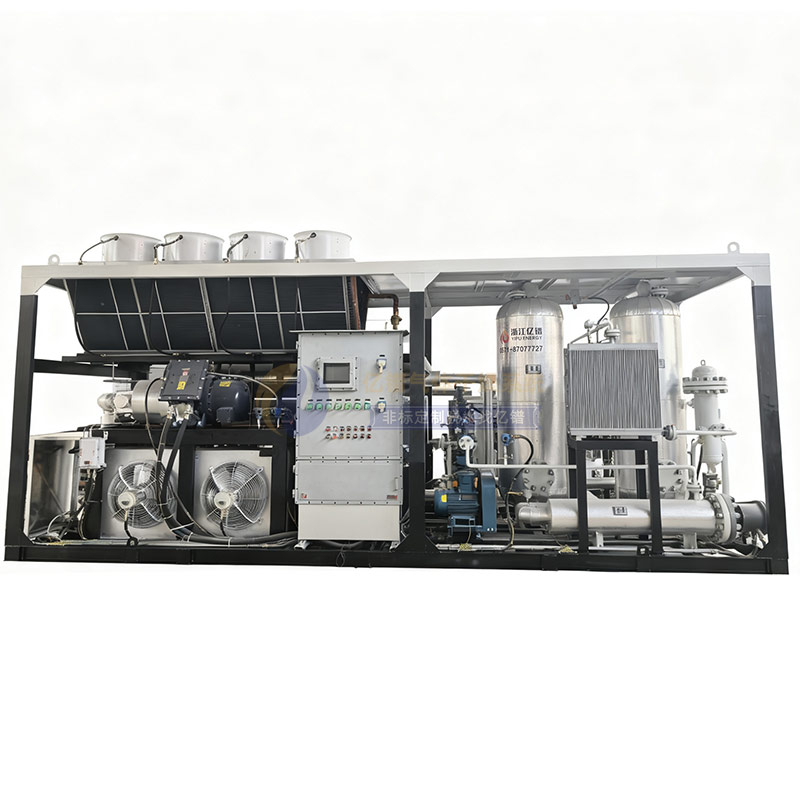
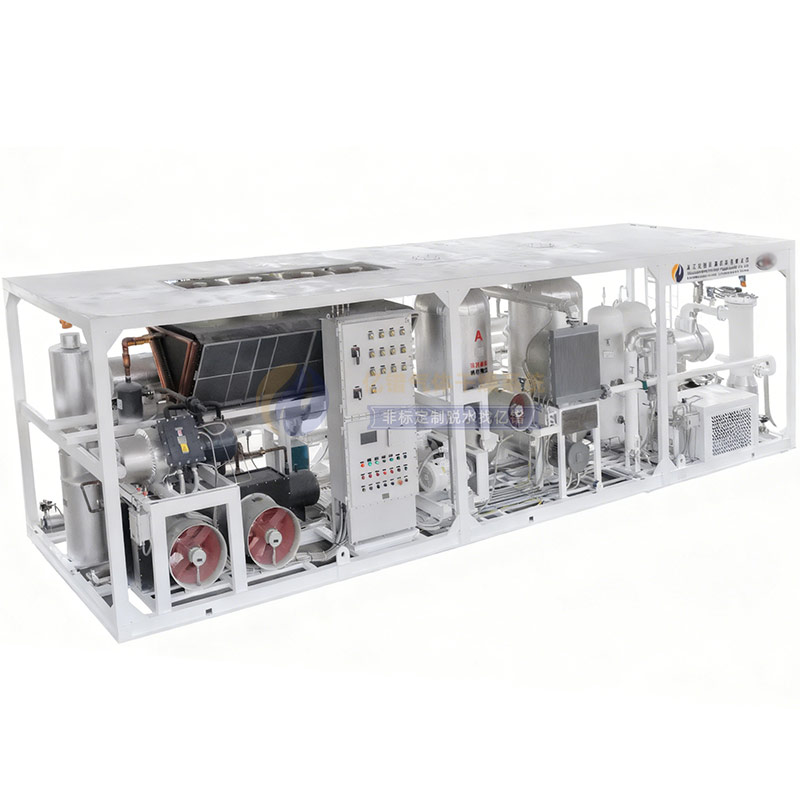
6. Skid-mounted integration: Overall skid-mounted structure, with separator, filter, heater, compressor, electrical control cabinet, etc. integrated on one base, facilitating on-site installation and occupying a small area.
V. Technical Strength
Zhejiang Yipu Energy Technology Co., Ltd. has been focusing on the field of natural gas dehydration for many years, and owns an independently developed core control system with intellectual property protection. The company's products are designed, manufactured and inspected strictly in accordance with standards such as SY/T 0076-2008 "Design Specification for Natural Gas Dehydration", GB150-2011 "Pressure Vessels" and TSG 21-2016 "Supervision Regulation on Safety Technology for Stationary Pressure Vessels". Core components are selected from internationally renowned brands: German ROP or Shanghai High Pressure Valve, China Yongyi full-lift safety valve, Taiwan Yangming power regulator, Schneider contactors and circuit breakers. Yipu natural gas dehydration units have been widely used in petroleum, chemical, machinery, electronics, instrumentation, CNG stations, urban pipeline networks, coalbed methane and other fields, providing customers with high-quality dry gas.
VI. Product Introduction
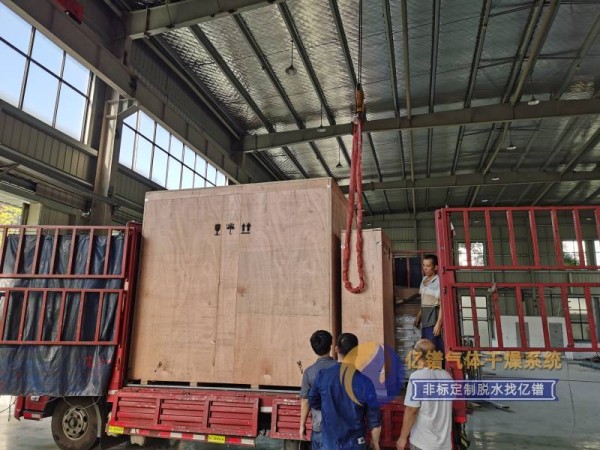
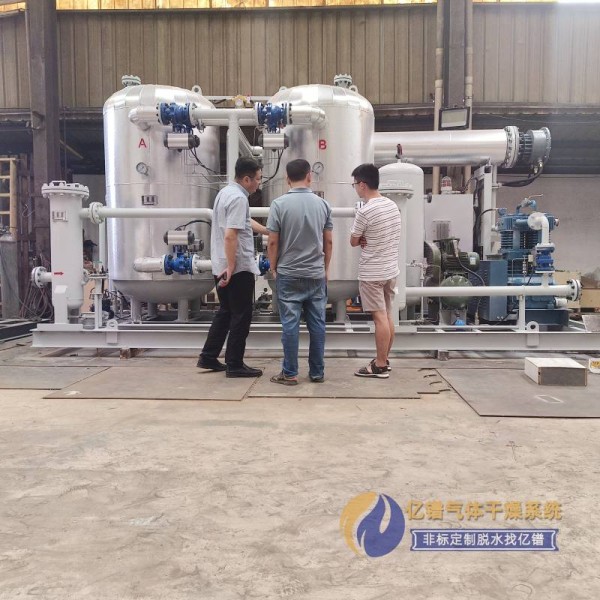
Yipu natural gas dehydration unit (model YNG7-5000/1.0~1.8-SM) is specially designed for a processing capacity of 5000 Nm³/h, with a working pressure of 1.0~1.8 MPa, adopting an overall skid-mounted structure. The system includes adsorption towers A/B, safety valves, manual ball valves, electrical control cabinet, explosion-proof electric heater (36 kW), circulation compressor (7.5 kW), cooler, separator, separation filter, dust filter, explosion-proof thermal resistor, pressure gauge, dew point analyzer and piping system. The equipment has compact overall dimensions and a mass of about 6000 kg, suitable for outdoor installation with a foundation. The unit can continuously output dry natural gas with a dew point below -60°C, suitable for scenarios such as CNG stations, oilfield wellhead gas recovery and urban pipeline network peak shaving.
VII. Technical Specifications
- Product model: YNG7-5000/1.0~1.8-SM
- Rated flow: 5000 Nm³/h
- Working pressure: 1.0~1.8 MPa
- Design pressure: 2.5 MPa
- Safety valve opening pressure: 2.4 MPa
- Inlet temperature: ambient temperature
- Inlet oil content: ≤3 mg/Nm³
- Outlet dew point: ≤-60°C (at atmospheric pressure)
- Maximum particle diameter at outlet: ≤1 μm
- Inlet/outlet pressure drop: ≤0.05 MPa
- Adsorption cycle: 16 hours
- Regeneration time: 8 hours
- Heater power: 36 kW (AC380V)
- Compressor power: 7.5 kW (AC380V)
- Cooling fan power: 1.1 kW (AC380V)
- Total power consumption: about 44.6 kW
- Regeneration method: isobaric regeneration
- Control method: manual switching, automatic regeneration
- Structure: overall skid-mounted
- Inlet/outlet pipe diameter: DN100 PN25
- Overall dimensions: according to actual design (about 6.5m×2.5m×3.0m)
- Total equipment mass: 6000 kg