
Yipu Biogas Dehydration Solution

Focus on customized non-standard working conditions on demand

Get a Quote >

Industry Pain Points

The dehydration conditions before desulfurization in biogas projects are complex, and directly applying ordinary drying equipment is prone to safety hazards, short service life, and unstable operation
Biogas is a flammable and explosive medium; the electrical components of ordinary refrigerated dryers are not explosion-proof; the site is a hazardous explosive area; non-explosion-proof components such as electrical controls and transmitters are very likely to generate ignition sources, which does not meet the GB3836 series explosion-proof specifications and poses a major safety hazard.
The front end of biogas is mostly a micro-negative pressure gas holder, and the pressure drop of traditional dehydration equipment is generally >1kPa, which will cause negative pressure in the gas holder and suck in air, threatening system safety; many general drying equipment do not optimize the flow channel for micro-negative pressure biogas, and cannot adapt to the original working conditions of biogas.
Hydrogen sulfide medium corrodes and damages equipment
Biogas before desulfurization contains H₂S, saturated water vapor combines with hydrogen sulfide to form acidic condensate, ordinary copper tube heat exchangers corrode and perforate in a short time, equipment leakage and failure, frequent repair and replacement, high operation and maintenance costs.
poor adaptability to harsh outdoor environments
Most projects are arranged outdoors in the open air, with high ambient temperatures in summer; traditional equipment lacks temperature interlock protection, and cooling conditions are unstable when load fluctuates; lack of remote signal output, unable to connect to DCS, faults can only be discovered manually on site, not conducive to unattended operation.

System Overview

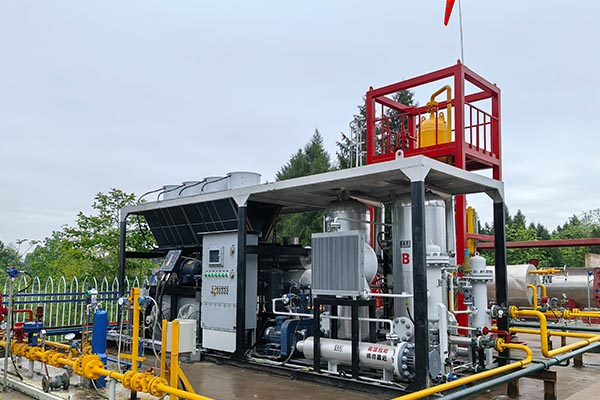
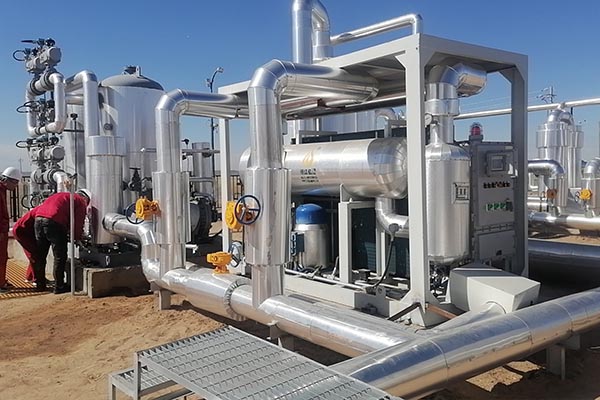
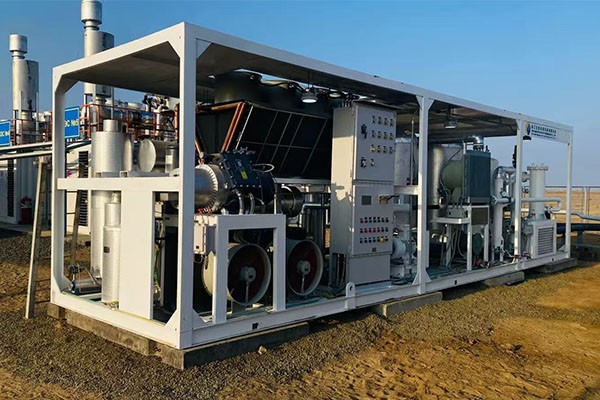
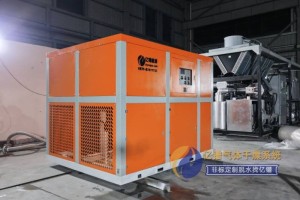
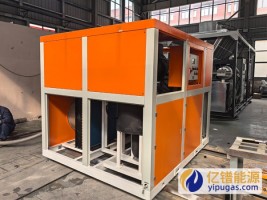
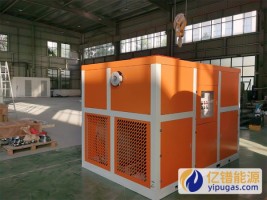
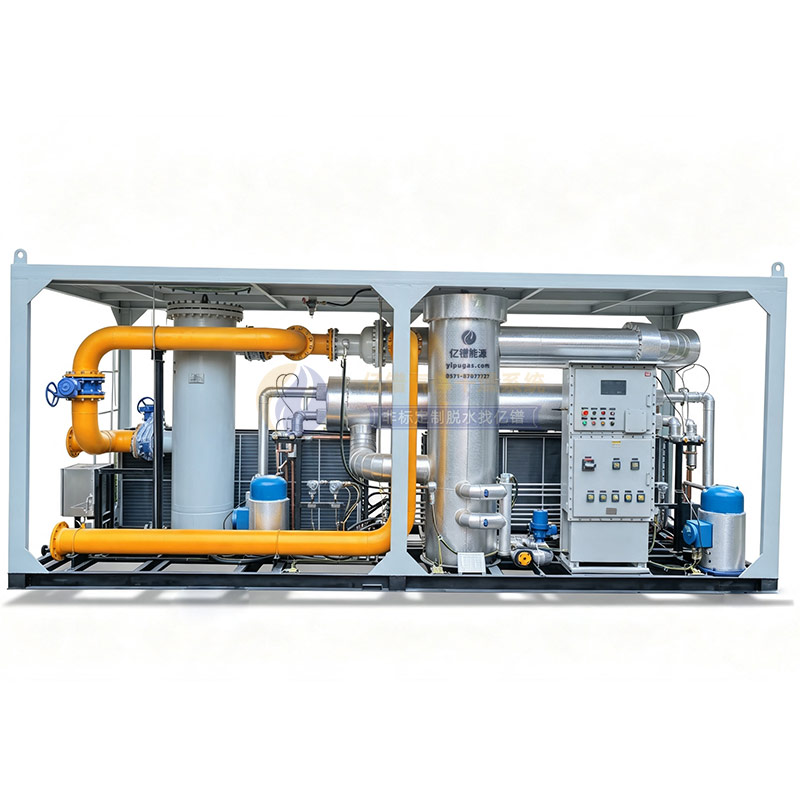
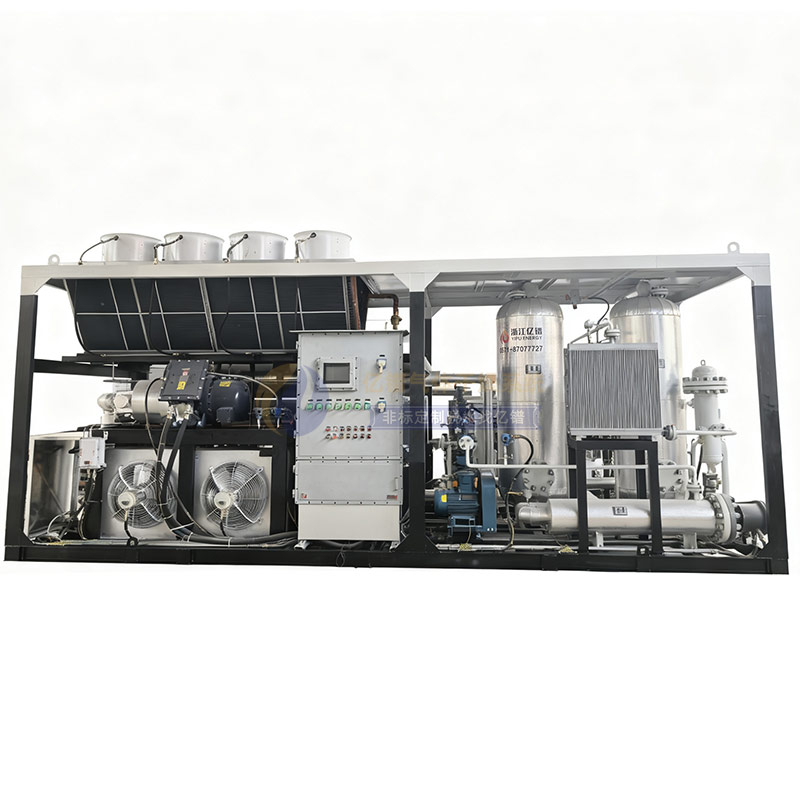
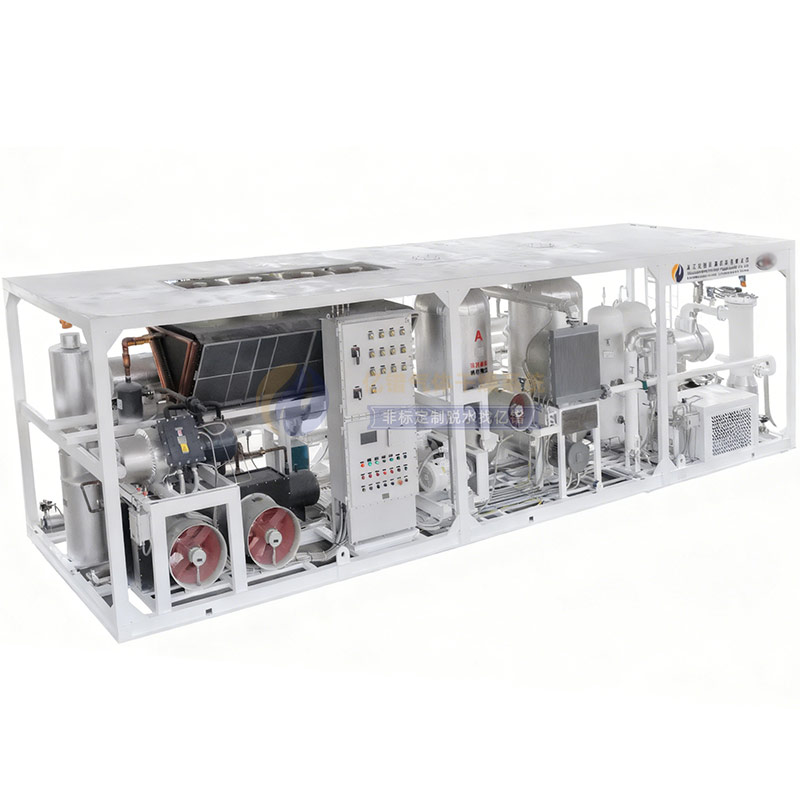
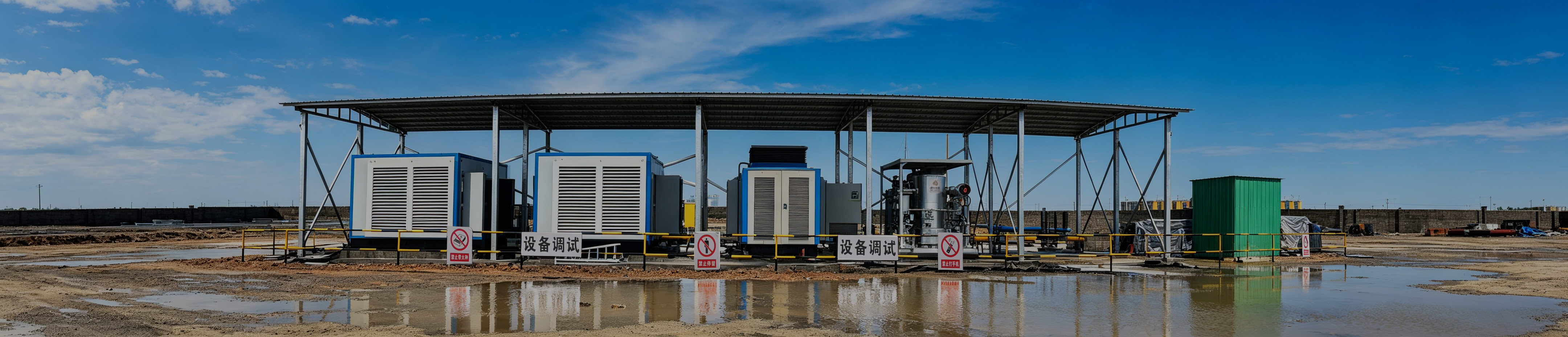
Yipu air-cooled explosion-proof refrigerated dryer for biogas, custom-developed for saturated biogas before desulfurization and micro-negative pressure inlet conditions. The equipment processing reference flow rate is 100~3000Nm³/h, with 10% processing margin reserved. The outlet biogas temperature is stably controlled at 10-15℃, the relative humidity after pressurization is ≤50%, and the overall pressure drop is ≤0.5kPa, explosion-proof rating EX DIIBT4.

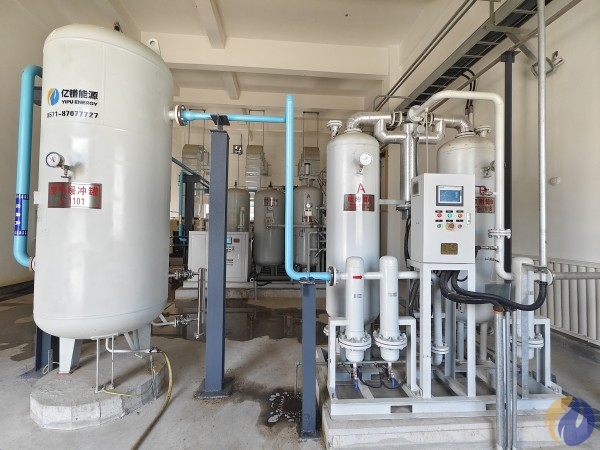
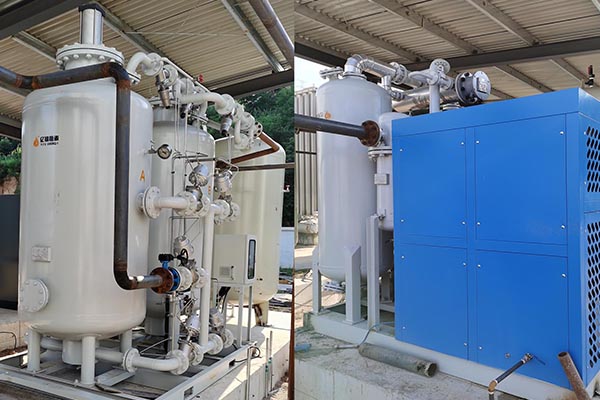
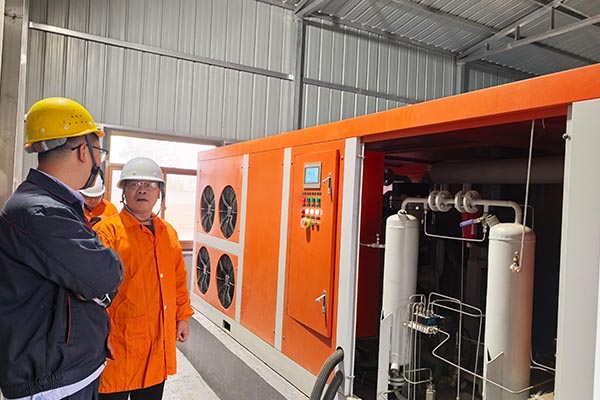
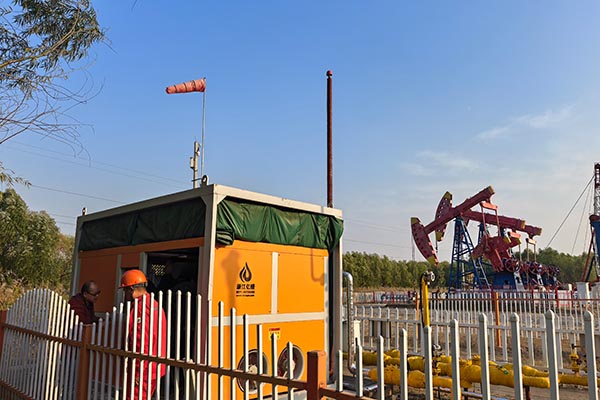
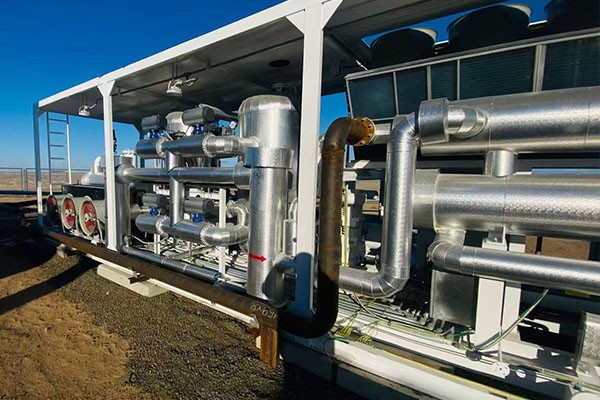
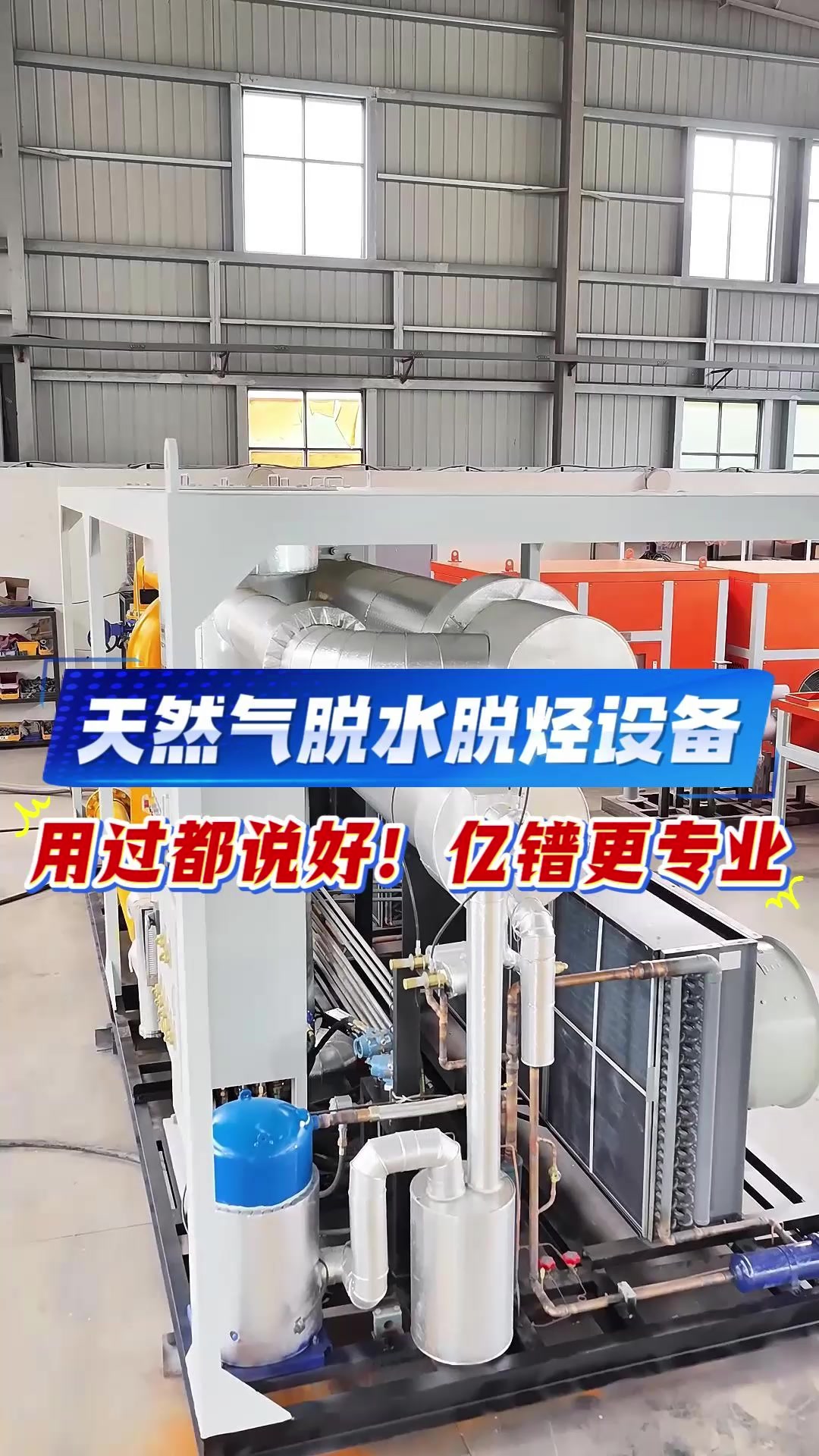
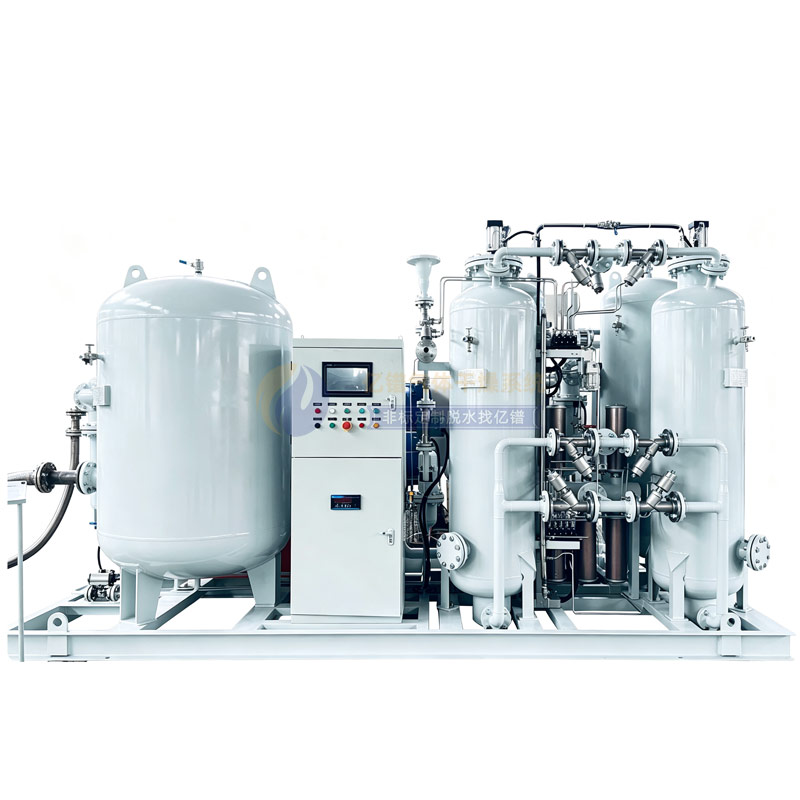
The complete unit consists of a refrigeration main unit, 304 stainless steel evaporator, built-in steam-water separator, Danfoss refrigeration components, explosion-proof electrical control system, and gas-blocking water seal automatic drain unit; air-cooled heat dissipation is adopted, requiring no supporting cooling water system. It supports outdoor installation on level ground without a foundation, suitable for open-air biogas projects in northern China (such as Tangshan, Hebei). The equipment provides remote dry-contact points for remote start/stop, fault alarms, and operating status upload, suitable for engineering scenarios such as biogas power generation and biogas pretreatment.


Solutions

ModuleFunction
Pretreatment unitRemoves H₂S and particulate matter (optional activated carbon/biological desulfurization)
Condensation dehydration modulePlate heat exchanger + Freon refrigeration, dew point quickly reduced to -5℃
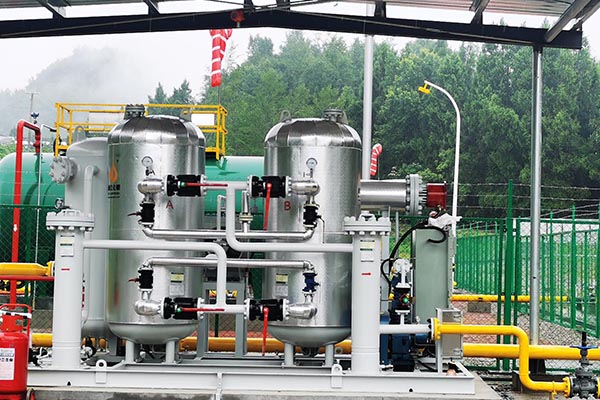
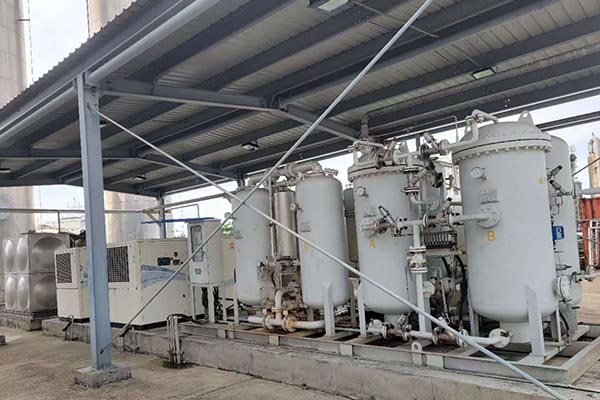
Adsorption drying towerDual-tower alternating operation, molecular sieve lifespan ≥5 years
VOCs recoveryRecovery rate of organic matter (such as CH₃OH) in condensate ≥85%
Intelligent electrical control cabinetSupports remote monitoring and linked start/stop of generator sets
Zero-emission designCondensate is treated and reused, and exhaust gas is discharged up to standard (non-methane total hydrocarbons ≤50mg/m³)
Application ScenariosLandfill gas power generation, agricultural biogas projects (livestock and poultry manure, straw), biogas purification from anaerobic fermentation of industrial wastewater

Technical Principle

The equipment adopts the principle of "freezing condensation dehumidification + gas-liquid separation" to complete biogas dehydration treatment

Condensation cooling and dehumidification

Saturated high-temperature micro-negative pressure biogas enters the 304 stainless steel evaporator, exchanges heat with refrigerant and cools to 10-15℃, water vapor becomes supersaturated and condenses out as condensate.

Condensation cooling and dehumidification

Gas-liquid impurity separation

The cooled biogas enters the built-in steam-water separator, where liquid droplets and solid impurities are removed through velocity reduction and collision coalescence, and impurities settle into the lower cavity of the equipment.

Gas-liquid impurity separation

Medium discharge and closed drainage

The dewatered biogas is sent to the downstream pressurization and desulfurization process; the condensate is discharged through automatic blowdown + gas-blocking water seal to prevent biogas leakage.

Medium discharge and closed drainage

Refrigeration regulation and explosion-proof interlock

The refrigerant completes the compression, heat dissipation, and throttling heat absorption cycle, with hot gas bypass adapting to load fluctuations; the explosion-proof control system collects temperature and pressure to achieve interlock protection and upper-level signal interfacing, ensuring safe and stable operation of the entire unit.

Refrigeration regulation and explosion-proof interlock

Core Advantages

Explosion-proof design with strong working condition adaptability

Complete unit explosion-proof rating EX DIIBT4; control cabinets and temperature transmitters are all explosion-proof configurations, customized for flammable and explosive hazardous areas of biogas, not a simple modification of ordinary air compressor refrigerated dryers, ensuring intrinsic safety.

Explosion-proof design with strong working condition adaptability

Low pressure drop, micro-negative pressure working condition

Complete unit pressure drop ≤0.5kPa, suitable for biogas micro-negative pressure intake conditions, protecting the upstream gas holder, avoiding safety hazards of negative pressure air intake, and conforming to the original process requirements of biogas.

Low pressure drop, micro-negative pressure working condition

Sulfur-resistant and corrosion-resistant

Biogas wetted parts such as the evaporator, separator, and pipeline flanges are made of 304 stainless steel, resistant to the acidic hydrogen sulfide condensate before desulfurization, preventing perforation damage to the heat exchanger and extending equipment service life.

Sulfur-resistant and corrosion-resistant

Air-cooled heat dissipation requires no cooling water supply, suitable for water-scarce and northern outdoor scenarios; the cabinet-type complete unit enables foundation-free floor installation, requiring only top rain shelter facilities, with minimal construction workload.

Equipped with temperature interlock antifreeze protection; local display of temperature and operating pressure parameters; supports 4-20mA analog signals, remote start/stop, and fault alarm output, and can connect to DCS systems, meeting the unattended automation requirements of biogas projects.

First-tier components for stable operation

Core refrigeration components use Danfoss brand, equipped with hot gas bypass to achieve load self-adaptation; built-in steam-water separator and gas-blocking water seal automatic blowdown, ensuring low-failure operation of the refrigeration system while also avoiding biogas leakage during the drainage process.

First-tier components for stable operation

Technical Strength

Standards system

Standards system

The equipment is strictly designed and manufactured in accordance with GB50058-2014, GB3836.1-2021, GB3836.2-2021 and other national explosion-proof standards, and the JB/T10526-2017 dryer industry standard, while also following national standards for pressure vessels, electrical grounding, and automation instruments, with full-process compliant design.
Customized development capability

Customized development capability

Custom-developed for special working conditions of biogas micro-negative pressure, sulfur-containing, and flammable and explosive environments; not a modified version of a general-purpose compressed air refrigerated dryer; complete set of drawings and documentation available: outline dimension drawings, electrical schematic diagrams, product certificate, operation manual; drawings and documentation delivered within one week after contract signing.

The whole equipment is warranted for 18 months from delivery; upon receiving a fault notification, we will arrive at the site within 12 hours to handle it; before delivery, the whole equipment is debugged and inspected to ensure that all performance indicators meet the technical requirements of the contract.

Suitable for outdoor project environments in northern regions, outdoor ground installation without foundation, suitable for biogas power generation pretreatment scenarios in large and medium-sized biogas projects.

Advantage Comparison

Comparison item
2-10℃, customizable to -60℃Only removes free liquid water, hardly reduces gaseous water vapor10‑15℃
Explosion-proof ratingEX DIIBT4 Whole-machine explosion-proofNo explosion-proof configurationNo explosion protection, electrical ignition risk exists
System pressure drop≤0.5kPa1‑2kPa>1kPa
Media contact material304 stainless steel, resistant to hydrogen sulfide corrosionOrdinary carbon steel, easily corroded by acidic waterCopper evaporator, prone to perforation in H₂S environments
Cooling methodAir-cooled, no cooling water requiredNo refrigeration systemAir-cooled / water-cooled
Suitable working conditionsSlightly negative pressure biogas before desulfurizationCan only be used as pre-coarse separationOnly suitable for compressed air, not for biogas
Energy consumptionTotal power ≤25kWAlmost no power consumptionComparable energy consumption, but no explosion-proof or anti-corrosion
Automation capabilityLocal display, 4-20mA, remote start/stop alarmLocal blowdown only, no signal outputLocal display, no explosion-proof signal output
O&M workloadLow maintenance workload, regular inspection of blowdownRequires frequent manual drainageRapid corrosion failure, frequent heat exchanger replacement
Application positioningMain dehydration before biogas desulfurizationAssisted pre-coarse filtrationProhibited for use in biogas explosion-proof areas

FAQ

Under standard operating conditions, the complete equipment can stably achieve an outlet dew point of -55℃~-70℃. Actual dew point indicators are affected by inlet gas composition, operating pressure, and inlet temperature; we will optimize them specifically according to the operating conditions during the solution design stage.
When the equipment operates according to specifications and the regeneration process is executed normally, the service life of the molecular sieve packing can reach 2~5 years. Good front-end pretreatment and operation and maintenance strictly in accordance with operating procedures can further extend the service cycle of the packing.
Supported. Dual-tower or multi-tower configurations enable adsorption in one tower while simultaneous regeneration occurs in the other, ensuring 24-hour uninterrupted system operation and continuous, stable gas supply without shutdowns that interrupt production.
Routine maintenance includes filter element replacement, valve condition inspection, regular instrument calibration, and routine overall inspection. The equipped PLC control system has operation monitoring and fault alarm functions, effectively reducing manual maintenance pressure.
Yes. Each unit is specially designed according to actual gas composition, processing flow rate, working pressure, ambient temperature, and site conditions, providing customized dehydration solutions for natural gas, biogas, and various industrial gas scenarios.

Send Inquiry