

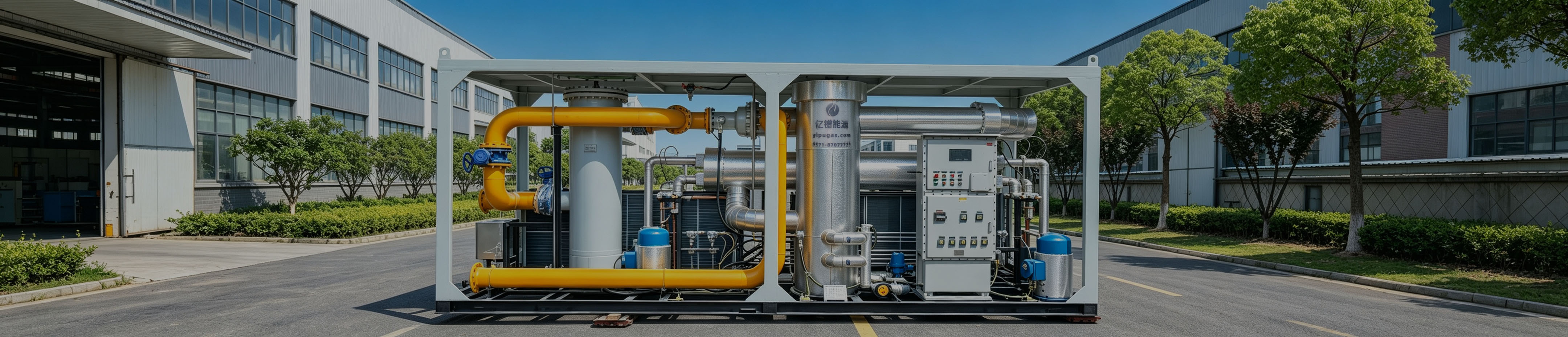
Efficient Water and Hydrocarbon Removal: Yipu Oilfield Wellhead Gas Dehydration and Hydrocarbon Removal Unit Boosts Gas Field Production and Efficiency
I. Market Pain Points
During oil and gas field development, oilfield wellhead gas often contains large amounts of water vapor, light hydrocarbon components, and solid impurities. Untreated wet gas entering the gathering and transportation pipeline network or downstream processing plants directly will cause a series of problems such as ice blockage, equipment corrosion, reduced pipeline transportation efficiency, and impact on natural gas quality. Although traditional dehydration methods such as molecular sieve adsorption and refrigeration separation can partially solve the problem, they have disadvantages such as high energy consumption, low regeneration efficiency, large equipment footprint, and high operating costs. Especially for oilfields with dispersed wellheads and large gas volume fluctuations, an efficient, compact, and automated integrated device is needed to meet the dehydration and dehydrocarbonization requirements.
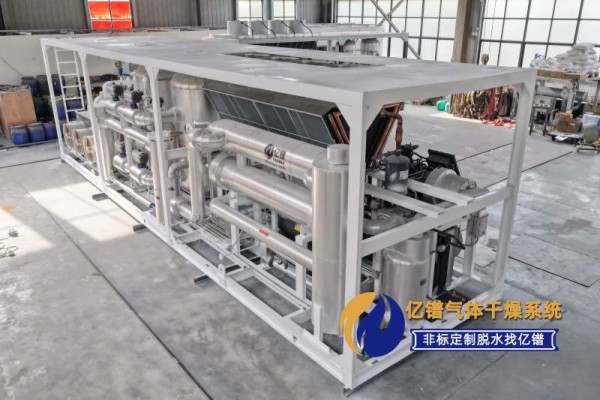
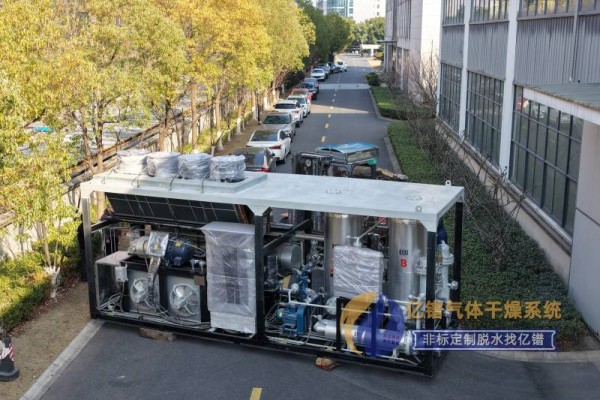
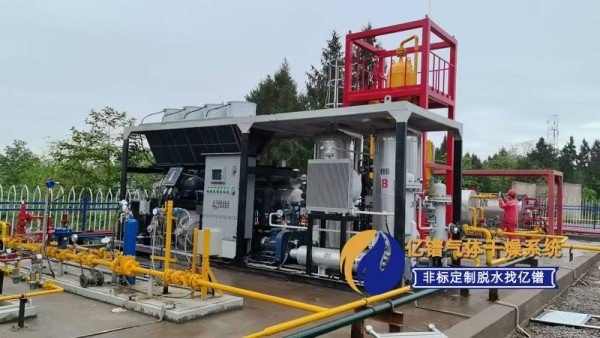
In response to this pain point, Yipu Energy, leveraging years of gas purification experience, has developed and produced the Yipu oilfield wellhead gas dehydration and dehydrocarbonization device. This device integrates adsorption dehydration and refrigeration dehydrocarbonization, features a skid-mounted design and automated operation, and can reduce the dew point of wellhead gas to below -55°C while recovering liquid hydrocarbons to achieve efficient resource utilization.
II. Device Process
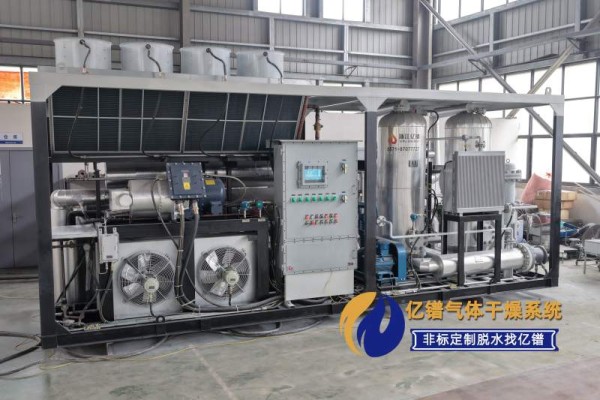
The Yipu oilfield wellhead gas dehydration and dehydrocarbonization device mainly consists of units such as pretreatment filtration, adsorption dehydration, regeneration system, refrigeration dehydrocarbonization, and gas-liquid separation. Its typical process is as follows:
1. Inlet gas pretreatment: The oilfield wellhead gas first enters the separation filter to remove entrained free liquid droplets and solid particles from the gas, protecting the subsequent adsorbent.
2. Adsorption dehydration: The pretreated wet gas enters the dual-tower adsorption system (Towers A/B operate alternately). When the gas passes through the molecular sieve bed, moisture is adsorbed, and the outlet gas atmospheric pressure dew point is ≤-55°C, achieving deep dehydration.
3. Refrigeration dehydrocarbonization: The dry gas after adsorption dehydration enters the refrigeration unit, first cooled to 15-20°C through the precooler, then enters the evaporator and is cooled to -20°C to -30°C, causing the light hydrocarbon components (such as C3+) in the natural gas to condense and liquefy.
4. Gas-liquid separation and recovery: The refrigerated gas enters the high-efficiency gas-liquid separator, where liquid hydrocarbons are separated through impingement, centrifugation, and stainless steel wire mesh mist elimination, and sent to the mixed hydrocarbon storage tank. The separated dry gas is rewarmed through the precooler and then output downstream.
5. Regeneration system: The adsorption-saturated molecular sieve is regenerated through isobaric semi-open countercurrent heating. A small amount of natural gas is pressurized by the booster, heated to 180-200°C by the electric heater, and enters the regeneration tower to desorb moisture. The desorbed wet gas is cooled and separated by the cooler, the moisture is discharged, and the regeneration gas returns to the adsorption cycle.
III. Working Principle
The working principle of the Yipu oilfield wellhead gas dehydration and dehydrocarbonization device is based on the organic combination of physical adsorption and low-temperature condensation:
- Adsorption dehydration: Utilizing the strong adsorption capacity of molecular sieves for water molecules under high pressure and low temperature, when wet gas passes through the molecular sieve bed, water molecules are captured in the micropores while components such as methane pass through. During molecular sieve regeneration, high-temperature heating causes water molecules to desorb, restoring adsorption capacity.
- Refrigeration dehydrocarbonization: Based on the boiling point differences of different hydrocarbon components in natural gas, the gas is cooled below the dew point through the refrigeration system, causing heavy components (C3+) to condense into liquid, achieving gas-liquid separation. Yipu adopts multi-stage evaporators and high-efficiency separators to ensure dehydrocarbonization efficiency.
The device adopts dual-tower alternating continuous operation, with one tower adsorbing while the other regenerates or stands by, ensuring uninterrupted gas supply. The regeneration process is a closed cycle with no product gas loss, saving energy and being environmentally friendly.
IV. Core Advantages
1. Efficient dehydration and dehydrocarbonization: Molecular sieve dehydration ensures atmospheric pressure dew point ≤-55°C, and refrigeration dehydrocarbonization can remove heavy hydrocarbons to meet pipeline transportation standards, and liquid hydrocarbons can be recovered to increase revenue.
2. Zero-emission regeneration: Adopts isobaric semi-open countercurrent regeneration, with regeneration gas recycled, no waste gas emissions, no product gas loss, greatly reducing operating costs.
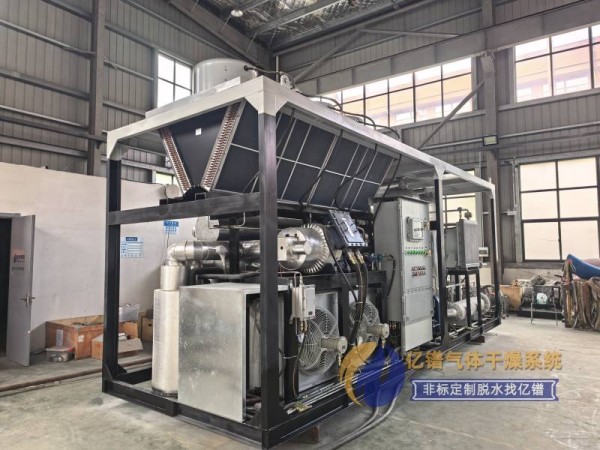
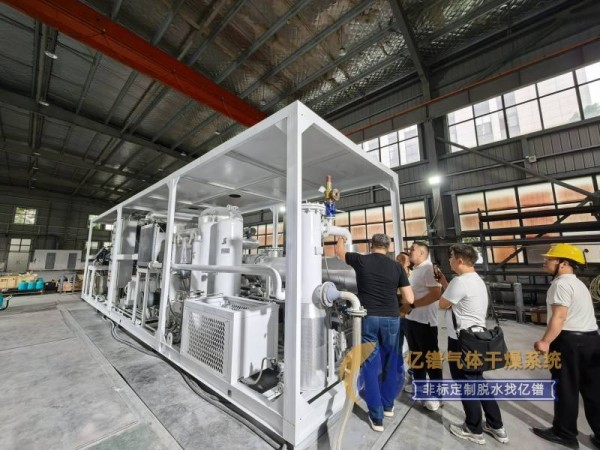
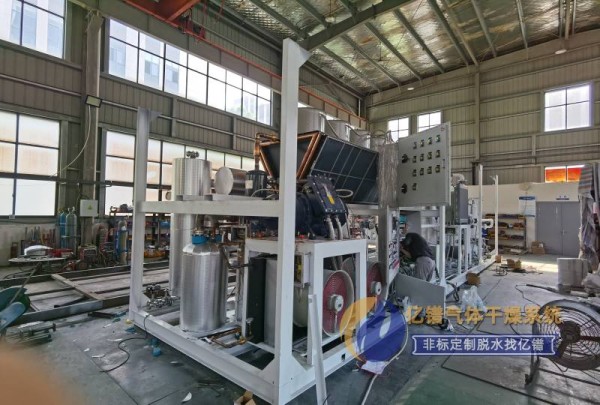
3. Highly integrated skid-mounted: The entire machine is skid-mounted, including all equipment, pipelines, valves, and electrical controls, with a small footprint, convenient transportation and installation. On-site, only the inlet and outlet gas connections and power supply need to be connected for commissioning.
4. Fully automatic operation: PLC automatic control, touch screen operation, automatic switching of adsorption/regeneration cycles, real-time monitoring of temperature, pressure, and dew point parameters, and support for remote communication, achieving unattended operation.
5. Safe and reliable: Multi-level explosion-proof design (ExdⅡBT4), multiple temperature over-limit protection, pressure protection, and overload protection; equipment is strictly manufactured according to standards such as GB150, and safety valves, explosion-proof electric heaters, explosion-proof fans, etc. are all selected from high-quality brands.
6. Long-life design: Molecular sieve service life can reach more than 20,000 hours; filters use high-efficiency filter elements with strong dirt-holding capacity; stainless steel shell-and-tube evaporators are corrosion-resistant and have low pressure drop.
V. Technical Strength
Zhejiang Yipu Energy Technology Co., Ltd. (formerly Hangzhou Yipu Gas Equipment Co., Ltd.) was established in 2013 with a registered capital of 10.013 million yuan, focusing on gas purification, separation, and recovery technology. The company has 7 patents, 7 trademarks, and 12 software copyrights, and has passed ISO9001, ISO14001, and ISO45001 certifications. Yipu natural gas dehydration and dehydrocarbonization skids, Yipu shale gas dehydration and dehydrocarbonization equipment, Yipu oilfield wellhead gas dehydration and dehydrocarbonization devices, Yipu associated gas dehydration and dehydrocarbonization devices, and other series of products are widely used in domestic and international large enterprises such as PetroChina, ENN Group, and China Minmetals Group, and exported to 26 countries. The company was selected as a recommended brand in the "2025 PSA Nitrogen Generator Preferred List" and obtained Zhejiang Province's "Green Factory" certification.
Yipu can customize dehydration and dehydrocarbonization solutions according to the gas quality characteristics of different gas fields. For example, there are successful cases for low-sulfur wellhead gas and high-CO2 associated gas. The company has professional process calculation software that can accurately simulate adsorption, regeneration, refrigeration, and other processes to ensure equipment performance meets standards.
VI. Product Introduction
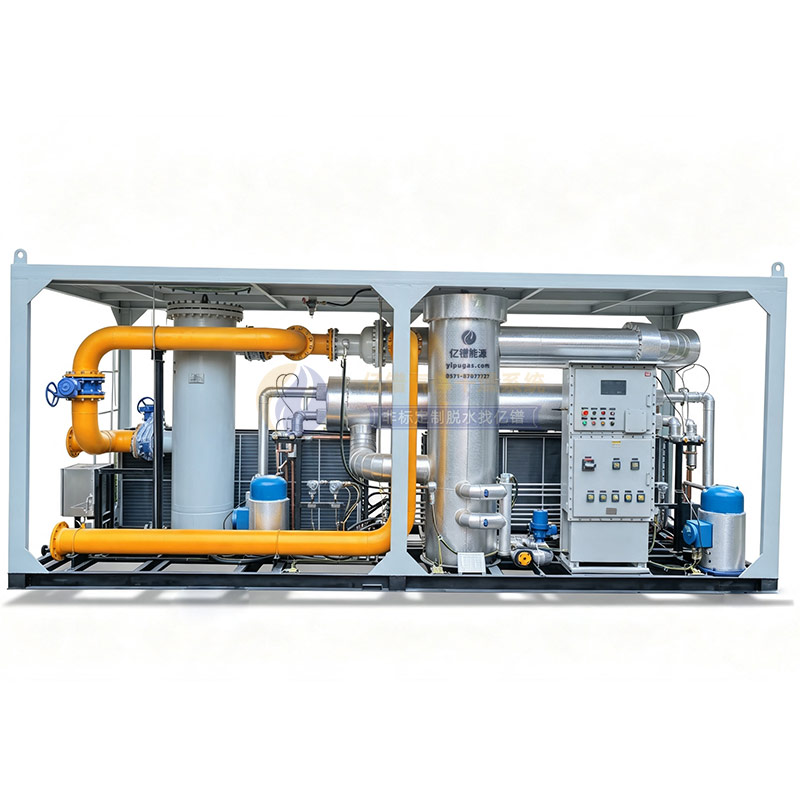
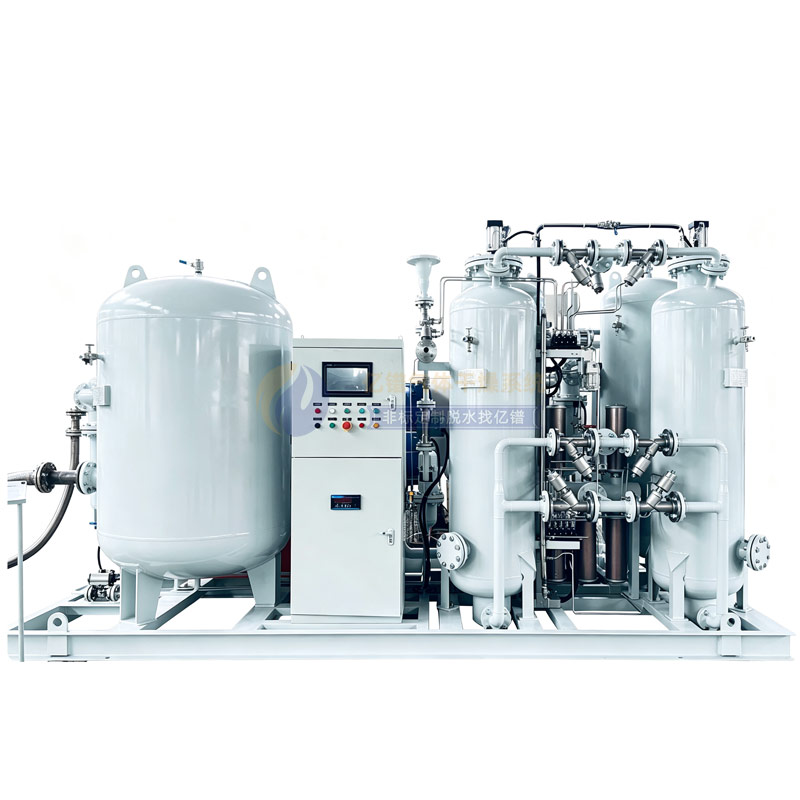
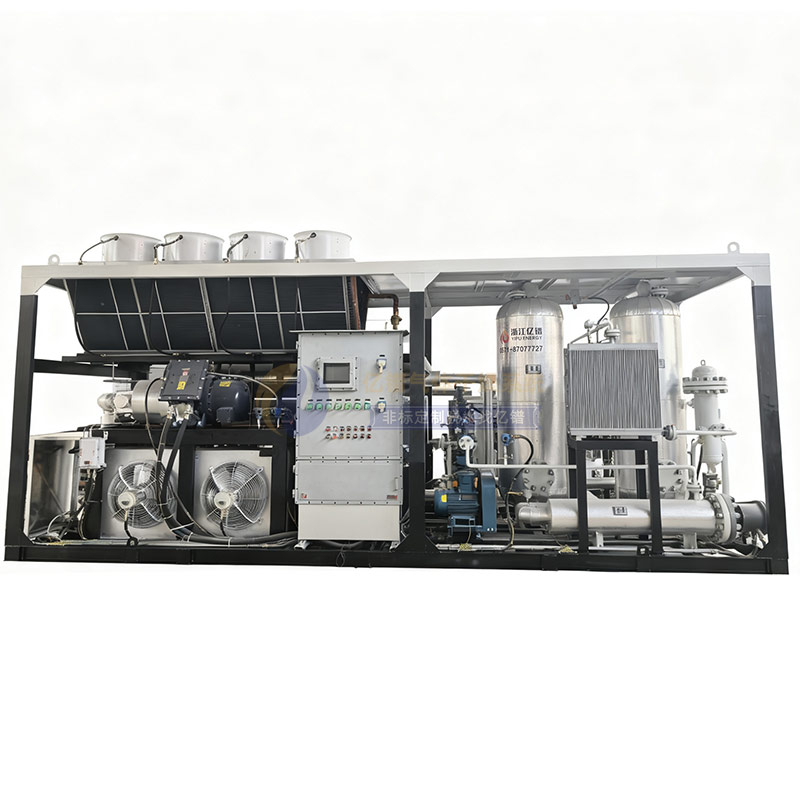
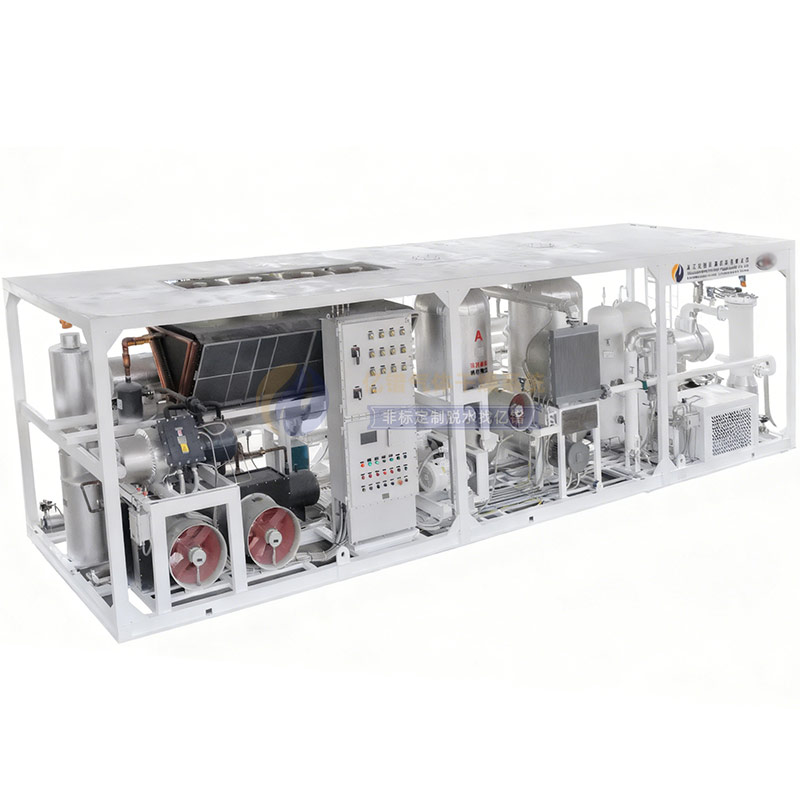
Taking the Yipu oilfield wellhead gas dehydration and dehydrocarbonization device (model YNG10-2400-0.4-AM) in this solution as an example, the device has a processing capacity of 2400Nm³/h (approximately 60,000 cubic meters/day) and an operating pressure of 0.4MPa, which can meet the needs of medium-sized wellheads or gas gathering stations. The equipment includes core components such as dual drying towers, separation filters, dust filters, explosion-proof air-cooled coolers, explosion-proof boosters, explosion-proof electric heaters, refrigeration units, gas-liquid separators, and PLC explosion-proof control cabinets.
- Overall dimensions: approximately 10000×2900×3000mm
VII. Technical Specifications
Inlet gas temperature: ≤25°C
Outlet gas dew point: ≤-55°C
Refrigeration temperature: -20°C to -30°C
Regeneration temperature: 180-200°C
Working cycle: 8 hours
Refrigerant: R22
Explosion-proof grade: ExdⅡBT4
Power: 200-250kw
Overall dimensions: approximately 10000×2900×3000mm
Processing capacity: 2400 Nm³/h
Operating pressure: 0.4 MPa
Design pressure: 0.6 MPa
Inlet gas temperature: ≤25°C
Exhaust temperature: ≤25°C
Atmospheric pressure dew point: ≤-55°C
Equipment pressure drop: ≤30 kPa
Regeneration pressure: isobaric operation
Regeneration cycle: ≤7.5 h (adjustable)
Refrigeration temperature: -20°C to -30°C
Power supply: AC380V/50Hz
Control mode: PLC automatic control
Blowdown mode: automatic blowdown
Structural form: complete machine skid-mounted
The equipment complies with standards such as SY/T 0076-2023, GB150-2024, and TSG 21-2016. All pressure vessels, valves, and instruments have qualified qualifications to ensure long-term stable operation.