

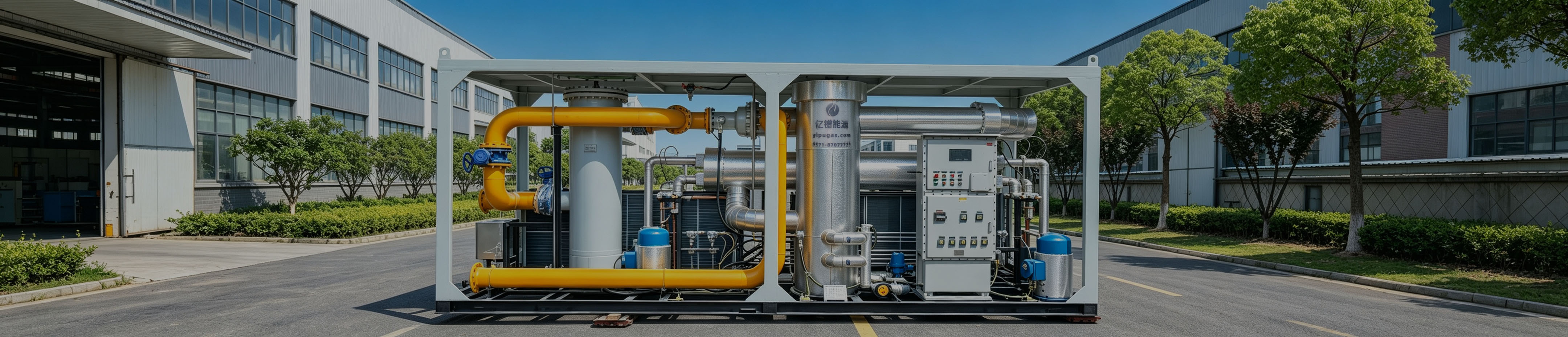
Yipu natural gas dehydration unit: efficiently solves natural gas dehydration challenges, ensuring stable operation of filling stations and pipeline networks
I. Market Pain Points
In the process of natural gas extraction, transmission, and use, the presence of water vapor is a hidden danger that cannot be ignored. When natural gas contains a large amount of water vapor, during pressurization and cooling, once the water dew point is reached, the water in the gas phase will precipitate in the form of free water, and then form hydrates. These hydrates will block pipelines, gas cylinder nozzles, inflation nozzles, and other key parts, causing gas stations to be unable to refuel normally in low-temperature environments, and making it difficult for vehicles to start and run in cold climates. For such a critical link as the natural gas dehydration system, if there is a lack of efficient and reliable equipment, the entire gas well gas gathering and transportation system will face risks. Traditional dehydration methods such as the cooling method and the absorption method are often inefficient, costly, and difficult to achieve deep dehydration requirements. Therefore, the market urgently needs a high-performance device that can effectively remove moisture from natural gas and prevent hydrate formation. The Yipu natural gas dehydration device is designed precisely to solve this pain point. It adopts advanced molecular sieve adsorption technology to deeply remove moisture from the gas and meet the requirements of natural gas cryogenic processing. Whether it is an oilfield wellhead gas drying and dehydration system or a gas station natural gas dehydration device, it can operate stably and ensure production safety.
II. Device Process
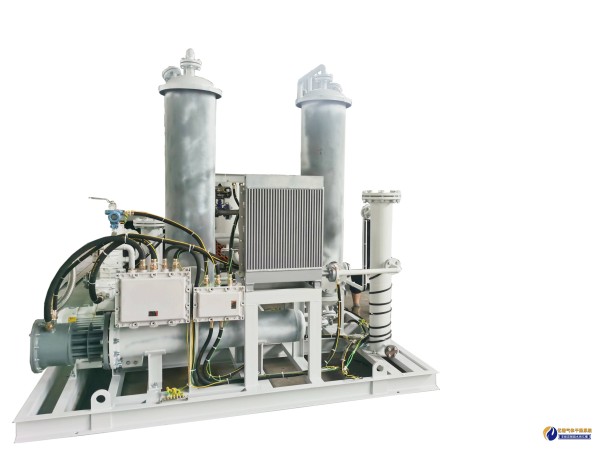
The Yipu natural gas dehydration device adopts a dual-tower alternating working system, that is, one tower adsorbs while the other tower regenerates or stands by. The entire process includes the adsorption process and the regeneration process.
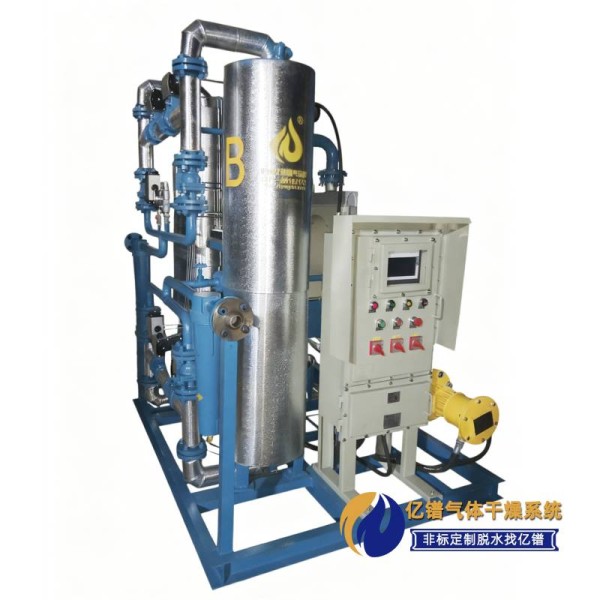
Adsorption process: The main gas flow enters from the gas inlet, passes through the separation filter to initially remove free oil and water and large particle impurities, and then enters adsorption tower A (or B). Inside the tower, the gas passes through the molecular sieve bed, and the molecular sieve adsorbs water vapor molecules in the natural gas under low temperature and high pressure. The dried gas after adsorption is deeply purified by the dust filter and finally discharged from the gas outlet, achieving continuous gas supply.
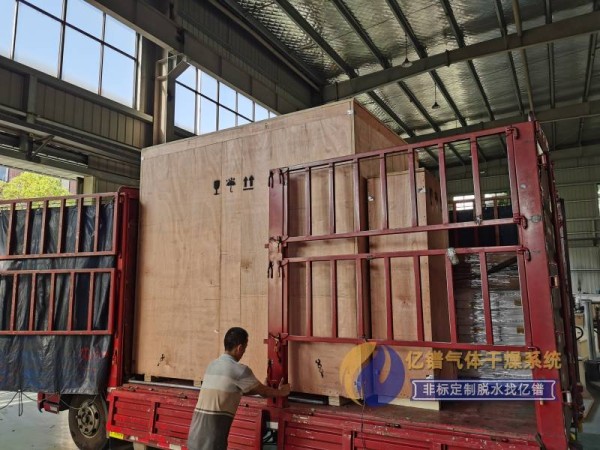
Regeneration process: When the molecular sieve is saturated with water absorption, it enters the regeneration process through valve switching. A small amount of dry natural gas is pressurized by the booster and then enters the explosion-proof electric heater to be heated to about 190°C, and then enters the regeneration tower to desorb moisture from the molecular sieve. The high-moisture natural gas after desorption enters the cooler for cooling and separation, the precipitated water is discharged to the liquid storage tank, and the separated natural gas continues to be recycled. After the molecular sieve regeneration is completed, it switches back to the adsorption state. In this way, the Yipu natural gas dehydration device can continuously provide pure dry gas with a dew point below -40°C.
III. Working Principle
The Yipu natural gas dehydration device is based on the principle of temperature swing or temperature swing pressure swing adsorption, utilizing the characteristic that the adsorption capacity of molecular sieve for water vapor molecules changes with system pressure and temperature. Under high pressure and low temperature, the molecular sieve adsorbs water vapor; under low pressure and high temperature, the molecular sieve desorbs water vapor, thereby achieving regeneration. This device uses 4A spherical molecular sieve as the adsorbent, which can deeply remove residual moisture in natural gas and also adsorb impurities such as H2S, NH3, and SO2, protecting subsequent equipment such as compressors and gas dispensers. The adsorption process is a physical process and does not involve chemical reactions, so the operation is safe and reliable. The entire natural gas dehydration system automatically controls the switching cycle through a PLC controller to ensure continuous and efficient operation of the equipment.
IV. Core Advantages
1. Deep dehydration: High-strength 4A molecular sieve is used, with a large filling amount, long adsorption cycle, and high dehydration depth. The exhaust dew point is as low as below -40°C, meeting the most demanding industrial requirements.
2. Stable and reliable: The dual-tower structure provides continuous gas supply, with one tower adsorbing and one tower regenerating. The output gas is stable without pressure fluctuations, extending the service life of the molecular sieve. Manual switching and automatic regeneration make operation simple and convenient.
3. Safety protection: Triple over-temperature protection function. The explosion-proof electric heater has its own explosion-proof thermal resistance to prevent dry burning; overload shutdown protection for the booster and cooling fan; power-off protection for heater over-temperature and automatic power-on function when temperature drops, ensuring the optimal regeneration temperature. 4. High-quality components: The controller uses imported original components such as Siemens PLC, Schneider contactors, and Taiwan Yangming power regulators; the valves use Shanghai high-pressure valves with high-temperature and wear-resistant materials; the safety valve uses China Yongyi full-lift enclosed stainless steel core; explosion-proof products meet the CT6 standard.
5. Easy maintenance: The tower body is separately provided with a loading port and a unloading port, so the molecular sieve can be replaced without disassembling the pipeline; the separator, separation filter, and dust filter effectively remove free oil and water and particles, protecting the adsorbent and subsequent equipment.
V. Technical Strength
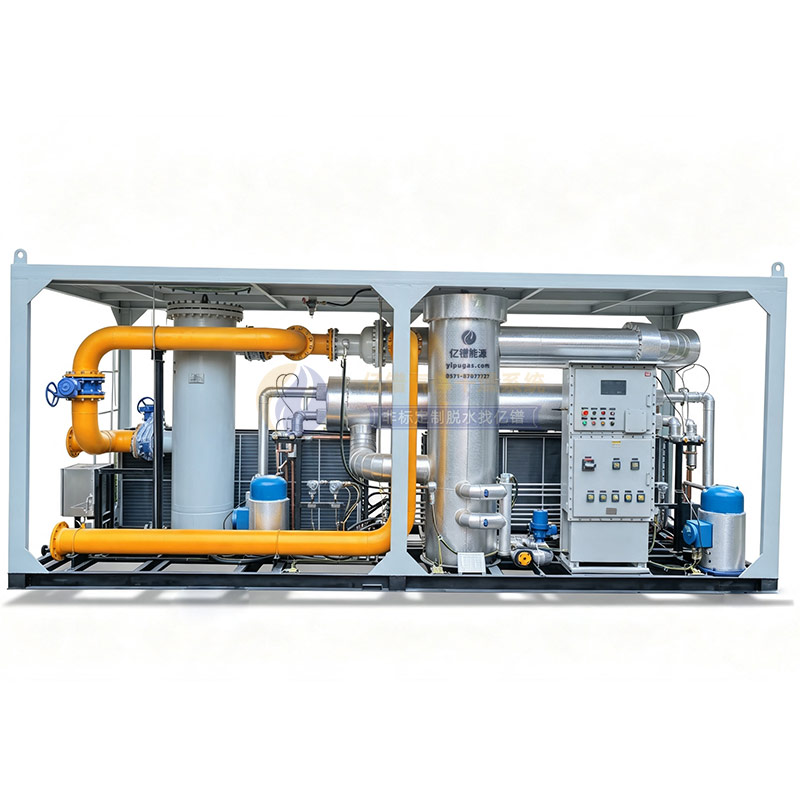
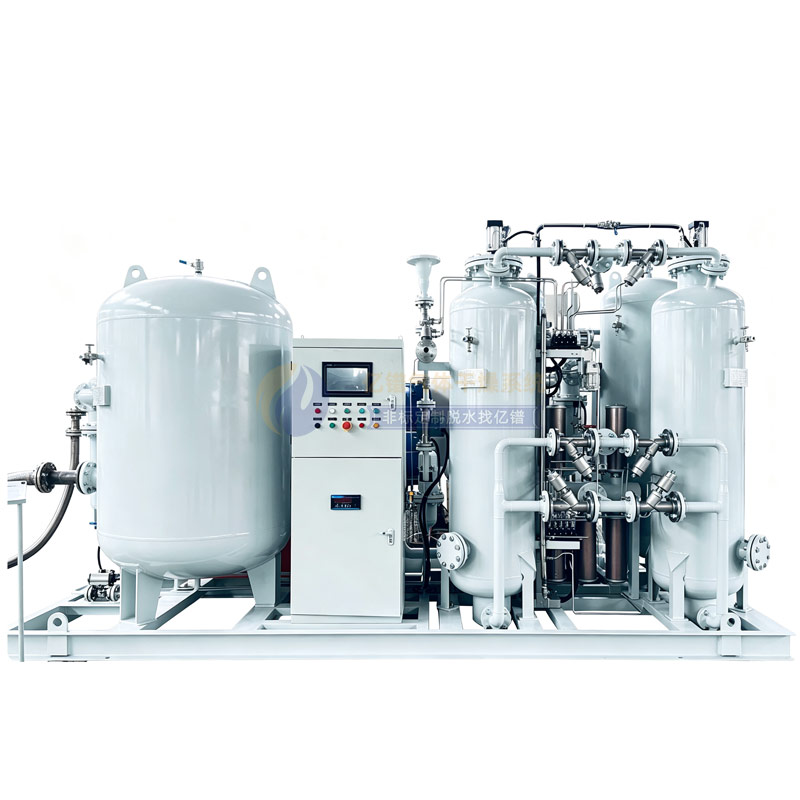
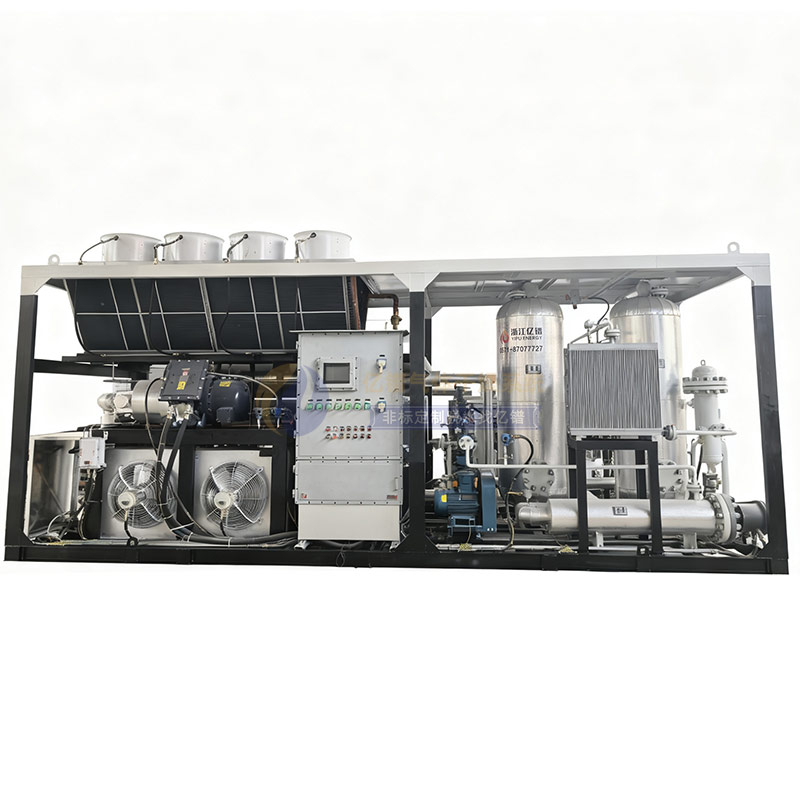
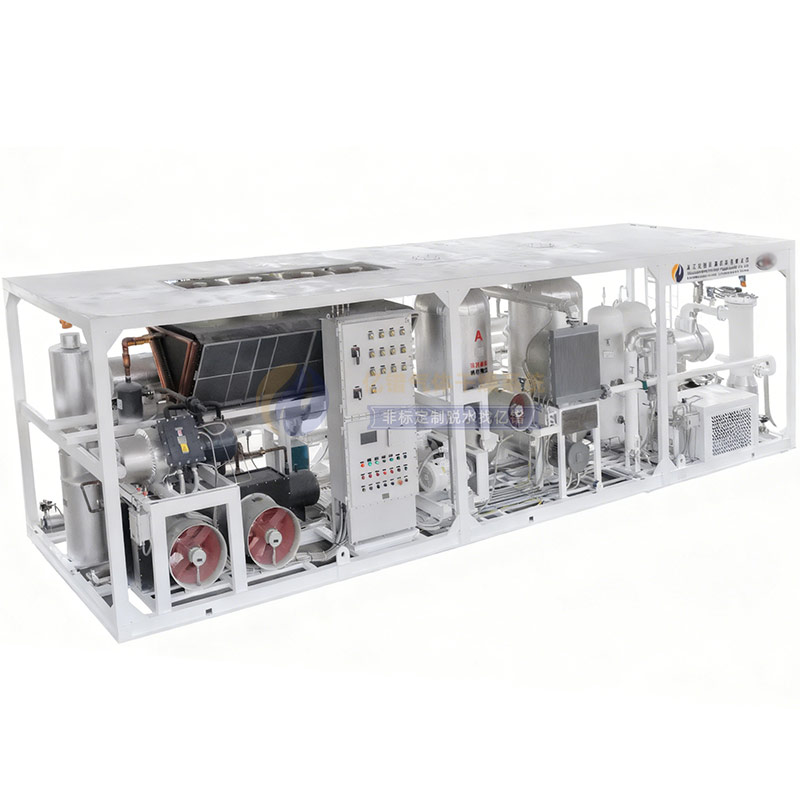
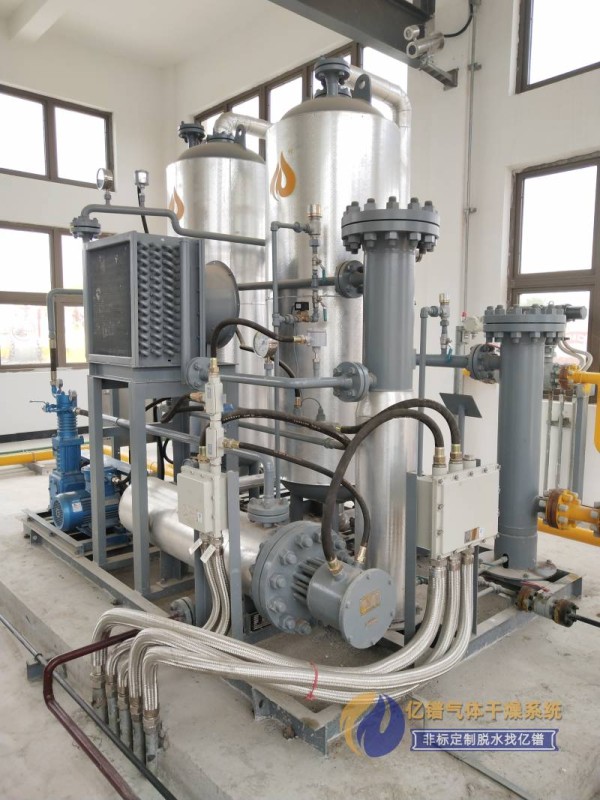
Zhejiang Yipu Energy Technology Co., Ltd. is a leading domestic manufacturer of natural gas dehydration equipment and possesses multiple independent intellectual property rights. The company strictly designs, manufactures, and inspects in accordance with relevant standards such as SY/T 0076-2008 "Design Specification for Natural Gas Dehydration," GB150-2011, and TSG 21-2016 "Supervision Regulation on Safety Technology for Stationary Pressure Vessels." Its developed YNG series natural gas dehydration devices have been widely used in industries such as petroleum, chemical, machinery, electronics, instrumentation, natural gas dehydration, biogas dehydration, and coalbed methane dehydration. The product structure is novel, operation is simple, and performance is stable and reliable. The Yipu natural gas dehydration device adopts an integral skid-mounted structure, integrating adsorption towers, safety valves, manual ball valves, electric control cabinets, explosion-proof electric heaters, boosters, coolers, separators, separation filters, dust filters, explosion-proof thermal resistances, pressure gauges, dew point meters, and pipeline systems, with advanced domestic configuration and reasonable design. The company also provides comprehensive technical support and after-sales service to ensure users have no worries.
VI. Product Introduction
This solution targets the YNG11-4170-2.0-SM model natural gas dehydration device, with a processing gas capacity of 4170 Nm³/h (10^4 Nm³/d) and a working pressure of 2.0 MPa. This device is specially used for deep dehydration of natural gas and can also be used in scenarios such as biogas drying and dehydration equipment, oilfield wellhead gas drying and dehydration systems, gas station natural gas dehydration devices, associated gas dehydration devices, coalbed methane dehydration devices, LNG gas station drying and dehydration systems, CNG gas station drying and dehydration systems, and city pipeline network gas dehydration devices. It adopts a molecular sieve regenerative adsorption dehydration system to ensure efficient dehydration. The equipment is integrally skid-mounted, compact in structure, and small in floor space, suitable for indoor or outdoor installation (protective canopy required).
Technical indicators:
Product model: YNG11-4170/2.0-SM
Rated working pressure: 2.0 MPa
Design pressure: 3.5 MPa
Safety valve set pressure: 3.2 MPa
Rated flow: 4170 Nm³/h
Inlet temperature: normal temperature
Inlet oil content: ≤3 mg/Nm³
Outlet temperature: 10°C higher than ambient temperature
Maximum particle diameter at outlet: ≤1 μm
Inlet and outlet pressure drop: ≤0.03 MPa
Regeneration method: manual switching, isobaric regeneration
Heating element design temperature: 240°C
Regeneration temperature: 170°C
Working mode: dual-tower alternating, continuous operation
Control mode: semi-automatic control
Adsorption cycle: 12 hours
Regeneration time: 8 hours
Filter blowdown method: manual periodic blowdown
Separator blowdown method: manual
Adsorbent: 4A spherical molecular sieve
Explosion-proof electric heater: AC380V 90kW dⅡBT4
Booster motor: AC380V 11kW dⅡBT4
Cooling fan motor: AC380V 2.2kW dⅡBT4
Structural form: integral skid-mounted
Filter configuration: separator, separation filter, dust filter
Inlet and outlet pipe diameter: flange WN80-40RF
Total equipment mass: about 1100 kg
Outlet gas dew point: ≤-40°C (at normal pressure)
Adsorbent service life: more than 8000 hours under normal use
Regeneration gas consumption: ≤3% of processing gas volume
Explosion-proof grade: dⅡBT4
Protection grade: IP55
Compliant standards: SY/T 0076-2008, GB150-2011, TSG 21-2016