

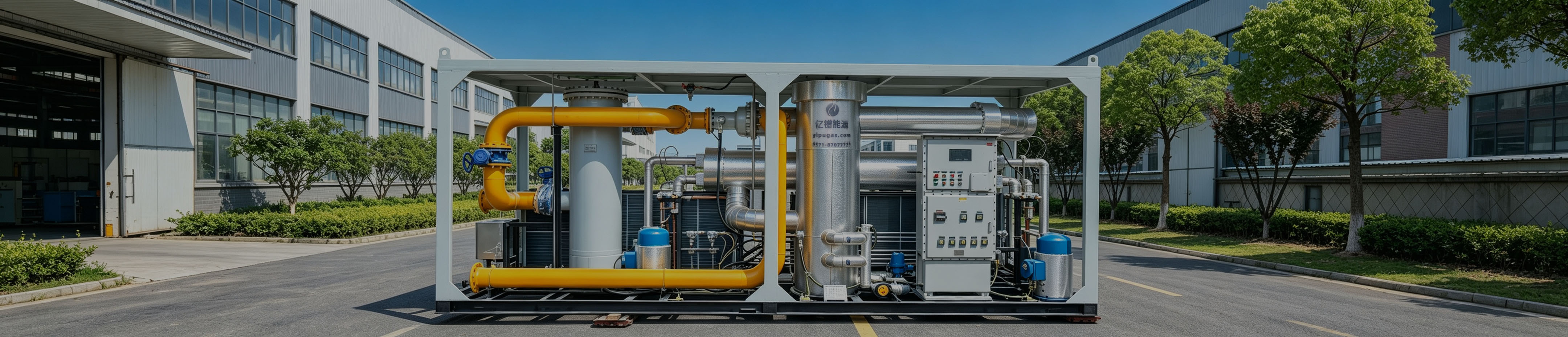
Yipu natural gas dehydration unit—deep water removal for your natural gas system, ensuring efficient operation
I. Market Pain Points
In the process of natural gas extraction, transmission, and utilization, water vapor is one of the most common and troublesome impurities. When natural gas reaches its water dew point during pressurization and cooling, gaseous water precipitates as free water and may even form hydrates with hydrocarbons, blocking pipelines, gas cylinder nozzles, inflation nozzles, and other critical parts. This can prevent gas stations from refueling normally in low-temperature environments and make vehicles difficult to start in cold climates, seriously affecting production operations and user experience. For gas sources such as oilfield wellhead gas, coalbed methane, and associated gas, the water content is often higher. Without deep dehydration, subsequent compression, liquefaction, transmission, and combustion processes will face major risks such as corrosion, ice blockage, and equipment damage. Especially in LNG filling stations, CNG filling stations, and urban pipeline gas supply systems, natural gas with unqualified dew point will directly threaten equipment safety and gas supply quality. Therefore, an efficient and reliable natural gas dehydration system has become an industry necessity, and the Yipu natural gas dehydration unit was created precisely to solve this pain point.
II. Unit Process
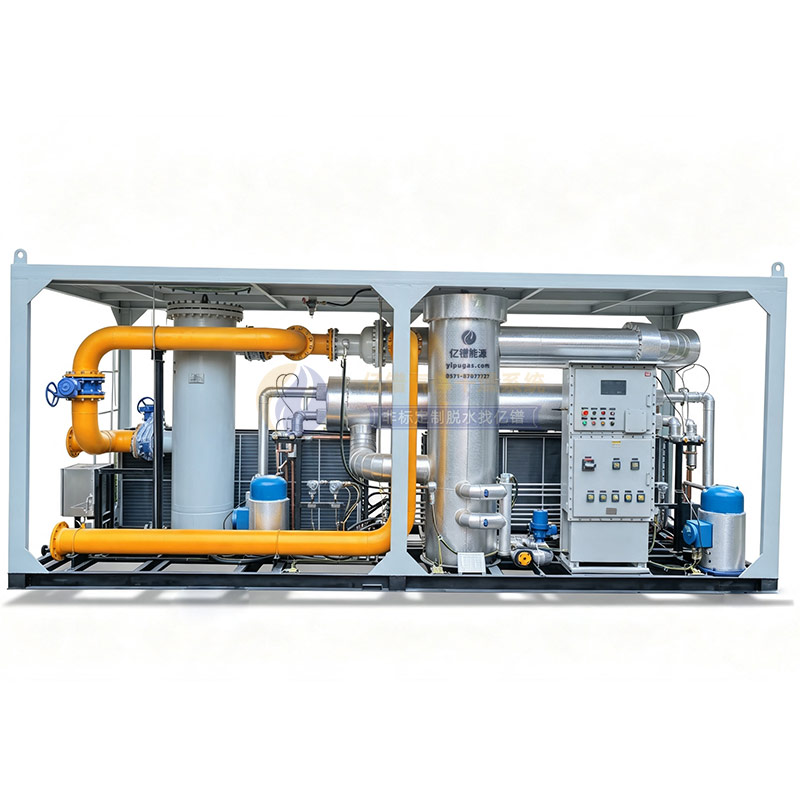
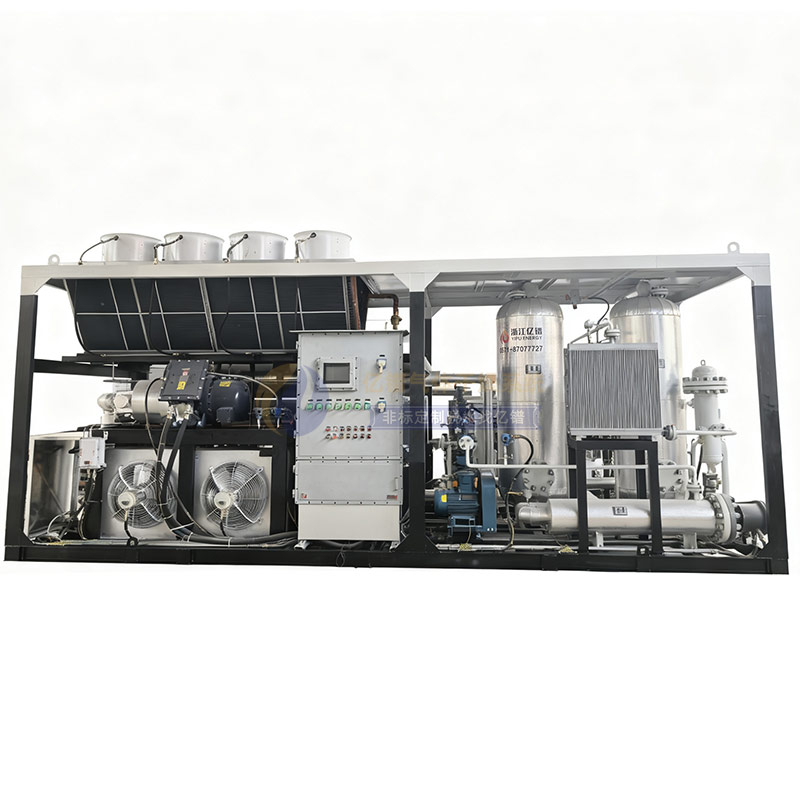
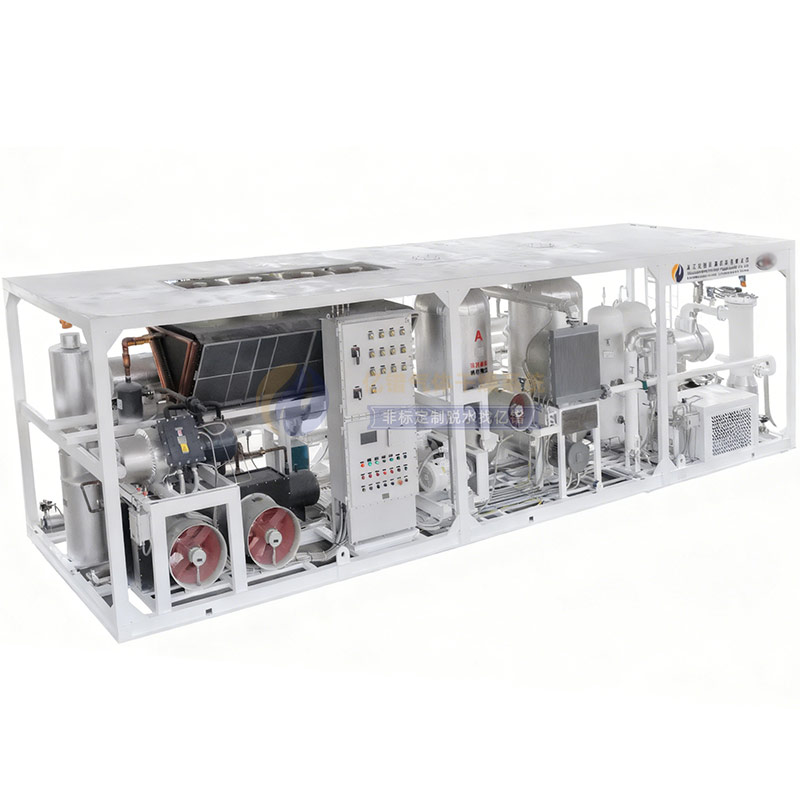
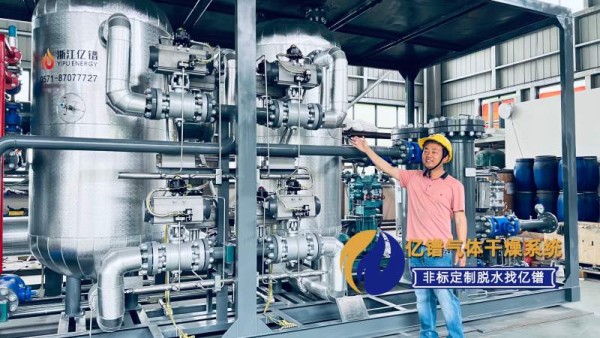
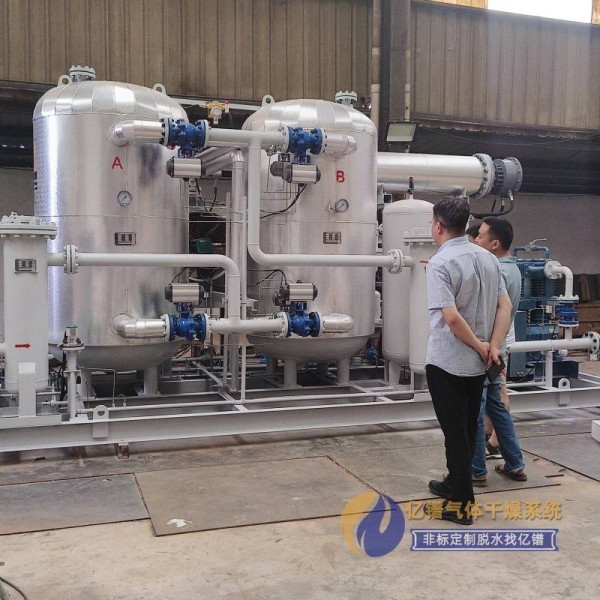
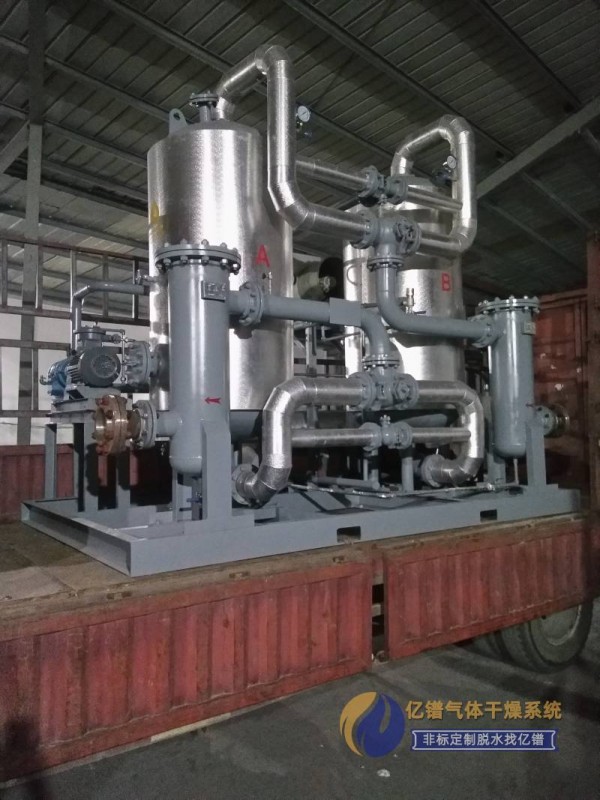
The Yipu natural gas dehydration unit adopts an integral skid-mounted structure, integrating core components such as adsorption tower A, adsorption tower B, safety valve, manual ball valve, electric control cabinet, explosion-proof electric heater, circulation compressor, cooler, separator, separation filter, dust filter, explosion-proof thermal resistance, pressure gauge, dew point meter, piping system, and control system. The equipment operation process is clearly divided into the adsorption process, regeneration process, blowdown process, and venting process. The main gas flow enters adsorption tower A from the gas inlet through the separation filter, passes through the 4A spherical molecular sieve bed inside the tower, and undergoes deep adsorption dehydration under low-temperature and high-pressure conditions. The dried gas after water removal is then finely dedusted through the dust filter and finally output from the gas outlet. When adsorption tower A becomes saturated, it enters the regeneration process through valve switching: a small amount of dry natural gas is pressurized by the circulation compressor and enters the explosion-proof electric heater, where it is heated to about 190°C and then enters adsorption tower B to perform high-temperature desorption on the saturated molecular sieve. The high-moisture natural gas after desorption is cooled and separated by the cooler, the water is discharged into the liquid storage tank, and the separated natural gas continues to enter the adsorption tower for drying until the molecular sieve regeneration is completed. Towers A and B work alternately to ensure continuous and uninterrupted gas supply from the system.
III. Working Principle
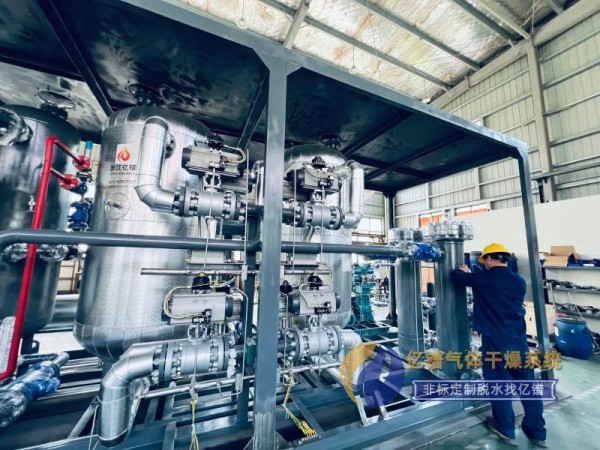
The core principle of the Yipu natural gas dehydration unit is the organic combination of temperature swing adsorption (TSA) and pressure swing adsorption (PSA). Essentially, it utilizes the characteristic that the adsorption capacity of molecular sieve for water vapor molecules changes with system pressure and temperature. Under low temperature and high pressure, 4A spherical molecular sieve has an extremely strong affinity for water molecules and can deeply remove water vapor from natural gas. After adsorption saturation, the adsorption bed is heated by high-temperature low-pressure or isobaric regeneration gas to drive off water, thereby enabling cyclic use of the adsorbent. This physical adsorption process does not change the composition of natural gas and only removes water and a small amount of impurities (such as H2S, NH3, SO₂, etc.), thereby obtaining pure and dry compressed natural gas. The Yipu natural gas dehydration unit adopts a dual-tower alternating operation system. While one tower is adsorbing, the other tower is regenerating or on standby, and automatic switching occurs after the set cycle to ensure continuous gas supply and a stable dew point below -60°C. The design of the molecular sieve regeneration adsorption dehydration system cleverly utilizes heat energy and pressure changes to achieve efficient, low-consumption deep dehydration, fully reflecting Yipu's technical accumulation in the field of gas purification.
IV. Core Advantages
The Yipu natural gas dehydration unit strictly follows standards such as SY/T 0076-2008 "Design Specification for Natural Gas Dehydration," GB150-2011, and TSG 21-2016 "Supervision Regulation on Safety Technology for Stationary Pressure Vessels" in design and manufacturing, ensuring safety and reliability. The equipment adopts a dual-tower structure, with one tower adsorbing and the other regenerating. The design margin is enlarged by 10%, the adsorption bed is high, and the molecular sieve loading is large, so the adsorption capacity is large, the adsorption cycle is long, and the dehydration depth is high, allowing it to adapt to various complex and harsh working conditions. Core components are selected from internationally renowned brands: the controller adopts Yipu's independently developed intelligent system, equipped with Siemens PLC controllers, Schneider contactors and circuit breakers, and Taiwan Yang Ming power regulators. The touch screen has built-in wiring diagrams and troubleshooting solutions, making operation and maintenance extremely convenient. Valves are selected from German ROP or Shanghai high-pressure high-temperature valves, and the sealing material is added with wear-resistant carbon fiber, which is more temperature-resistant and wear-resistant than peers' PPL and has a longer service life. The safety valve adopts China Yongyi full-lift enclosed stainless steel valve core. Explosion-proof products meet CT6 standards. The explosion-proof heater is designed with a U-shaped low-load design, and the explosion-proof axial fan adopts all-aluminum fan blades with coating technology, ensuring safe operation in hazardous environments. In addition, it has intelligent functions such as triple over-temperature protection, compressor and fan overload shutdown protection, and automatic start-stop of the fan based on regeneration gas temperature, effectively avoiding the risks of dry burning and unexpected shutdowns. The adsorbent uses high-quality 4A molecular sieve with a large filling amount and excellent dehydration effect, with a normal service life of more than 8,000 hours. The tower body is separately provided with a loading port and a discharge port, so the molecular sieve can be replaced without dismantling pipelines. The inlet and outlet of the drying tower are equipped with airflow diffusion distributors, which can effectively prevent airflow impact on the adsorbent and further extend the service life of the molecular sieve.
V. Technical Strength
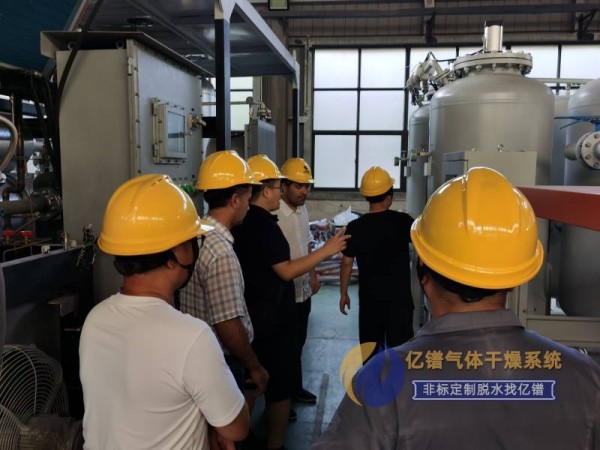
Zhejiang Yipu Energy Technology Co., Ltd., as a professional manufacturer of natural gas treatment equipment, has been deeply engaged in the industry for many years and possesses rich engineering experience and strong R&D capabilities. The Yipu YNG series natural gas dehydration system has been widely applied in petroleum, chemical, machinery, electronics, instrumentation, natural gas dehydration, biogas drying and dehydration, coalbed methane dehydration, and many other industries, providing high-quality dry and clean compressed gas for various process processes. The company's independently developed control system has applied for intellectual property protection. The equipment touch screen has built-in wiring diagrams and troubleshooting solutions, greatly facilitating on-site operation and after-sales maintenance. Yipu not only provides standard models of natural gas dehydration units but can also provide customized designs according to customers' specific gas source composition, pressure, flow rate, and dew point requirements. For example, for different gas source characteristics such as oilfield wellhead gas, associated gas, and coalbed methane, the molecular sieve loading and regeneration process are optimized to ensure the best dehydration effect. The company has a complete quality management system, with strict control at every process from raw material procurement, processing and manufacturing, assembly and commissioning to factory inspection, ensuring that every natural gas dehydration skid is of excellent quality. Choosing Yipu means choosing professionalism and peace of mind.
VI. Product Introduction
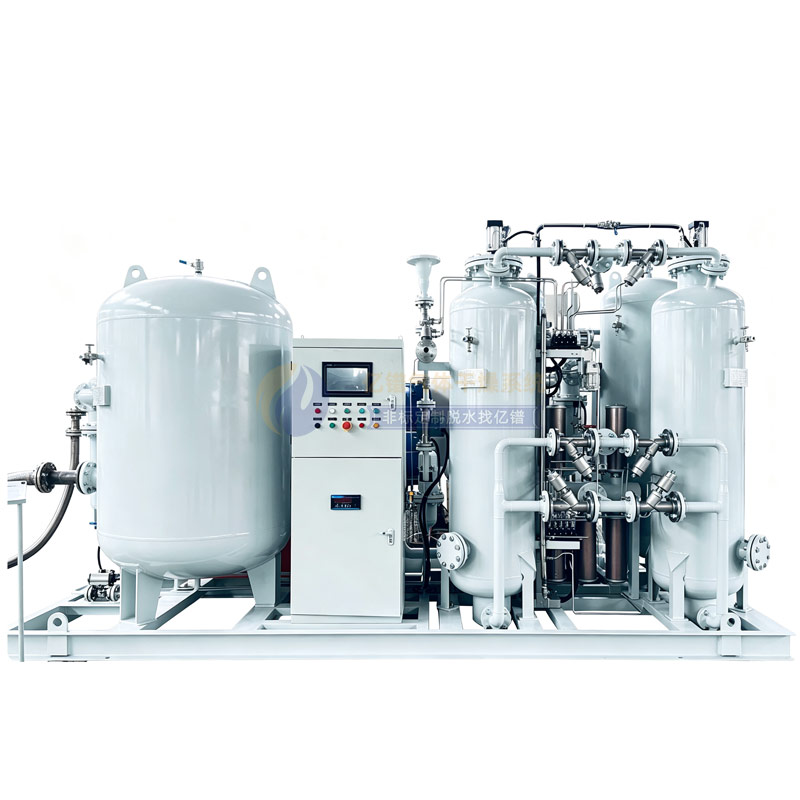
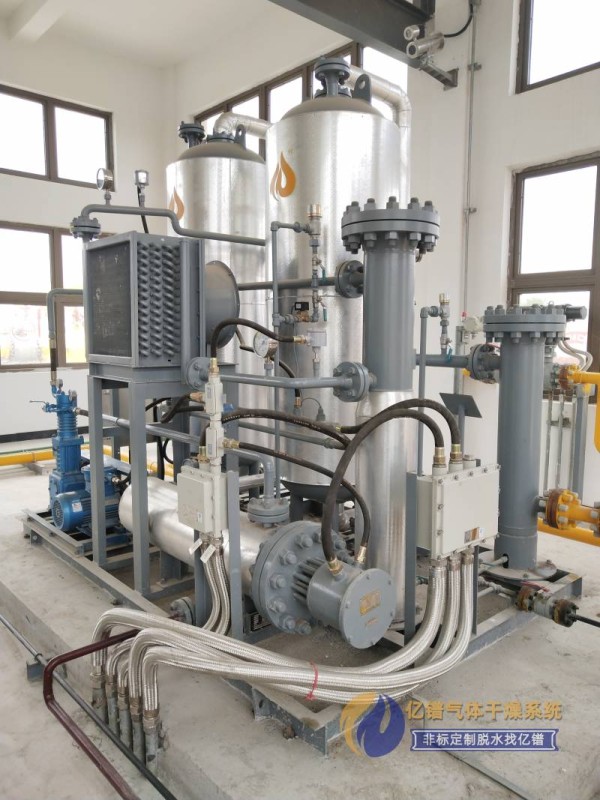
The Yipu YNG series natural gas dehydration unit is a deep dehydration device integrating intelligence, integration, and high efficiency. This product model is YNG7-5000/1.0~1.8-SM, with a processing gas capacity of 5000Nm³/h, working pressure of 1.0~1.8MPa, and design pressure of 2.5MPa. The equipment structure is integral skid-mounted, integrating all components on a steel base. On-site installation is simple, and operation only requires connecting the inlet and outlet pipelines and power supply. The product is suitable for various scenarios such as natural gas filling stations (CNG/LNG), urban pipeline gas, oilfield wellhead gas, associated gas, coalbed methane, and biogas, and can provide stable and reliable low-dew-point natural gas for subsequent compression, liquefaction, transmission, and combustion. The Yipu natural gas dehydration equipment has an intelligent control mode of manual switching and automatic regeneration, supporting three modes: time switching, dew point switching, and time-dew point combined switching, and reserves a Modbus RTU communication interface for convenient connection to the user's DCS system. The outlet gas dew point of the equipment can stably reach below -60°C, superior to the national standard, fully meeting the requirements of cryogenic processing and pipeline transmission.
VII. Technical Specifications
Product model: YNG7-5000/1.0~1.8-SM
Name: Natural gas dehydration unit
Rated working pressure: 1.0~1.8MPa
Design pressure: 2.5MPa
Safety valve set pressure: 2.4MPa
Rated flow rate: 5000Nm³/h
Inlet gas temperature: Designed according to ambient temperature
Inlet gas oil content: ≤3mg/Nm³
Outlet gas temperature: About 10°C higher than ambient temperature
Maximum particle diameter in outlet gas: ≤1μm
Inlet and outlet pressure drop: ≤0.05MPa
Regeneration method: Manual switching, isobaric regeneration
Heating element design temperature: 240°C
Regeneration temperature: 170°C
Working mode: Dual-tower alternating, continuous operation
Control mode: Semi-automatic control
Adsorption time: 16 hours
Regeneration time: 8 hours
Filter blowdown method: Manual periodic blowdown
Separator blowdown method: Manual
Adsorbent: 4A spherical molecular sieve
Explosion-proof electric heater: AC380V 36KW dIICT4 Compressor motor: AC380V 7.5KW dIICT4 Cooling fan motor: AC380V 1.1KW dIICT4
Structural form: Integral skid-mounted
Filter configuration: Separator, separation filter, dust filter
Inlet and outlet pipe diameter: Flange WN100-25RF
Overall dimensions: According to actual design
Installation method: Outdoor installation with foundation
Total equipment mass: About 6000kg
Total power consumption: According to actual working conditions
These technical specifications are fully benchmarked against international advanced levels, ensuring that the Yipu natural gas dehydration unit maintains excellent performance under high pressure, high humidity, and harsh working conditions.