

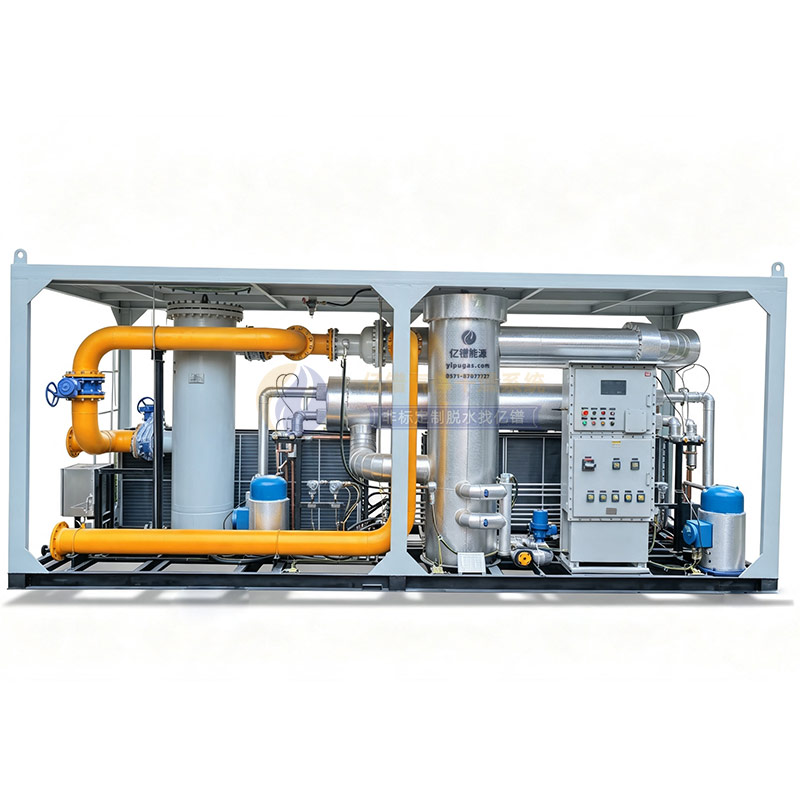
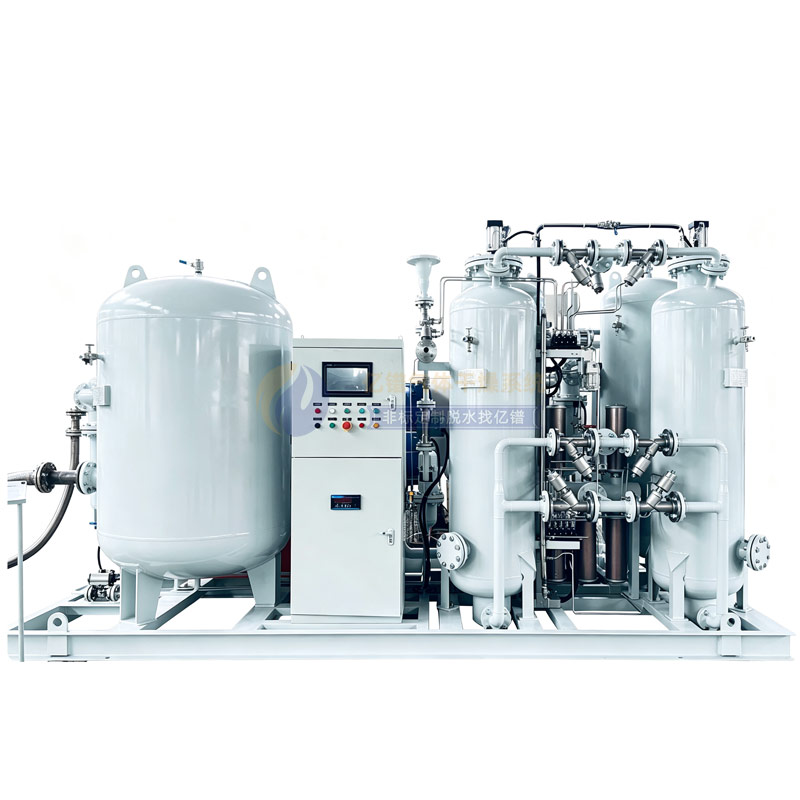
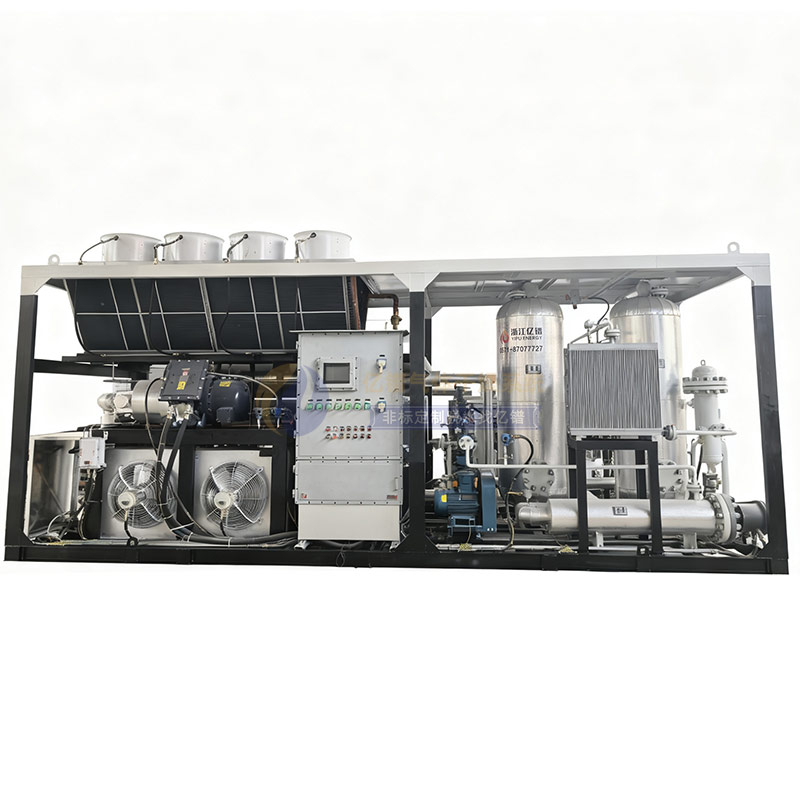
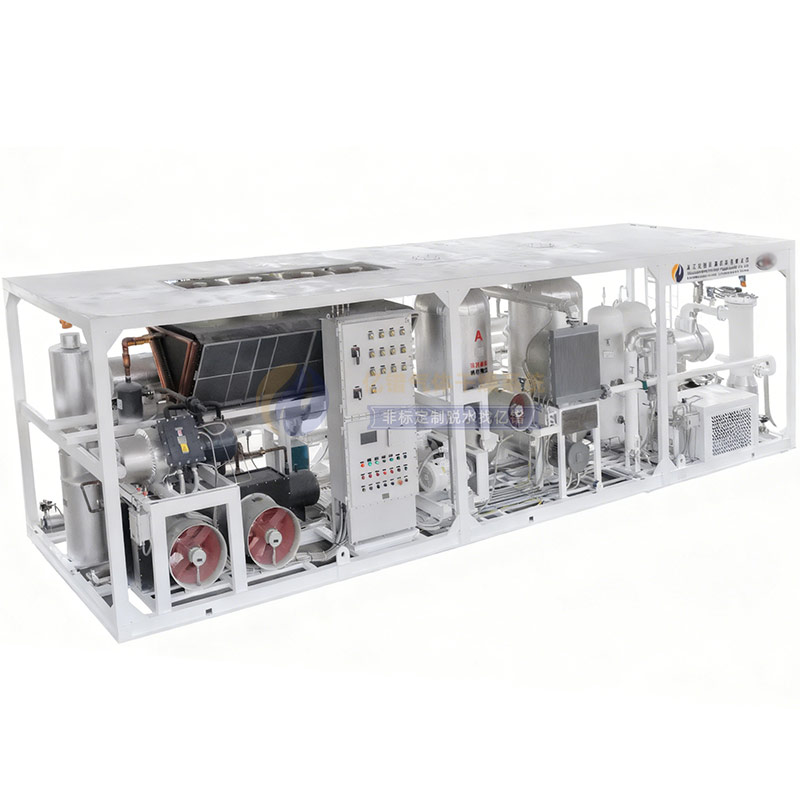
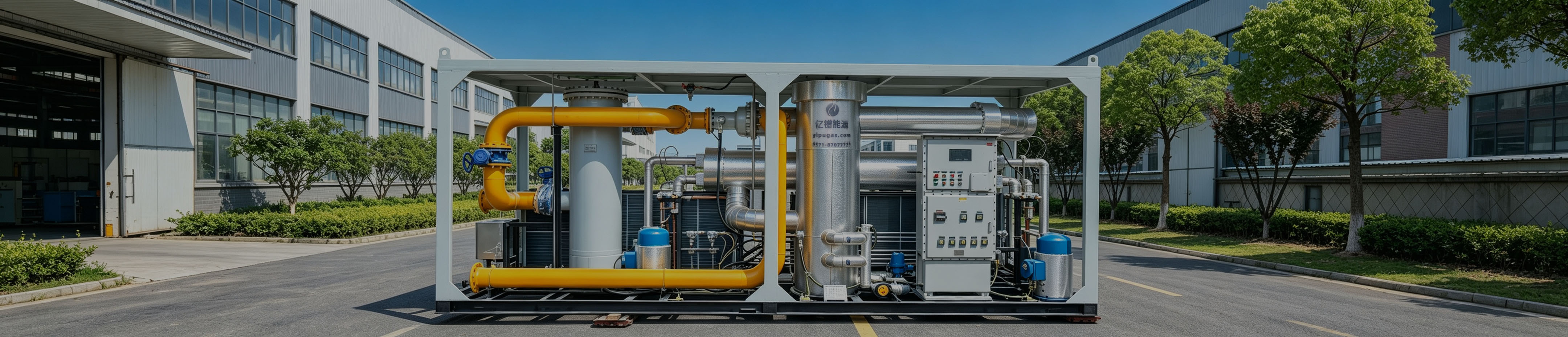
Yipu city pipeline network gas dehydration unit: deep dehydration, safeguarding the safe operation of the pipeline network
In the process of natural gas transmission and distribution, city pipeline network gas often contains saturated water vapor. This water vapor not only corrodes pipeline equipment, leading to reduced metal wall thickness and increased leakage risk, but also easily forms natural gas hydrates under high-pressure and low-temperature conditions, blocking valves, pressure regulators, and instrument piping, seriously threatening the safety of the pipeline network and the stability of gas supply. Traditional dehydration methods such as refrigeration and gravity separation have limited effectiveness and cannot meet deep dehydration requirements, especially for low-pressure city pipeline networks with strict dew point requirements. The Yipu city pipeline network gas dehydration unit, with its advanced technology, completely solves this problem, ensuring that pipeline network gas is dry and clean, and providing gas companies with a reliable deep dehydration solution.
I. Working Principle
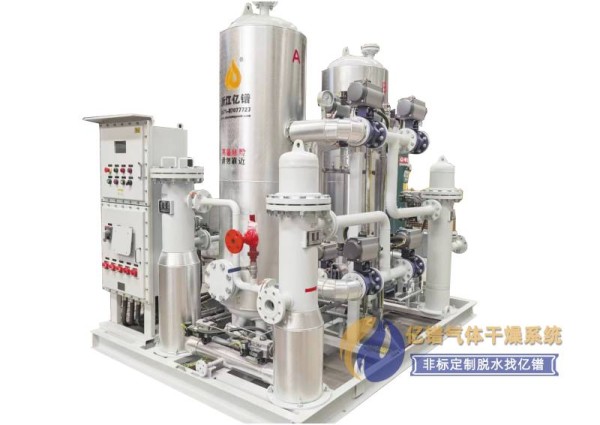
The Yipu city pipeline network gas dehydration unit adopts a two-tower alternating operation system: when one tower is adsorbing and dehydrating, the other tower is regenerating or on standby, achieving continuous gas supply. The gas first passes through a liquid-gas separator and a coarse filter to remove free oil, water, and particulate impurities, and then enters the drying tower, where water vapor and carbon dioxide are adsorbed through a 4A molecular sieve bed. The dried gas is output after molecular sieve dust is filtered out by a dust filter. The regeneration process adopts a closed-loop countercurrent heating zero-emission method: regeneration gas enters from the bottom of the drying tower, is heated to 180-230°C by an explosion-proof electric heater, passes countercurrently through the saturated molecular sieve bed to desorb water, then is cooled by an air cooler, drained by a liquid-gas separator, and recycled, without consuming product gas.
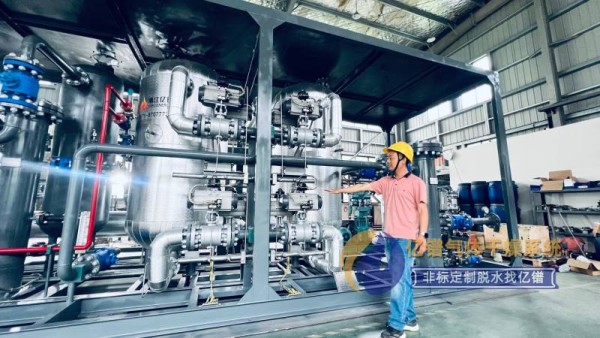
The adsorption capacity of the adsorbent for water molecules varies with temperature: the adsorption capacity is large at low temperatures and small at high temperatures. The Yipu city pipeline network gas dehydration unit utilizes this temperature swing adsorption principle to adsorb water vapor in the gas at ambient temperature. When the molecular sieve is saturated, high-temperature low-pressure regeneration gas is introduced to heat the bed, causing water to desorb and be carried away by the regeneration gas, and after cooling, it is separated and discharged, thereby achieving cyclic use of the molecular sieve. The regeneration process is automatically controlled by a PLC, with real-time monitoring through temperature sensors and pressure transmitters, ensuring thorough regeneration and energy savings. The switching time between the two towers can be set according to the water content of the inlet gas, usually switching once every 24 hours, ensuring that the adsorption tower has sufficient time to complete adsorption and the regeneration tower fully recovers its activity.
II. Technical Features and Advantages
1. Zero gas consumption regeneration: Traditional heating regeneration methods often require discharging a large amount of regeneration gas, causing natural gas loss. The Yipu unit adopts closed-loop countercurrent heating regeneration, in which the regeneration gas is recycled. Only a very small amount of gas is discharged with condensed water during the water separation process, resulting in almost zero emissions, saving energy and protecting the environment while reducing operating costs.
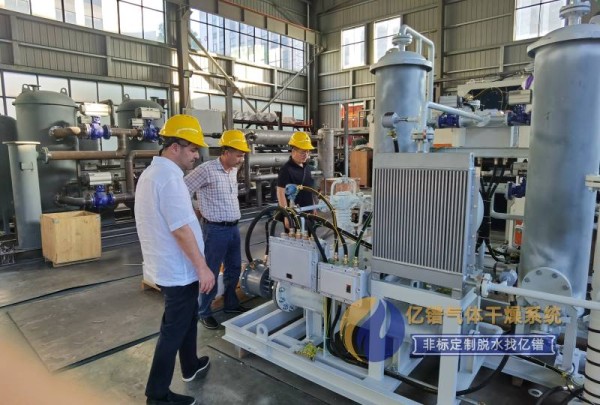
2. Deep dehydration: High-quality 4A spherical molecular sieve is used, featuring high adsorption capacity and selectivity, and can deeply remove water vapor and carbon dioxide. The outlet dew point can reach below -60°C (at atmospheric pressure), effectively preventing hydrate formation and ensuring the normal operation of downstream equipment. Even if the inlet water content fluctuates, high-quality dry gas can be output stably.
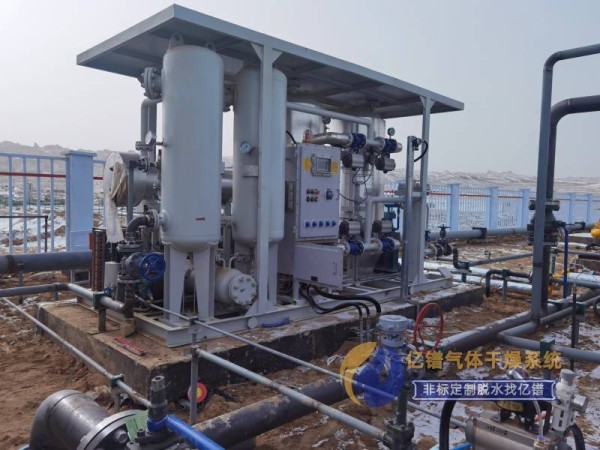
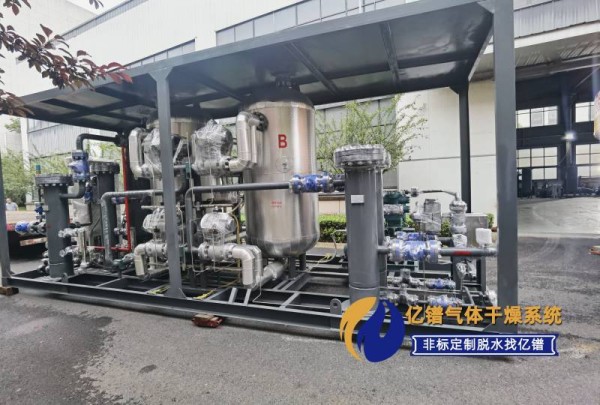
3. Skid-mounted integration: The overall skid-mounted structure integrates all components on the same base, including the liquid-gas separator, coarse filter, drying tower, dust filter, explosion-proof electric heater, circulation fan, cooling fan, air cooler, valves, and control system. It occupies a small area and is easy to install; only the inlet and outlet pipelines and power supply need to be connected for operation, reducing on-site construction work.
4. Safe and reliable: City pipeline network gas is a flammable and explosive medium, so equipment safety is crucial. The Yipu unit has multiple explosion-proof designs; the electric heater and fans are all explosion-proof, complying with national explosion-proof standards. The heater has three levels of temperature protection: the first level is closed-loop control by a temperature sensor, the second level is automatic cut-off upon over-temperature alarm, and the third level is a mechanical temperature control switch to prevent dry burning. It also has a manual/automatic switching function for maintenance and emergency operation. The drying tower design pressure is 0.6MPa, far higher than the working pressure, providing sufficient safety margin.
5. Intelligent control: Equipped with a text display, it shows real-time operating parameters such as temperature, pressure, cycle status, and dew point. Users can set parameters such as working cycle, heating temperature, and cooling time, and the equipment runs automatically without attendance. The fault alarm function can upload alarm information to a remote monitoring system for centralized management.
III. Product Parameters and Selection
The model of the Yipu city pipeline network gas dehydration unit is YNGS-75/0.03~0.05, suitable for deep dehydration of natural gas in city pipeline networks. Main technical parameters: rated gas processing capacity 75Nm³/h (1800Nm³/d), working pressure 30~50KPa (gauge pressure), design pressure 0.6MPa; inlet water content 3mg/L, outlet dew point can reach below -40°C (actual can reach -60°C); regeneration temperature 180-230°C, regeneration pressure isobaric (same as working pressure); adsorbent is 4A molecular sieve, dosage 160Kg; explosion-proof electric heater power 9KW, circulation fan power 5.5KW, cooling fan power 0.37KW; dimensions 3000×1800×2200mm, total weight about 1600Kg; total power consumption 18KW, voltage 380V/50Hz. Equipment design strictly implements standards such as SY/T 0076-2008 "Welding Procedure Qualification for Oil and Gas Metal Pipelines", GB150-2011 "Pressure Vessels", and TSG R0004-2009 "Supervision Regulation on Safety Technology for Stationary Pressure Vessels", ensuring reliable quality.
For projects with different gas processing capacities or pressure requirements, Yipu can provide customized designs. For example, for larger processing capacities, multiple towers in parallel or larger tower diameters can be selected; for high-pressure conditions, vessels and valves with higher pressure ratings can be selected. During selection, information such as inlet gas conditions, target dew point, and site constraints should be provided, and Yipu technical personnel will provide a detailed solution.
IV. Application Scenarios and Benefits
The Yipu city pipeline network gas dehydration unit is widely used in natural gas gate stations, pressure regulating stations, storage and distribution stations, and gas supply systems of industrial and mining enterprises. Verified by actual operation, the unit can reduce the dew point of pipeline network gas to below -40°C, completely eliminating the conditions for hydrate formation, avoiding valve sticking and pipeline freezing blockage, and extending the service life of pipeline equipment. Taking a gas company as an example, before use, regulator ice blockage occurred frequently in winter, requiring manual cleaning every day. After using the Yipu unit, no ice blockage accidents occurred for two consecutive years, saving about 50,000 yuan in maintenance costs annually. In addition, due to deep dehydration, the combustion efficiency of downstream gas turbines or industrial furnaces is improved, carbon emissions are reduced, and environmental benefits are significant.
V. Quality Assurance and Service
Yipu has been deeply engaged in the gas purification field for many years, possessing advanced adsorption drying technology and a complete quality management system. Each unit undergoes strict performance testing before leaving the factory, including airtightness tests, dew point tests, and regeneration efficiency tests. Key components such as drying towers, explosion-proof electric heaters, and circulation fans are all selected from high-quality domestic and international brands to ensure long-term stable operation. The company provides lifetime technical support and rapid after-sales response—telephone response within 2 hours after receiving a repair notice, and arrival on site within 48 hours (major domestic cities). Spare parts supply is also provided, including molecular sieves, filter elements, heating tubes, etc., ensuring continuous operation of the equipment.
VI. Conclusion
As a clean energy source, the safety of natural gas transmission and distribution is crucial. With its five major advantages—zero gas consumption, deep dehydration, skid-mounted integration, safety and reliability, and intelligent control—the Yipu city pipeline network gas dehydration unit perfectly solves the problem of high water content in city pipeline network gas, safeguarding the safe operation of gas pipeline networks. Choosing Yipu means choosing a professional, reliable, and efficient gas purification solution.